

Protest at NIH Highlights Opposition to Medical Research Funding Cuts
On a chilly Saturday morning in Bethesda, Maryland, approximately one thousand demonstrators gathered outside the National Institutes of Health (NIH) headquarters to protest proposed reductions in medical research funding and healthcare policies under the Trump administration.
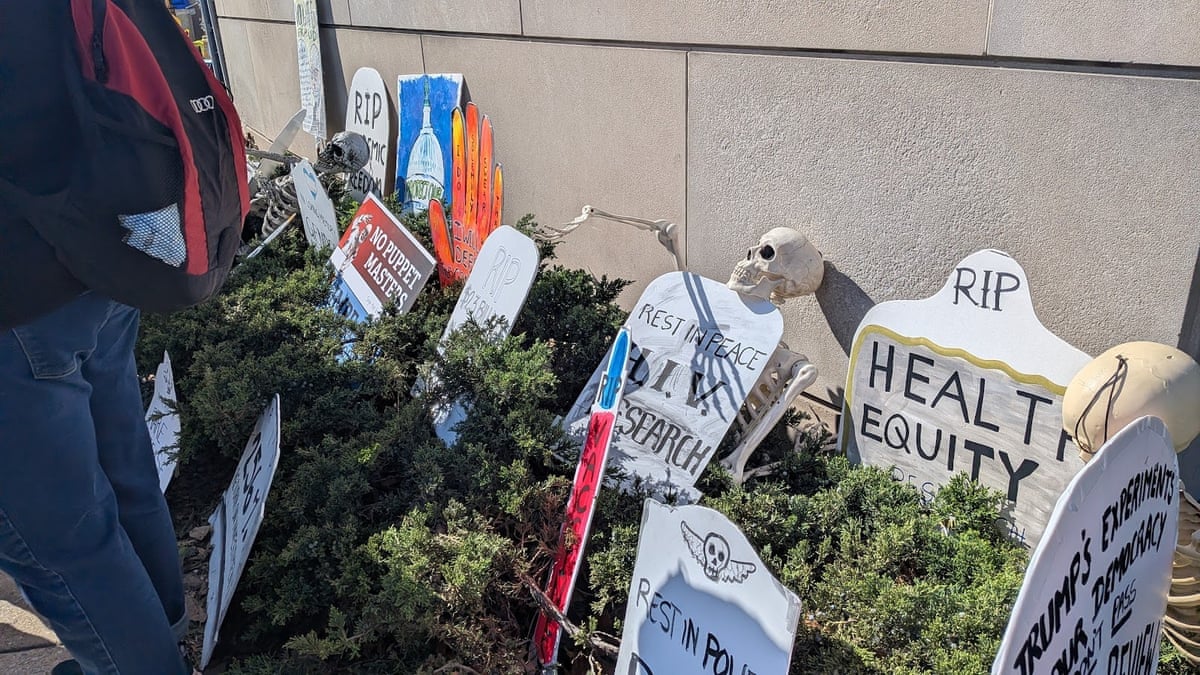
The protest was part of a larger wave of No Kings demonstrations occurring simultaneously across the United States and globally. The rally specifically addressed the NIH’s recent challenges, including significant cuts to multi-year funding and the termination of grants, particularly those focused on gender and race-related research. According to a report by Roll Call on the preceding Friday, the White House is preparing to reduce the NIH’s budget by 20%, nearly one year after extensive layoffs at various health agencies.
Personal Testimony Highlights Importance of NIH Research
Bill Bien, a lymphoma survivor, shared his experience with the crowd. Diagnosed with a rare form of lymphoma a year ago, Bien described his initial symptoms as a sore throat and shortness of breath.
“It was like trying to climb a mountain, and I couldn’t breathe,”
he said, adding,
“But I made it, and so will you.”
He emphasized the progress made in lymphoma treatment over the past 25 years, attributing breakthroughs to research conducted at institutions such as the National Cancer Institute.
“Ten years ago, his diagnosis would’ve been a ‘death sentence,’”
he noted.
“You create fundamental shifts, and now lymphomas are cured.”
After a year of treatment and recovery, including battling life-threatening infections, Bien’s cancer is now in remission. He praised NIH researchers as
“national treasures”and urged continued government support for long-term, interdisciplinary scientific research.
“You guys should be cherished, not diminished.”
“You must persevere,”
he said,
“It means so much to so many people you’ll never meet. It will save their lives.”
Protesters Voice Broader Concerns on Health and Policy
The rally’s atmosphere was punctuated by honking cars and the swirling of cherry blossom petals in the wind. Protesters chanted slogans such as
“No kings, just vaccines!”while speakers criticized harsh immigration enforcement, restrictions on transgender healthcare, the ongoing conflict in Iran, the blockade of Cuba, and the reshaping of the public health landscape.
The event also served as a food drive to assist unpaid Transportation Security Administration (TSA) employees and others impacted by the partial government shutdown.
Voices from the Research Community
Nina Friedman, a doctoral candidate at the University of Maryland whose research has been funded by the NIH, addressed the crowd.

“Speaking into a microphone, it’s new to me,”
she said,
“But I’m realizing that if we don’t take the microphone, RFK Jr and Jay Bhattacharya will have the airwaves.”
Robert F. Kennedy Jr., Secretary of the U.S. Department of Health and Human Services (HHS), and Jay Bhattacharya, head of the NIH, have overseen significant reductions at the agency, which is regarded as a leading global research institution.
Michael Green, who received an early-career fellowship from the NIH in August 2024 for his research on healthcare discrimination, saw his project terminated in 2025 amid the broad cuts targeting diversity, equity, and inclusion research.
“I study trust for a living … Trust is not found by going on a podcast,”
Green said, referencing Bhattacharya’s frequent appearances on right-wing podcasts.
“What I see is one person trying to run science like a king, deciding which research is acceptable based on political ideology rather than scientific merit.”
Jeanne Marrazzo, former director of the National Institute of Allergy and Infectious Diseases (NIAID) and current CEO of the Infectious Diseases Society of America, emphasized the necessity of a sustained commitment to equity, diversity, and inclusion in public health research.
“Conducting public health research has required a very, very visible lifetime commitment to championing equity, diversity and inclusion,”
she stated.
Marrazzo and other NIH institute leaders resisted the imposed cuts. She recounted,
“We never explicitly told why we were placed on administrative lead almost exactly a year ago. I was never explicitly told why I was ultimately fired six months later. But it’s very hard to imagine that our resistance did not play a role.”
Despite these challenges, Marrazzo affirmed her continued dedication to supporting critical research in the United States.
“I am ready for this. I am all in,”
she said, referencing the rally’s name, No (Shadow) Kings.
“It can be dimmed or redirected by political will or malign intent … but eventually the light reaches where it needs to go.”
Oath of Office Reaffirmed by Former NIH Employees
Anna Culbertson, co-founder of 27 UNIHTED, a nonprofit organization of former NIH workers, led attendees in reciting the government employee oath of office.
“I will support and defend the constitution of the United States against all enemies, foreign and domestic,”
she said, prompting the crowd to repeat the final phrase in unison.


