

Screening Recommended for Only a Small High-Risk Group
Scientific advisers have concluded that prostate cancer screening using a blood test should be offered only to "a few thousand" men who carry a dangerous genetic variant and have a family history of cancer. The UK's National Screening Committee (UK NSC) advises against screening in all other groups, stating that the harms outweigh the benefits.
While testing healthy men for prostate cancer can save lives, it also results in treatments that may cause significant side effects such as urinary incontinence and erectile dysfunction.
The ultimate decision on implementing these recommendations lies with health ministers across England, Wales, Scotland, and Northern Ireland.
Prostate Cancer Overview and Screening Process
The prostate gland, located just below the bladder, plays a crucial role in male reproductive anatomy by contributing to seminal fluid and influencing urine flow.
Prostate cancer is the most common cancer among men in the UK, causing approximately 12,000 deaths annually.
Screening involves a blood test measuring prostate specific antigen (PSA) levels, followed by an MRI scan of the prostate if PSA results indicate potential abnormalities.
Benefits and Harms of Screening
A comprehensive review by the UK NSC found that screening 1,000 men in their 50s would prevent two prostate cancer deaths over 15 years. However, it would also lead to 20 men being diagnosed with cancers that would never require treatment.
Some prostate cancers grow so slowly that they would not pose a threat until the men reach 120 to 150 years old. Despite this, those diagnosed would carry the psychological burden of a cancer diagnosis for life.
Of the 20 men diagnosed with indolent cancers, 12 would undergo unnecessary treatments that damage the prostate, potentially impairing sexual function and causing incontinence, necessitating the use of pads to manage urine leakage.
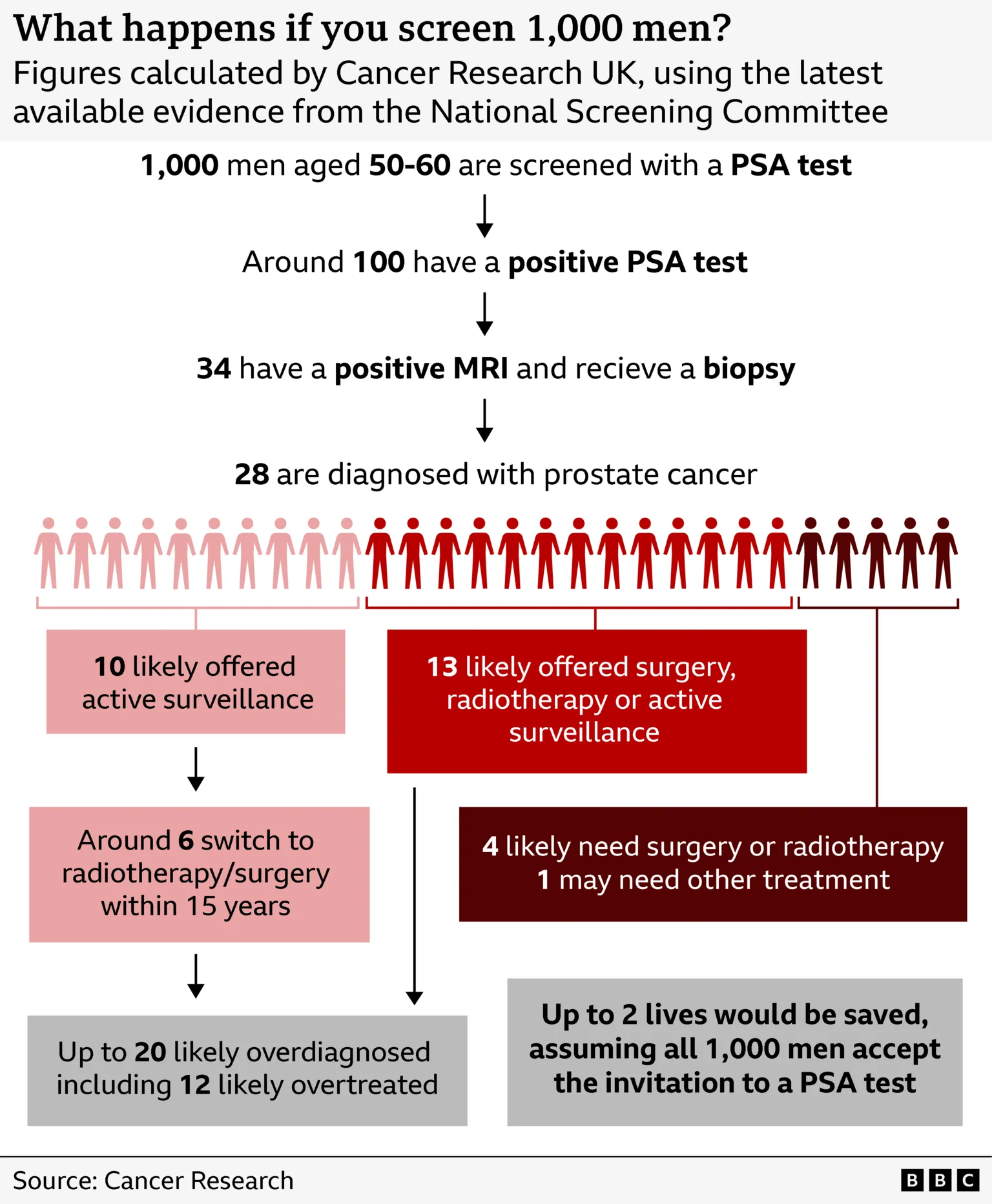
"Once a prostate cancer is found, we still can't reliably tell which cancers need treatment or which do not – and the treatments available for prostate cancer can cause long-lasting harm," said Prof Sir Mike Richards, chair of the screening committee and a prostate cancer patient himself.
Screening Recommendations
The committee advises against offering prostate cancer screening to the general male population.
The only group where screening benefits outweigh harms are men with a BRCA2 gene variant combined with a family history of breast, ovarian, pancreatic, or prostate cancer. BRCA2 is involved in DNA repair, and certain mutations increase both the incidence and lethality of cancers.
Men meeting these criteria should be invited for a PSA blood test every two years between ages 45 and 61. This recommendation affects a "few thousand" men annually, many of whom currently receive informal screening through NHS genetics clinics.
Ongoing Evaluation and Future Prospects
The committee will continuously review emerging evidence that may support broader screening programs. This includes new diagnostic tests with improved accuracy, artificial intelligence tools, and results from the ongoing Transform trial in the UK, which aims to clarify prostate cancer risks in Black men.
Although Black men have a higher risk of developing prostate cancer, it remains uncertain whether their cancers are more aggressive, a factor that would influence NHS screening policies.
Sir Mike Richards stated, "I hope new evidence and new tests and a better understanding of prostate cancer will support wider prostate cancer screening in future, but they do need the evidence first."
Public and Political Context
This review follows extensive campaigning by charities and public figures, including Olympian Sir Chris Hoy, who has terminal prostate cancer, as well as former Prime Ministers David Cameron and Rishi Sunak. Other prominent advocates include actor Stephen Fry and footballer Les Ferdinand, highlighting the widespread impact of prostate cancer on men.

Decisions on changes to prostate cancer screening will be made by ministers in the devolved UK governments. Sir Mike Richards is scheduled to discuss the recommendations with the new health secretary, James Murray, on Monday.
Dr Ian Walker, executive director of policy at Cancer Research UK, emphasized the importance of evidence-based decisions, stating:
"Screening decisions must be guided by the current evidence, with programmes only introduced when the benefits are shown to outweigh the harms, including unnecessary and invasive overtreatment. We urge the UK Government to accept the recommendation."


