

Unregulated Sperm Donation Market Grows on Social Media
Women eager to become parents are facing harassment for sex and being offered inexpensive, illegal sperm samples through social media platforms.
Those unable to access fertility treatments through official channels are turning to social media, fueling an expanding unregulated market. Some women are even using websites described as "Tinder for sperm" to find donors.
A BBC Wales investigation purchased a sperm sample for £100, arranged for next-day delivery from a man advertising his "baby batter" online. The sample was sent in a box with a frozen carton of tomato passata used as an ice pack.
The UK's fertility regulator has warned that women are at risk of exploitation by predatory donors.
Investigation Reveals Ease of Access to Unregulated Donors
During the investigation, it was evident that sourcing sperm online was straightforward, with numerous men advertising their services.
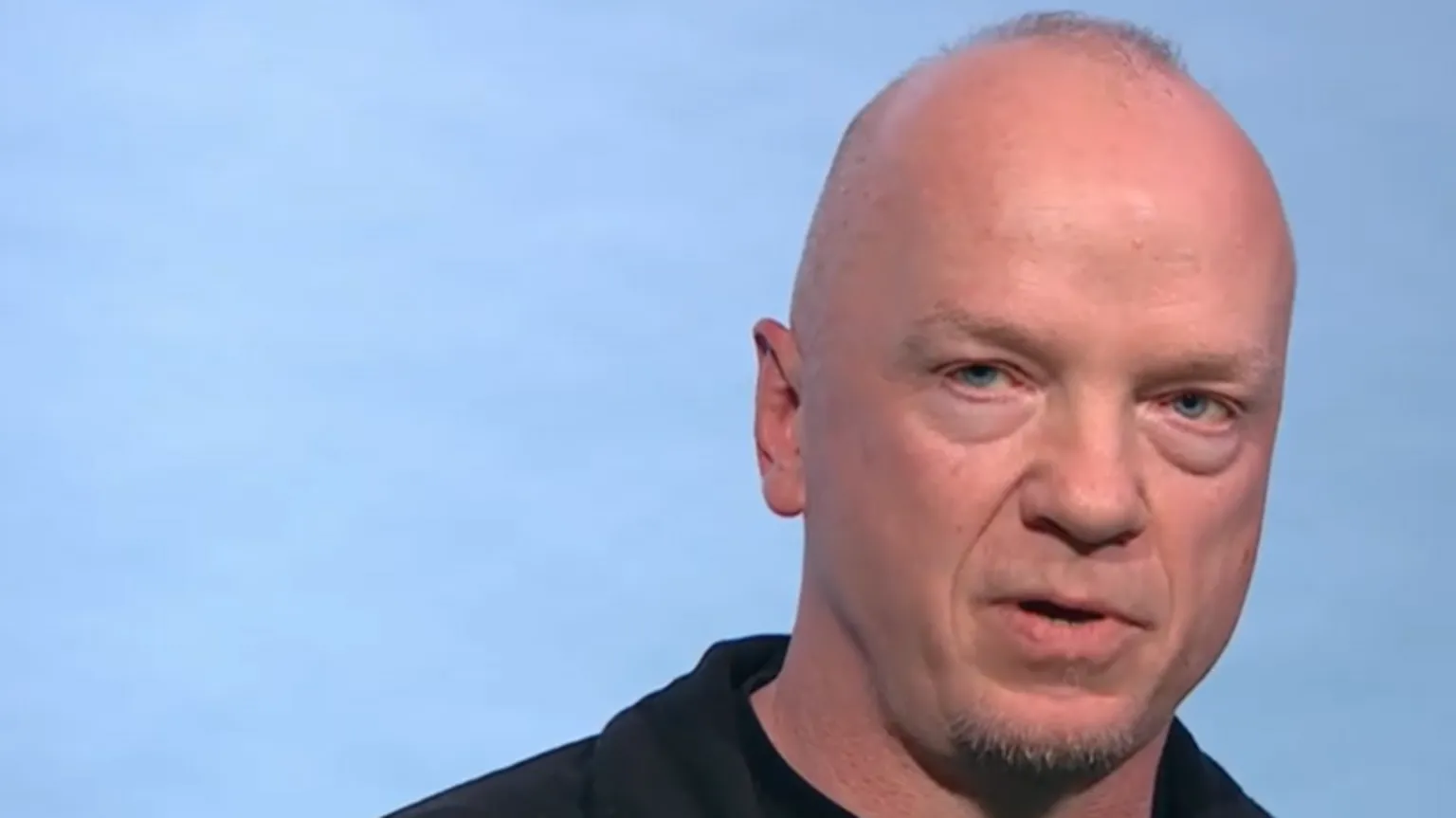
One advertisement promoted a man known as Joe Donor, who claimed to be reliable and offered delivery by post. He is a prolific donor, stating he has fathered 180 children worldwide through both sexual and artificial insemination methods.
In an uncommon public disclosure, a family court judge in Cardiff identified him as Robert Albon to highlight the risks associated with unregulated sperm donation.
Contacting him under an alias, it took only a few emails and a brief phone call to arrange next-day delivery. He did not request identity verification or provide any health screening information.
He charged £100 in cash, sent by post, for a syringe of sperm which arrived chilled with a box of tomato passata serving as an ice block.
A licensed clinic tested the sample four hours after receipt and found all sperm cells were dead.
Albon questioned the storage and transport methods used, stating that typically enough sperm survive his delivery process to allow fertilization and that he had "many successful pregnancies" through this method.
Albon and hundreds of other men use Facebook to connect with women seeking sperm; some groups have memberships of up to 40,000.
The investigator joined a donor group with an anonymous profile and received a mix of genuine messages and many that offered sex, requested intimate images, suggested costs for samples, and persistently tried to arrange meetings.
Several men repeatedly pressured for sex, promoting it as the cheapest and most effective option.
One woman warned she had received a donation from a man in north Wales who was later revealed to be a convicted sex offender.
Legal Framework and Risks of Unregulated Donation
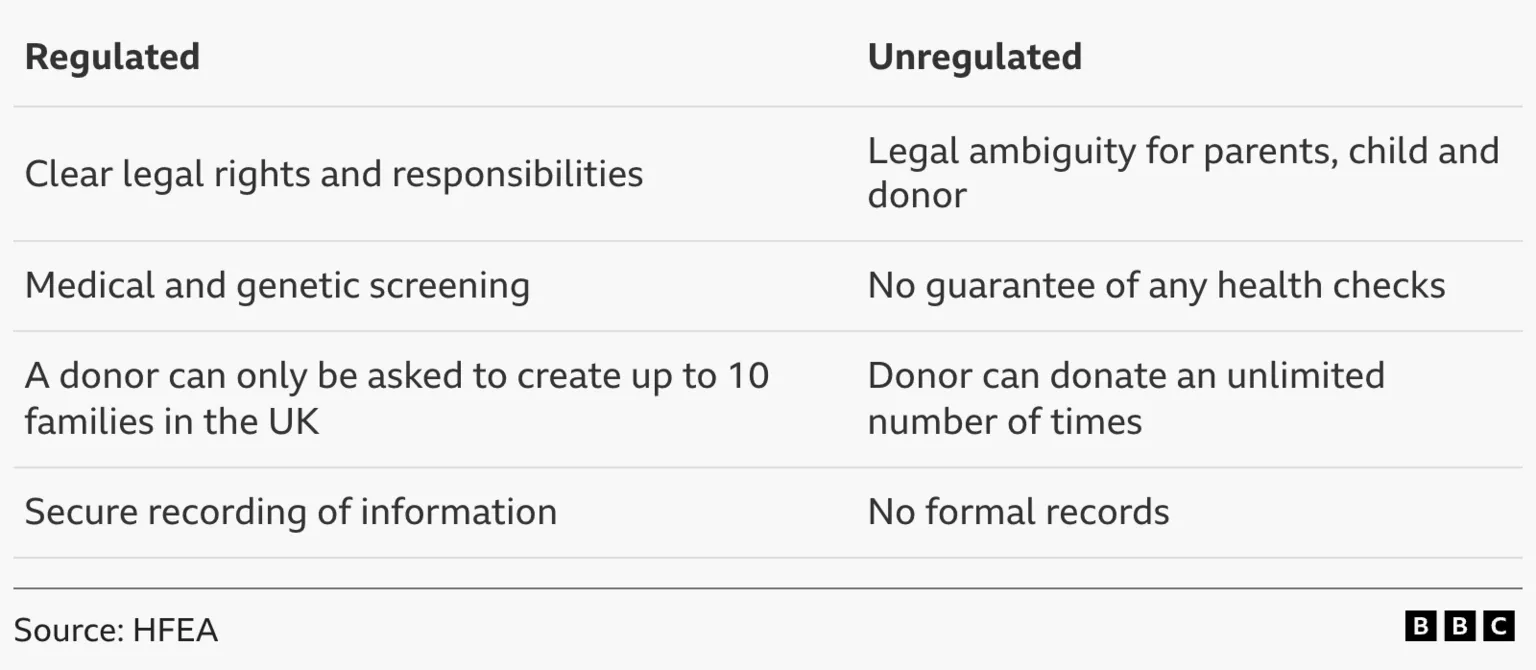
The Human Fertilisation and Embryology Authority (HFEA) defines unregulated donation as any donation occurring outside of an HFEA-licensed facility, noting it is a criminal offense in the UK.
Tianna and her wife Nikki, from south Wales, resorted to unregulated donation after being deemed ineligible for NHS funding and finding private treatment unaffordable.
"I always knew I wanted to be a mum, we knew that there was something missing from our family," Tianna said.
"You do get weirdos who are in it for the complete wrong reasons," she added.
She described a website that functions like a hybrid between a catalogue and Tinder, allowing users to filter donors by eye color, hair color, and other traits.
The couple sought artificial insemination but often encountered men recommending sex as the preferred option.
"I think it was really helpful that me and my wife had each other so there was no way that anyone could really pressure us into doing something we didn't want to do, because when all you want to have is a baby you're in a really vulnerable position," Tianna explained.
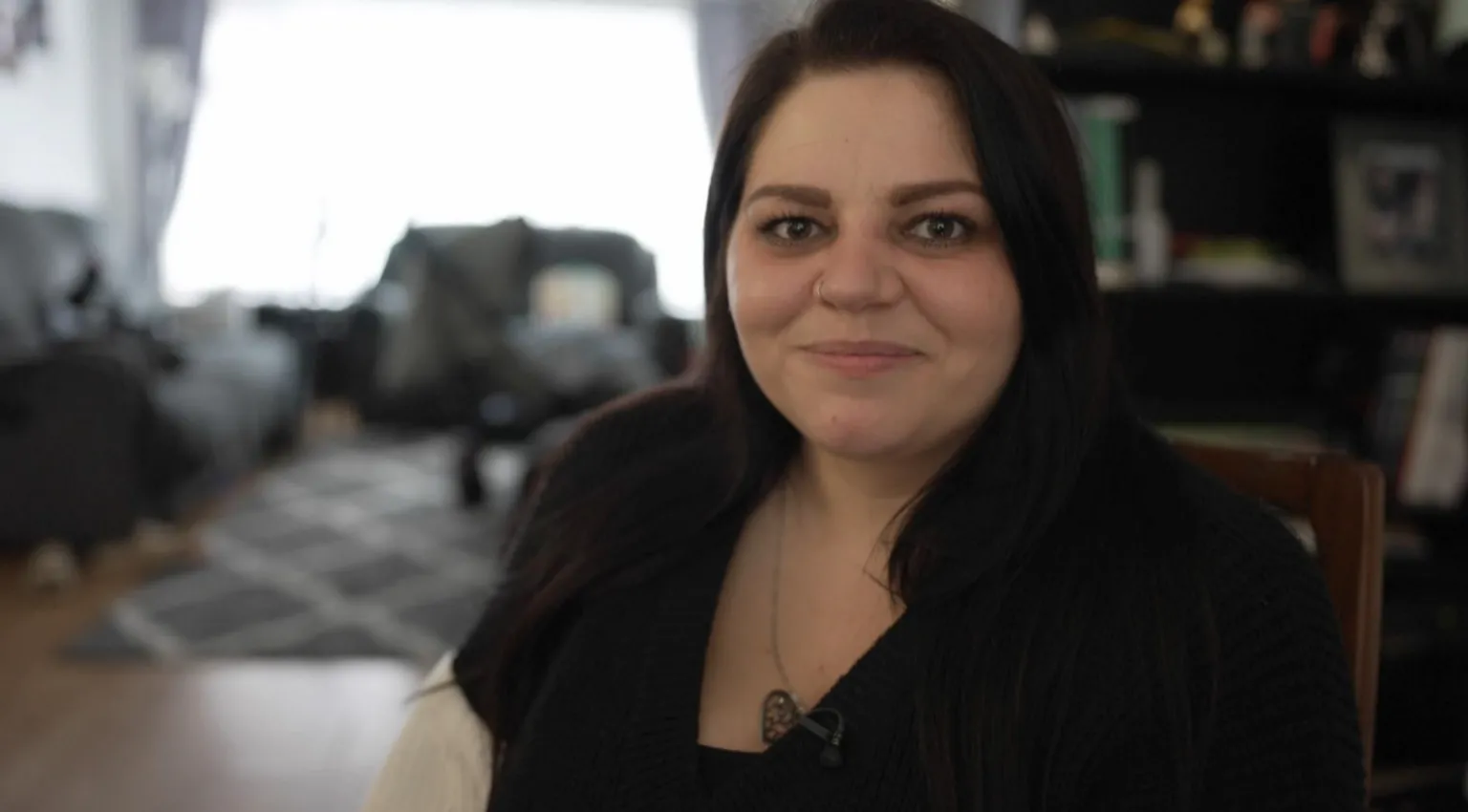
Eventually, they found a donor they felt comfortable with through a co-parenting website and drafted a contract outlining contact plans and parental rights. However, this contract holds no legal standing.

"There is still a chance that in the future, he could come and try and start claiming parental rights and take us through a court case," Tianna admitted.
"But I do think we've put as much as possible in place to stop that happening and I genuinely do believe that he is never going to do that to us."
The couple now have a one-year-old son.
"We wanted him for so long. Obviously, we took a risk. But it was so worth it."
Varied Methods and Motivations Among Unregulated Donors
Unregulated donors offer their services in various ways, ranging from free sexual donation to charging expenses for international travel to perform artificial insemination.
Daniel Bayen, 25, based in the US, traveled to the UK in summer 2025 to donate via artificial insemination, a trip he claims resulted in four babies.
The BBC filmed with Dan for three days. He describes himself in online videos as both the "highest paid donor" and someone who works "not for profit."
"Recipients have to help me cover all my health and my living expenses too, not just the travel," he said.
"There is also communication, health, posting on Instagram, putting information out there, education."
He stated that in the UK, he only asks clients to cover travel costs but claimed elsewhere he has been offered up to $20,000 for a donation.
When questioned about potentially exploiting financially capable individuals, he responded:
"I don't really care what other people think. I care what's best for the children and the families I work with."
Dan identifies as an open donor, willing for children to know his identity, and shares videos about his lifestyle and health test results. However, he is cautious about disclosing personal details.
"In order to protect yourself as a donor, you don't want too many assets under your name, just to make sure that no one can destroy your life and your family if they wanted to," he said.
"I think you, of course, shouldn't lie about your health and your SDI screenings. But the one thing that is OK to not give too much information out about is where you work, what you do, the information for recipients to sue you. Which could be, for example, your full name or your address."
Dan asserted he had not broken any laws while donating in the UK.

Regulation and Enforcement by the HFEA
Licensed clinics in the UK operate under the regulation of the HFEA, which provides information on legal requirements on its website.
The HFEA confirmed it has referred several prolific unregulated donors to the police.
"It's important to know that using an unregulated donor is not a criminal offence, and you are not breaking the law, but the donors or other people involved in the process of making the sperm available may be committing a serious crime," the authority stated.
According to the Human Fertilisation and Embryology Act, activities such as using, storing, procuring, testing, processing, and distributing gametes (eggs or sperm) for human use are illegal unless conducted by an HFEA-licensed clinic.
Clare Ettinghausen, director of strategy and corporate affairs at the HFEA, described the sperm delivery received from Albon as "shocking."
"The law's quite clear that without a license from the HFEA, you can't process sperm, you can't distribute sperm, which is what he's doing by sending it."
Albon responded by asserting that the regulations did not apply to him because he believed private donations, including charging for them, were legal.
He also claimed he was not a "direct risk" to vulnerable women.
Ettinghausen criticized social media company Meta, owner of Facebook, for "facilitating the law being broken," a concern she raised at a UK Parliament select committee in March.
The HFEA has contacted Meta directly about these issues but Ettinghausen acknowledged that completely shutting down such social media groups would likely only displace the practice elsewhere.
"Having constant health warnings and options about where to get support and find treatment in a safe way wouldn't resolve the problem completely, but it would be help."
She also expressed concerns about personal safety, noting:
"Some of these donors are advertising as natural insemination only, which is essentially in some cases coercing women to have sex when they possibly wouldn't want to."
Responses from Meta and Law Enforcement
Meta stated it would "review any groups or posts shared with us and remove content which violates our rules."
They added, "We have a dedicated reporting process for regulators to flag content which doesn't break these policies but violates local law. We are in close collaboration with the relevant authorities on this matter."
A spokesperson for the National Police Chiefs' Council said:
"Unregulated sperm donation carries many risks and can exploit the most vulnerable. We strongly advise the public to understand the risks and stick to regulated routes.
"If anyone has concerns, we'd encourage them to report it to the police so we can provide support and investigate."


