

Understanding Heat Exhaustion and Heatstroke
During periods of hot weather, it is common for individuals to overheat, which can lead to heat exhaustion or heatstroke.
Heat exhaustion is generally not serious if the affected person can cool down promptly. However, heatstroke is a critical medical emergency that demands immediate intervention.
Certain populations, including older adults, young children, and individuals with chronic health conditions, are especially vulnerable to heat-related illnesses.
What Differentiates Heat Exhaustion from Heatstroke?
Heat exhaustion occurs when the body becomes excessively hot and struggles to maintain a stable temperature.
A key symptom is profuse sweating accompanied by feelings of intense heat and malaise, signaling the need to cool down quickly.
Young children, who may be unable to articulate their symptoms, might exhibit signs such as lethargy and sleepiness.
Heat exhaustion can affect anyone, including those who are physically fit, particularly following strenuous activity in high temperatures or prolonged alcohol consumption in the sun.
Its onset can be rapid, developing within minutes, or gradual over several hours.
Certain medications may impair the body’s ability to regulate temperature or increase susceptibility to sunburn, dizziness, or dehydration.
If untreated, heat exhaustion can progress to heatstroke, a life-threatening condition where the body fails to manage heat, causing a dangerous rise in core temperature. Immediate medical attention is necessary.
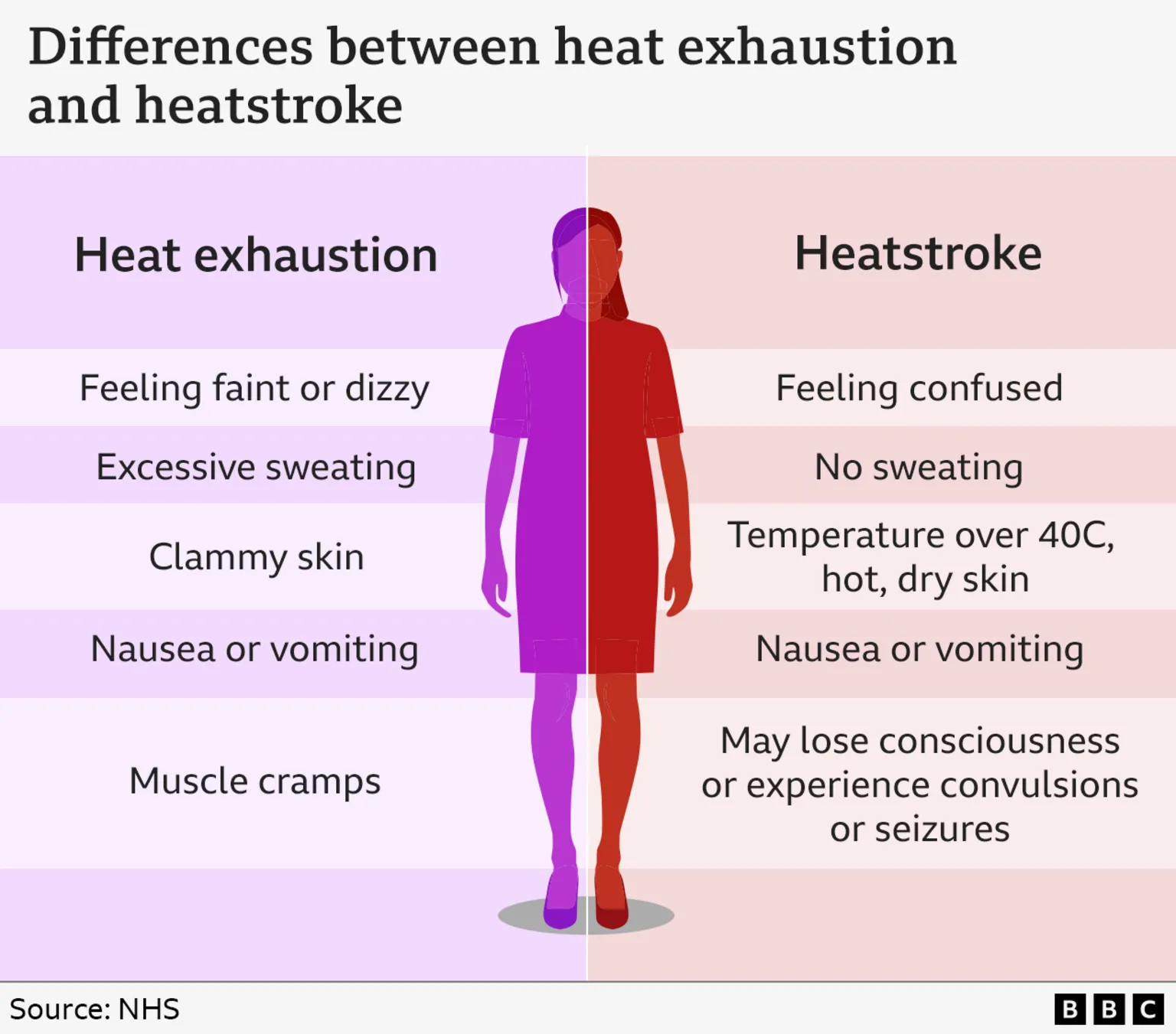
Recognizing Symptoms of Heat Exhaustion and Heatstroke
Signs of heat exhaustion include feeling faint or dizzy, excessive sweating, clammy skin, nausea or vomiting, and muscle cramps.
Heatstroke symptoms are more severe and include confusion, absence of sweating, a body temperature exceeding 40°C with hot, dry skin, nausea or vomiting, and possible loss of consciousness or seizures.
Recommended Actions if Heat Exhaustion or Heatstroke is Suspected
If an individual is experiencing heat exhaustion:
Remain with them until their condition improves.
They should begin to cool down and show signs of recovery within 30 minutes.
If there is no improvement after 30 minutes of rest, or if you suspect heatstroke, seek urgent medical assistance immediately by calling 999.


