

Strikes as a Firebreak in Hospital Operations
"We sighed with relief - strikes act like a firebreak."
These were the words of a hospital chief executive reflecting on the resident doctors' walkout in England last December. Following the conclusion of the recent doctors' strike, several NHS trust leaders who spoke to have noted that the healthcare system operated more efficiently during the strike period, with some describing the experience as smoother than typical non-strike days.
Looking back at previous industrial actions, these leaders observed that contrary to widespread expectations of chaos, patient wait times were reduced, decisions were expedited, and hospital corridors were calmer.
However, there is recognition that these improvements relied on temporary, improvised solutions, which may incur significant costs.
During the December strike, approximately 25,000 doctors who would normally have been working were absent each day, according to NHS England. The British Medical Association (BMA) organized a five-day walkout timed to coincide with the lead-up to the Christmas season. Government ministers condemned the strike as "irresponsible and dangerous."
Despite this, within at least one hospital, the atmosphere was notably different, partly due to the easing of the flu season. The trust chief executive remarked to the BBC that the strikes functioned like a firebreak, stating:
"With consultants on the front door, decisions are made fast and admissions fall. Lower bed occupancy before Christmas was a gift."
During the strike, consultants and other senior doctors were deployed in Accident & Emergency (A&E) departments, enabling rapid assessment of whether patients required urgent treatment or could be safely redirected to community health services.
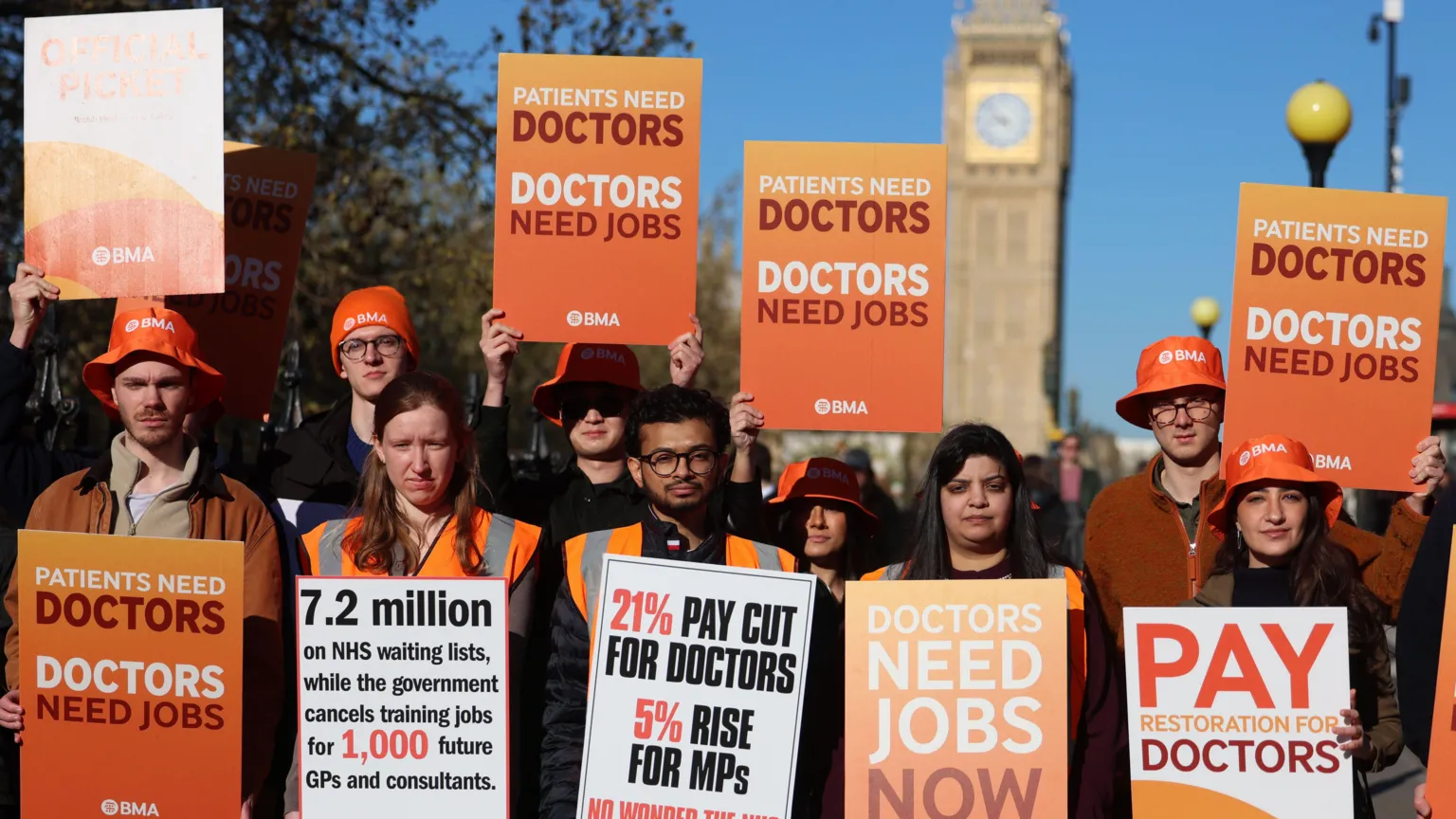
More Direct Decision-Making
At King's College Hospital, a study examining the first junior doctor strikes in 2023 found that patients were seen, treated, and discharged more quickly on strike days despite reduced staffing levels. Importantly, the research reported no increase in mortality or readmission rates.
Similar trends were observed at other institutions. For example, at the Royal Berkshire Hospital, the four-hour A&E target was met in 82% of cases during December's strike, compared to 73% the previous week. While other factors may have contributed, this improvement coincided directly with the strike period.
Dr Layla McCay, director of policy at the NHS Alliance, which represents trusts, commented:
"We have heard, anecdotally, that the enhanced presence of consultant colleagues in A&E, with their additional experience, can mean quicker, less risk-averse decision-making, which is good for patients.
"But this is a temporary, unsustainable solution with knock-on effects."
On routine, non-strike days, emergency departments are primarily staffed by early-career doctors training for specialist roles. These junior doctors often order more diagnostic tests and seek multiple layers of senior opinion, which can slow the patient journey.
When consultants assume front-line roles during strikes, decision-making tends to be more direct, as explained by Dr Damian Roland of the University of Leicester:
"The more doctors involved in a patient pathway, the longer everything takes."
However, training resident doctors is essential to maintain the consultant workforce of the future. The BMA's Dr Jack Fletcher emphasized that when current consultants retire,
"we have no one to replace them as [trainee doctors] have left due to a combination of inadequate pay and conditions, and a lack of jobs."
Hospitals typically aim to discharge as many patients as possible before the Christmas period. The pre-Christmas strike accelerated this process. Dr Roland noted:
"Lower occupancy improves flow, and with that the patient experience."

In hospital terminology, "flow" refers to the timely movement of patients from the emergency department to other hospital areas for treatment.
Patients themselves noticed the difference. One woman described her visit during the strike as "a blessing." A mother reported that her son, who is frequently admitted with asthma, received the fastest treatment he had ever experienced because "an experienced consultant just got him sorted."
NHS England stated that thousands of patients were safely discharged home ahead of Christmas despite the strike action.
Some hospitals are now implementing new strategies on non-strike days. For instance, one trust assigns cardiology consultants to the front door every Friday, a practice informed by lessons from industrial action deployments. Nick Hulme, former chief executive at East Suffolk and North Essex NHS Foundation Trust, explained:
"Cardiologists rarely admit someone with chest pain.
"Junior doctors are more cautious.
"After seeing the impact of the strikes, we realised this was a smart way to reduce admissions ahead of the weekend."
Complex Financial Picture
Although the strike-day model appears efficient, hospitals achieve it by suspending some normal activities. Planned operations and appointments are postponed, although NHS England reports that 95% of routine treatments continue during strike days.
Senior doctors redeployed to front-line roles must cancel other commitments, and consultant cover is costly. Premium rates for consultant shifts can exceed £3,000 for a single night. A BBC Freedom of Information request revealed that in 2023, the cost of consultant cover was three times higher than the savings trusts realized from withholding junior doctor pay.
The financial implications are complex. The Nuffield Trust estimates that paying premium rates for industrial action coverage and the additional administrative work to reschedule appointments costs approximately £30 million per strike day, although this figure varies depending on strike turnout and the time of year. Government estimates are higher, at around £50 million.
Hospitals lose income when operations are postponed but receive payment when procedures are performed later.
Sally Gainsbury of the Nuffield Trust commented:
"The financial costs of industrial action in the NHS are fairly opaque."She also noted that neither the government nor NHS England has provided a detailed breakdown of these figures.
Regarding sustainability, consultants are a limited resource and are growing weary of strike action. Some feel vulnerable returning to front-line roles they have not performed for years, while others report fatigue and frustration due to increased workloads.
The BMA's Dr Fletcher stated:
"An NHS getting by over a strike period is completely different to managing without resident doctors all of the time."
One senior hospital manager observed:
"There are benefits to a strike day, but they are ultimately limited before you hit the ceiling of other pressures from outside the trust."Services in the community are stretched daily, regardless of strike activity.
Professor Carol Propper of Imperial College added:
"You can't run a hospital in 'emergency mode' all the time.
"It simply isn't a stable way to run hospitals."
This situation raises fundamental questions: Fifteen walkouts have failed to secure an acceptable deal, so if strikes have limited impact, why continue them? Additionally, was the government's heightened rhetoric about strikes causing disruption and harm to patients justified?


