

Increase in Hospital Admissions Due to Spider Bites in England
Hospital admissions related to spider bites in England have increased significantly over the past decade, according to data obtained through a freedom of information request by the Press Association.
NHS statistics reveal that in 2025, there were 100 hospital admissions linked to spider bites, compared to 47 in 2015.
Experts attribute this rise to a notable increase in the population of the noble false widow spider, which has been described as "the most dangerous spider breeding in Britain." However, the charity Buglife emphasizes that these spiders are not aggressive and there is no record of them causing serious illness or fatalities, although bites can occasionally cause pain and swelling.
Rise of the False Widow Spider
The noble false widow spider is believed to have originated from Madeira and the Canary Islands and was first documented in southern England in 1879.
Clive Hambler, a lecturer in biological and human sciences at the University of Oxford, told PA: "I think if you were going back 50 years, then there would have been hardly any consequences from spider bites in Britain.
"The incidents of severe bites from spiders in Britain will have increased, as this species (false widows) became hugely more abundant in Britain, particularly in the south."
NHS data obtained by PA indicate 43 hospital admissions due to spider bites in 2021, rising to 95 in 2022. In both 2023 and 2024, there were 91 admissions each year.
Of the 100 admissions in 2025, 73 were through Accident & Emergency (A&E) departments, compared with 38 of the 47 admissions in 2015.
There have been individual cases reported, such as a baby in Ireland treated in an emergency department following a bite in 2022, and a woman from Lincolnshire who described her finger as feeling like it would "explode" after a suspected spider bite in 2023.
Several factors may explain the increase in hospital admissions related to spider bites, including greater awareness among medical professionals and a growing UK population.

Dr Michel Dugon, a zoologist at the University of Galway, described the figures as "interesting" but "not surprising."
He said the "most obvious" factor that might have caused the rise is "the explosion in the population of noble false widow."
"We know that those species indeed can actually bite, that they do have a preference to live in and around houses rather than in natural habitats, at least in the UK and Ireland," he said.
Dr Dugon also noted that increased media coverage of false widow spiders and their bites in recent years might have led some individuals to believe they were bitten by this species when the cause may have been different.
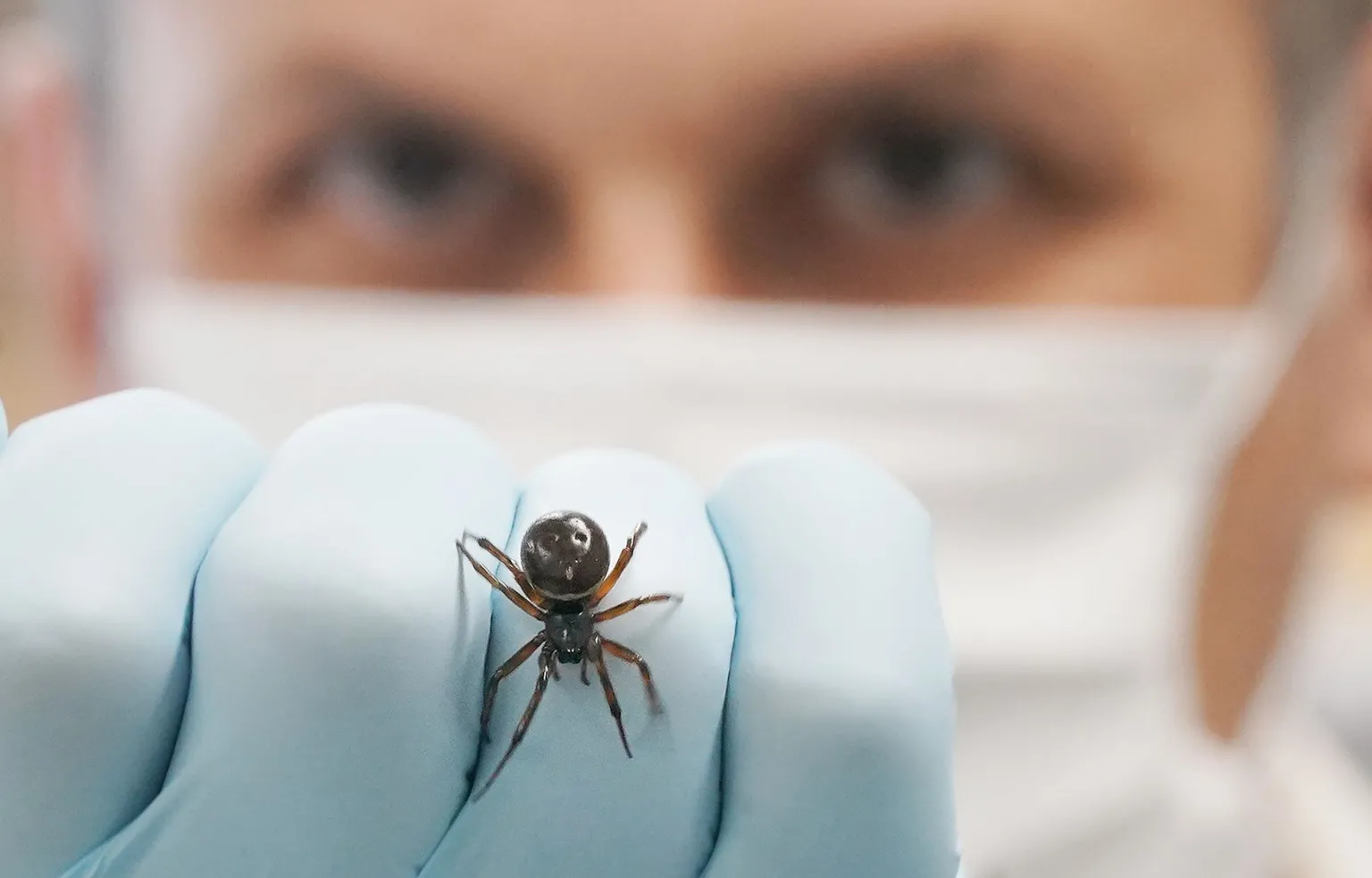
What Are Spider Bite Symptoms?
Spider bites typically leave small puncture marks on the skin, which can be painful and may cause redness and swelling.
Professor David Lalloo, from the Liverpool School of Tropical Medicine, states that bites from false widow spiders "are not dangerous."
"But they can make people feel unwell for a day," he added.
When the noble false widow spider bites, it injects a neurotoxin that can cause localized pain, minor swelling, and in rare cases, nausea, according to Buglife.
The charity clarifies that the spider's neurotoxins do not cause gangrene-like infections; such infections result from bacterial contamination, which can occur from scratching mosquito bites, scratches, or splinter wounds with unclean fingers.
Buglife states there are no confirmed cases where the noble false widow spider has caused death, coma, or permanent injury.
Additionally, female noble false widow spiders are generally sluggish and non-aggressive.
"They will never run or jump at you in an aggressive manner as some people describe.
Most British spiders couldn't bite you if they tried; their fangs are too small or weak to penetrate human skin.
Most large spiders are not inclined to bite a human – you can handle hundreds of large house or garden spiders and never get bitten," the conservation charity explains.
Occasionally, venomous spiders can be introduced into the UK via produce or goods imported from abroad.
Buglife advises caution regarding spiders found in grocery areas of shops.


