Coroner Finds Heading Caused Brain Disease in Nobby Stiles
Norbert "Nobby" Stiles, a member of England's 1966 World Cup-winning team, died with a brain condition caused by repeatedly heading a football, a coroner ruled during his inquest.
The former Manchester United midfielder, who passed away in 2020 at age 78, suffered from severe dementia. Evidence presented at Stockport Coroners' Court revealed that Stiles had headed a football approximately 140,000 times throughout his career.
Neuropathology expert Dr Daniel Du Plessis stated to the court:
"I'm quite convinced his heading the football that many times has caused his CTE [chronic traumatic encephalopathy]."
Senior Coroner Alison Mulch recorded the cause of death as Alzheimer's disease, contributed to by CTE, alongside another neurodegenerative condition and cerebrovascular disease.
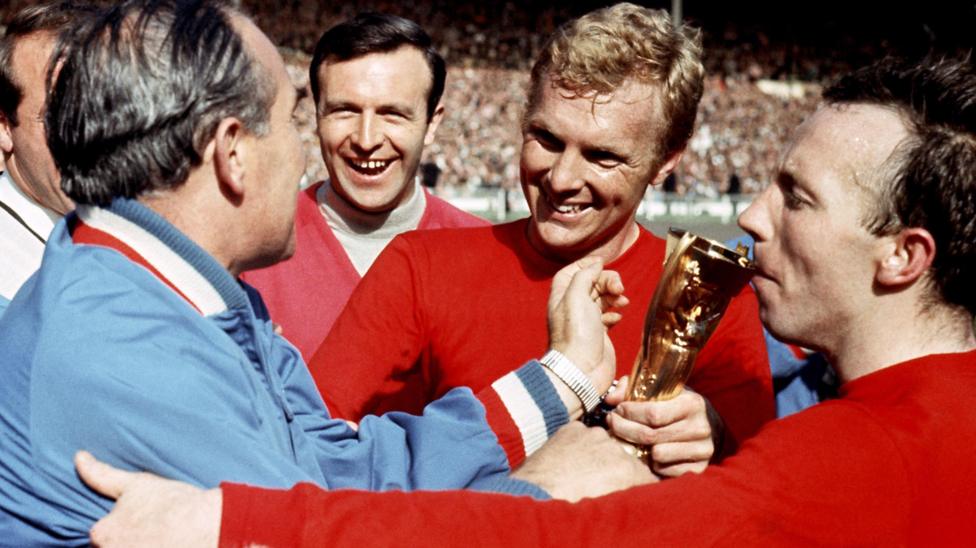
Nobby Stiles (right) was part of England's 1966 World Cup winning team
Career and Personal Background
Born in Collyhurst, Manchester in 1942, Norbert "Nobby" Stiles was known as a tough-tackling defensive midfielder. He earned 28 caps for England and made nearly 400 appearances for Manchester United.
Stiles resided in Stretford, Greater Manchester, before his death in a care home on 30 October 2020, having become bed-bound due to dementia.
His family has actively campaigned for football authorities to increase support for former players dealing with injuries they believe were sustained during their playing careers.
Following the hearing, Stiles' son John commented that the coroner's ruling was "no surprise" but criticized the football industry for its lack of support, warning that his father's case could be the first of many similar inquests.
Heading Frequency and Family Perspective
During the inquest, John Stiles described the extensive heading practice his father endured, estimating conservatively that he headed the ball 40 times a day, five days a week, over each 10-month season.
"Heading the ball in training was absolutely massive," John said.
He also reflected on his father's humility, stating:
"He was very humble – he just happened to achieve quite a lot in the professional game."
John added,
"He went into his house and you wouldn't know he was a footballer. Football was left at the door. Family was always his first priority and then his friends."
When the coroner suggested that football was not a dominant factor in Stiles' life, John replied:
"It really wasn't at all – he never talked about it – it was just something that happened to him. We were much more proud of the father than the footballer."
Training Practices and Early Signs of Dementia
The court heard that at Old Trafford, a ball would hang down from the stand, and players were encouraged to head it during training sessions.
John emphasized that while this practice was not forced upon players, they were unaware of the potential risks involved.

The family began noticing signs of memory loss and repetitive questioning in Stiles during his late 50s and early 60s.
"For a long time, there was a terrible impending feeling of doom by the family – we didn't know what was happening but we could feel it coming on," John said.
By 2010, Stiles' health had deteriorated significantly, leading him to decide to sell his medals, John revealed during the inquest.
Expert Analysis of Brain Condition
Expert examination of Stiles' brain confirmed that his severe dementia resulted from Alzheimer's disease as well as CTE.
Dr Du Plessis, consultant neuropathologist at Salford Royal Hospital, explained:
"In this case, it is quite clear that Mr Stiles had advanced dementia and he died of his dementia - that is the primary cause of death here. Added to the mix was CTE - we know it is caused by people who have head injuries. I'm quite convinced his heading the football that many times has caused his CTE."
The senior coroner questioned Dr Du Plessis:
"What you are saying is that the CTE that Mr Stiles clearly had, you are satisfied on the balance of probability, the cause was heading the ball?"
He responded:
"Yes. This is a very complicated issue and it is important to use such a death to highlight – that we do now know repeated head injuries have an impact on the brain."
Coroner's Findings and Family Statements
The coroner attributed Stiles' death to Alzheimer's disease with "high stage" CTE, also noting a contributing factor of "stage three limbic predominant age related TDP-43" and cerebrovascular disease.
She remarked:
"It seems strange that we are having this conversation on a day like today,"
referencing England's World Cup semi-final match against Argentina on the same day.
After the inquest, John Stiles stated:
"As we rightly celebrate the football heroes of today, 60 years after the heroics of 1966, it is right to remember the people like dad and thousands of others abandoned by an industry rolling in cash. It is a shame and a scandal that the industry and the government have failed to support these vulnerable people."
Football Authorities' Response and Research
The Football Association (FA), in partnership with the Professional Footballers' Association (PFA), co-funded a 2019 study that found footballers were three-and-a-half times more likely to die from neurodegenerative diseases compared to age-matched individuals in the general population.
The FA is implementing a phase-out of heading in youth football for players up to under-11s by 2026.
The PFA has established multiple support services for players affected by dementia and other neurodegenerative conditions, including financial assistance through The Football Brain Health Fund and support via The PFA Dedicated Brain Health Team, which aids with diagnosis and educates current players on brain health.
Contact and Further Information
Readers are encouraged to suggest stories relevant to Greater Manchester.
Listeners can access BBC Radio Manchester on Sounds and follow BBC Manchester on Facebook, X, and Instagram. Story ideas can also be submitted via WhatsApp to 0808 100 2230.
and Further Reading
- Coroner rules inquest needed into Nobby Stiles' death
- Nobby Stiles' son calls dementia group 'transformative'
- Meet the 25-year-old who's trying to stop footballers getting dementia
Related Internet Links
- HM Courts and Tribunals Service
John Stiles says he is proud of his dad