

Abbie Filer's Diagnosis Journey
Abbie Filer, a 27-year-old from Leeds, was diagnosed with endometriosis in 2024.
"With endometriosis, most people end up minimising their pain, gaslighting themselves so they don't reach out for help," Abbie Filer explains.
"The onus shouldn't be on them to display their symptoms in an acceptable way - patients already do so much to manage their health and push for the right care."
Endometriosis affects one in 10 women in the UK and occurs when tissue similar to the lining of the womb grows outside of it. This condition can cause severe and debilitating symptoms such as pelvic pain, heavy periods, fatigue, and infertility.
Before her diagnosis, Abbie endured a decade of heavy periods and Premenstrual Dysphoric Disorder (PMDD), a hormonal condition that can cause debilitating low moods, brain fog, and fatigue. In 2023, she was compelled to use a catheter. After seven months without answers, her endometriosis was finally identified through surgery.
"If I hadn't gone into urinary retention, I probably wouldn't have a diagnosis at this point in time," she says.
Despite the condition's prevalence, many women face long waits before receiving an official diagnosis.
New NHS Testing Guidance
This week, The National Institute for Health and Care Excellence (NICE) released draft guidance recommending the introduction of new tests on the NHS to expedite diagnosis.
Two non-invasive tests will be offered by GPs in England and Wales during a three-year trial period while evidence is gathered on their effectiveness.
Endotest is a saliva test that detects genetic material, and Endosure measures electrical signals in the gut using sensor pads placed on the abdomen.
The tests are not definitive proof of endometriosis but can provide indications that may lead to referrals to specialist services.
However, not all GPs will have immediate access to these tests, and their use must be overseen by healthcare professionals experienced in diagnosing and managing endometriosis.
Abbie experienced a number of health issues related to undiagnosed endometriosis
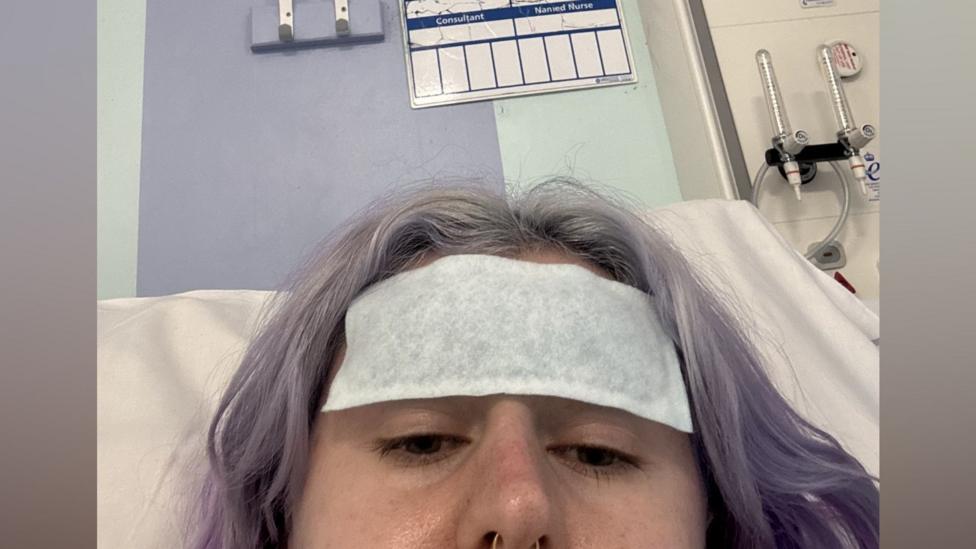
Abbie expresses mixed feelings about the tests, citing concerns about the current lack of understanding of endometriosis that could hinder early identification.
"For those seven months that I spent with a catheter, no-one suspected I could have endometriosis, so I wouldn't have been referred for any of these tests," she says.
As treasurer of the peer group Menstrual Health Support, Abbie notes that members generally view the tests as a "side-step" rather than a significant advancement.
She also highlights concerns about long waiting times for further treatment once initial test results are received and suggests that increasing the number of specialists is necessary.
Leeds has a dedicated endometriosis centre, which she describes as "incredible," but other regions lack such facilities, resulting in uneven service provision.

"However it is nice to know that something is being done," she adds.
'Endo Warriors' and Charity Support
Helen Brewster, executive at the charity Hey Endo!, shares Abbie's concerns about infrastructure.
The charitable incorporated organisation (CIO) offers support for individuals living with gynaecological conditions and opened its first centre in Hull last year.
Helen, 34, describes her own diagnosis of endometriosis and adenomyosis as "a long road."
"It's good getting people listened to, getting them the referral to where they need to be," she says.
"We've been crying out for a long time that there needs to be something, anything at all. My query there is how long are they going to be stuck in the system?"
The availability of the tests is "fantastic news," Helen explains, provided that provisions are made to handle a potential increase in demand for services.
She adds that despite "archaic notions" still surrounding endometriosis, increased awareness benefits both diagnosed and undiagnosed individuals.
"As an endo warrior myself, I feel seen and I feel heard and I'm starting to feel supported by the country that I live in.
Finally I don't feel like I have to hide away anymore and I know that there are a lot of other warriors out there that do feel the same way."
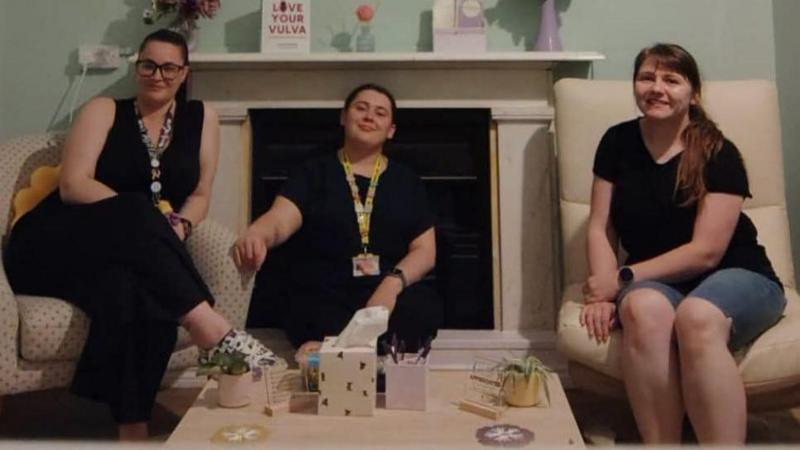
Helen Brewster (left), Alice Paige and Ashleigh Hirst work for charity Hey Endo!
Expert Perspective on Diagnosis Improvements
The potential to reduce endometriosis diagnosis times would be "absolutely huge," according to Dr Sarah Jarvis.
Speaking to BBC Radio Sheffield, the GP explained that while the tests cannot provide "an absolute diagnosis," they can offer indications that guide subsequent steps.
"Hopefully we'll be able to order [the tests] and then the results can tell us whether we need to fast-track that patient into secondary care, into specialist care."
Dr Jarvis noted that symptoms are often non-specific and varied, leading to misdiagnoses with other conditions initially.
"Women may never have known what was causing [their symptoms] and therefore could never get the right treatment unless they had the diagnosis," she said.
"Women suffer completely needlessly in pain and really debilitated. It can have a huge impact on your life.
"You may spend years being told you've got irritable bowel syndrome, which is a very debilitating condition, but the treatments for it are completely different."
Dr Sarah Jarvis said reducing endometriosis diagnosis times would be "absolutely huge"

Additional Information
Listen to highlights from North Yorkshire on and catch up with the latest episode of Look North.
- 'I had endometriosis at 11 - no-one believed me'
- Two tests GPs can soon offer to help spot endometriosis
- First local endometriosis support centre to open


