Underwater Observation of Nephrops Norvegicus
Observing prawns underwater is a specialized skill that scientists like Dr Pia Schuchert at the Agri-Food and Biosciences Institute (AFBI) have honed over years. The species, known scientifically as Nephrops norvegicus, are elusive seabed dwellers.
"We normally think they might be running around - and they are sometimes, they're very cute,"
"But they live in burrows under the sea."
This burrow-dwelling behavior complicates efforts to count and monitor their populations, which is essential for managing this economically significant species.
An international team of experienced and early-career researchers recently gathered in Northern Ireland for a week-long training session in preparation for this summer's survey.
While scientists refer to them as Nephrops, these creatures are commonly known as Dublin Bay prawns, langoustines, Portavogie prawns, or scampi.
Annual Underwater Television Surveys
Each year, Underwater Television (UWTV) surveys are conducted across multiple locations to monitor the seabed using camera-equipped sleds. The recorded footage is analyzed by teams throughout the UK and Ireland to evaluate the species' status and inform fishing quotas.
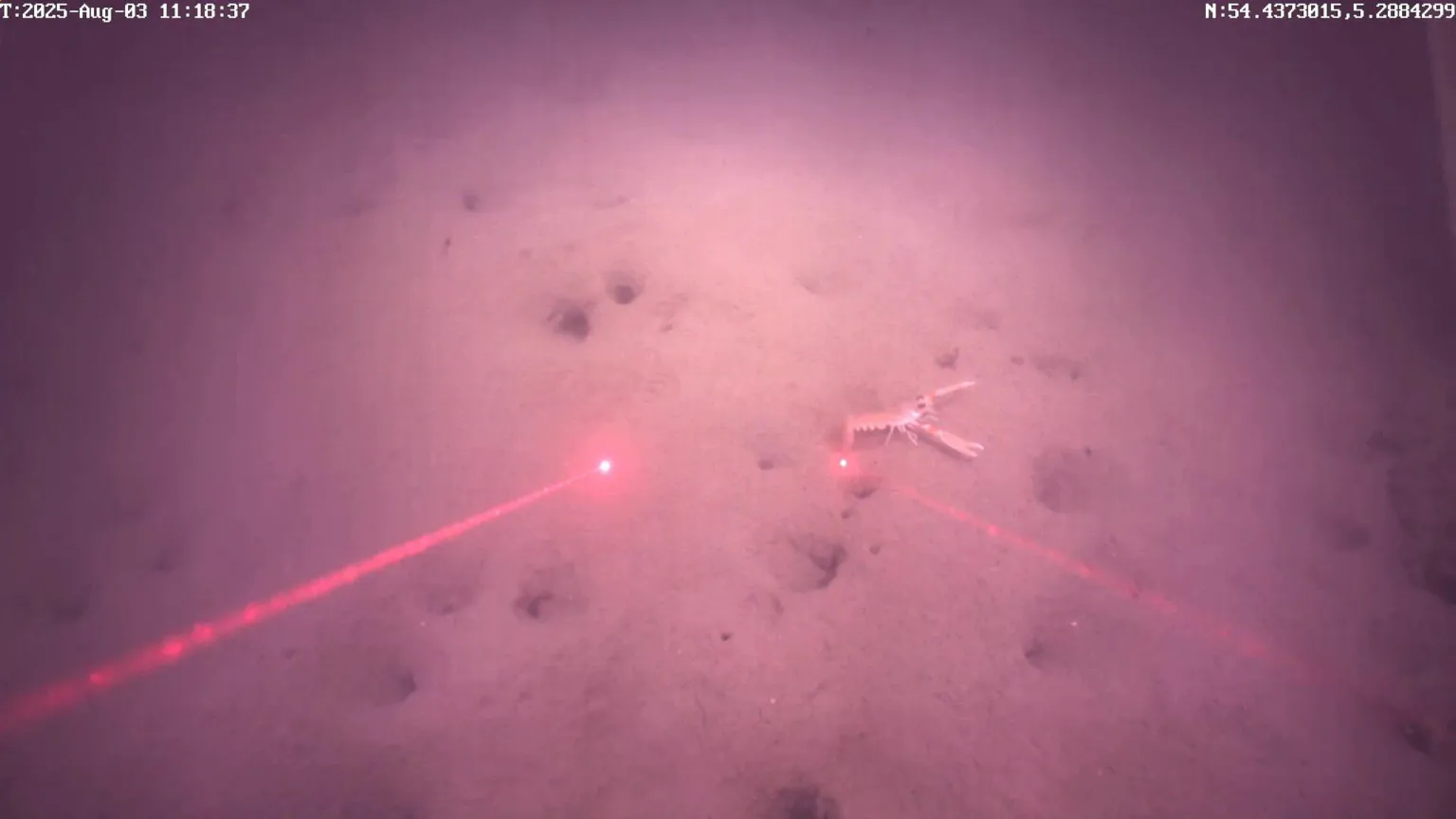
According to Dr Schuchert, Nephrops lead a concealed life beneath the seabed.
"They build like huge holes and excavations, and that's where they live and spend most of their time in,"
"So we have to actually assume that they are in their burrows, and we count the number of burrows as a proxy for the numbers of individual Nephrops that we have."
The challenge lies in accurately identifying these burrows.

During the training at AFBI's Belfast facility, scientists exchanged footage and techniques to distinguish genuine prawn burrows from other seabed features by examining specific characteristics.
"It's got a little kind of driveway where they push out the sand from the burrow,"
"But it also has got, normally you can see, it needs to have like two or more entrances so they can go through.
"So there are quite a few characteristics that we actually look at - and some of them are very difficult to identify."
Developing Expertise in Burrow Identification
Dr Heidy Dias participated in the AFBI-led school to enhance her skills in identifying prawn burrows among other seabed features. She is involved in a seabed-mapping project aiming to make Northern Ireland the first region in the UK to have its entire seabed documented.
"We do a lot of underwater TV videos and we come across different substrate types and everything,"
"So we do not really know what happens on the seabed sometimes."
The survey technology minimizes disturbance to shellfish while providing valuable insights.
"Knowing that there are burrows and identifying what type of burrow is that, that's very interesting and also an advantage for us as seabed mappers - to know what's underneath and what's really happening down on the seabed there,"

Economic and Environmental Importance
Prawn fishing contributes significantly to the economy, generating £114 million annually in the UK and €61 million (£53 million) in Ireland. Beyond economic value, Nephrops play an important ecological role by consuming decaying matter and algae and serving as prey for other species.
Experts at AFBI and fisheries scientists such as Jennifer Doyle from the Marine Institute in Galway have collaborated for many years studying the western Irish Sea.
"The prawn stocks and Nephrops stocks are highly commercial and very important to both fishing nations,"
"I've never seen so many monitors and people at a workshop with such great intent and great enthusiasm for learning this new skill of burrow identification."
These institutions also partner with the Centre for Environment, Fisheries and Aquaculture Science (CEFAS) in Lowestoft, England, which oversees the eastern Irish Sea.
Shellfish scientist Chris Firmin joined colleagues from across the UK and Ireland, both virtually and in person, to share expertise essential for conducting precise annual surveys.
"It's really pleasing here to see a lot of new scientists have been doing superbly in getting up to speed with how to read and identify these borough complexes under the sea,"
"Nephrops are fascinating little beasts - being able to survey the animals, to look at them underwater.
"We don't need to catch them, but you can see the whole of the habitat, see everything that's going on."