

Independent Chair Leads Review of Water Quality Measures
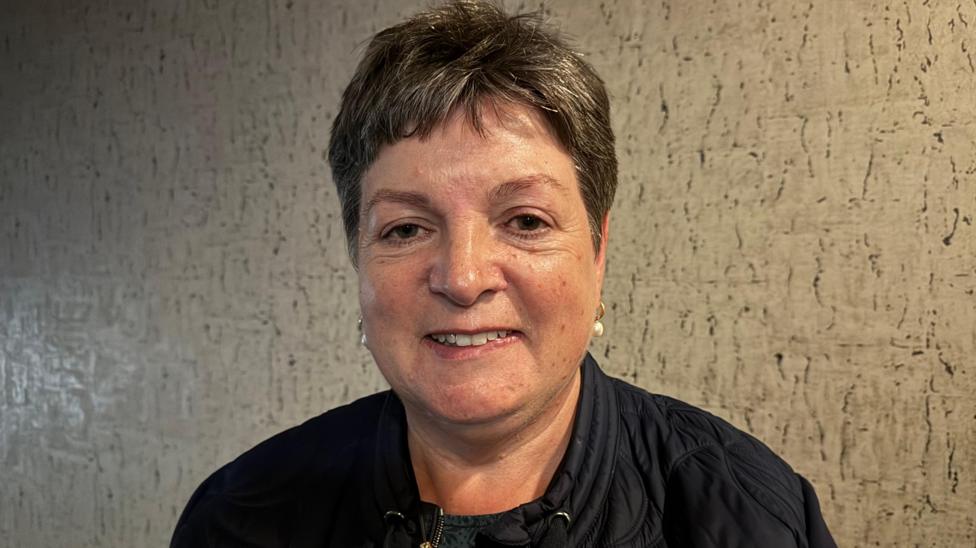
Karen Brosnan serves as the independent chair of the group overseeing the review.
Farmers who enroll in a new programme may experience fewer inspections if the proposed measures to address agricultural water pollution are implemented.
The draft Nutrient Action Programme (NAP) 2027-2030 has been released for public consultation.
The previous draft sparked demands to "scrap the NAP," with farmers criticizing it as disconnected from practical farming realities.
Under the guidance of management consultant Karen Brosnan, a task-and-finish group comprising over 70 farmers, scientists, environmentalists, and agri-food representatives examined consultation feedback and agreed on a revised document.
The NAP undergoes review every four years, and this latest edition is already overdue.
The task-and-finish group convened more than 60 times over nine months since its establishment.

John McLenaghan, president of the Ulster Farmers' Union, participated in the process.
"It wasn't straightforward. It wasn't simple - these are complex issues.
But central to it all the way through was this idea of introducing measures which would be practical at a farm level, workable at a farm level, would still maintain productivity and provide that opportunity for productivity growth sustainably, and at the same time show environmental improvement, particularly in terms of water quality, which the NAP primarily looks at.
The key thing is that we keep this workable and practically, I think that was one of the great wins from this process - everybody recognising and understanding everybody else's position better as we went through the process."
The co-design approach was described as "a little nerve-wracking" by the group's chair, Karen Brosnan.
"But we've been very fortunate that those in the room have chosen to be there and they've chosen to comply with the design and comply with the terms of reference and the charter.
So people chose to engage respectfully and to stay at the conversation until solutions were agreed.
It's a way of working that works."
New Approach for Large-Scale Producers
One of the proposed changes is the replacement of derogation with the Nutrient Stewardship Programme (NSP).
Farmers engaged in more intensive production could join the NSP and benefit from fewer inspections in exchange for compliance.
The NSP offers multiple pathways allowing farmers to fulfill their obligations while maintaining production levels.
Louise Skelly, a County Down sheep farmer and chair of the Nature Friendly Farming Network in Northern Ireland, welcomed this change.

"I think those farmers who are in the Nutrient Stewardship Programme will be really focused on making good decisions around nutrient management on their farm.
At the end of the day, nobody wants to waste good resources, so they will be well trained up on all of that.
But those people who are causing problems may well most likely be outside that programme, and we would like to see greater regulation for the few that are actually causing a problem, because that's what gets farmers a bad name.
So more inspections in that area are actually something that farmers would really welcome."
Consultation Period Begins
The consultation will last 10 weeks, concluding on 7 September.
Following the consultation, responses will be reviewed and executive approval sought to implement the revised proposals within the current Assembly mandate.
Andrew Muir, Minister for Agriculture, Environment and Rural Affairs, emphasized the importance of the revised NAP.
"The revised NAP is critical to improving water quality and creating a thriving, resilient and environmentally sustainable future for agriculture.
All measures have been carefully considered and are firmly embedded in science and evidence.
Through this process, our agricultural sector has again shown its willingness to work with environmental organisations and rise to the challenges posed by poor water quality.
I know that the majority of our farmers are already taking positive steps to manage nutrients more efficiently and to protect the environment.
However, if we are to address the issues at Lough Neagh and elsewhere, we need to tackle all sources of nutrient pollution. I will not be found wanting in terms of regulation of wastewater, but we need collective endeavour across government to deliver good water quality."
Background on the Nutrient Action Programme
The NAP was initially introduced in 2007 as the Nitrates Action Plan to comply with the EU nitrates directive.
Phosphorus regulations were introduced alongside it.
Both sets of regulations aim to reduce water pollution from agricultural sources by enforcing strict controls on the quantity, timing, and location of fertiliser and slurry application.
Due to the nature of their operations, intensive farmers were allowed to apply for derogation, permitting them to sp fertiliser than limits set for other farms.
In 2019, nitrates and phosphorus regulations were consolidated under the Nutrients Action Plan.
The NAP is intended to be reviewed every four years to ensure its measures remain relevant.
The fourth review, due in 2023, was delayed and published in 2025, generating controversy.
The farming lobby criticized the lack of prior involvement in the details before consultation and called for the NAP to be scrapped.
In response, the Minister extended the consultation and established a task-and-finish group to analyze over 3,000 responses and develop new proposals.
This process resulted in the fifth review, which is now open for consultation.
- 'Significant change' needed to tackle agri pollution
- Environmental plan is largely off track, warns watchdog
- Farmers say NI pollution proposals 'out of touch'


