
Ruwaydah shares Manchester's cafes, restaurants and date spots on TikTok and Instagram
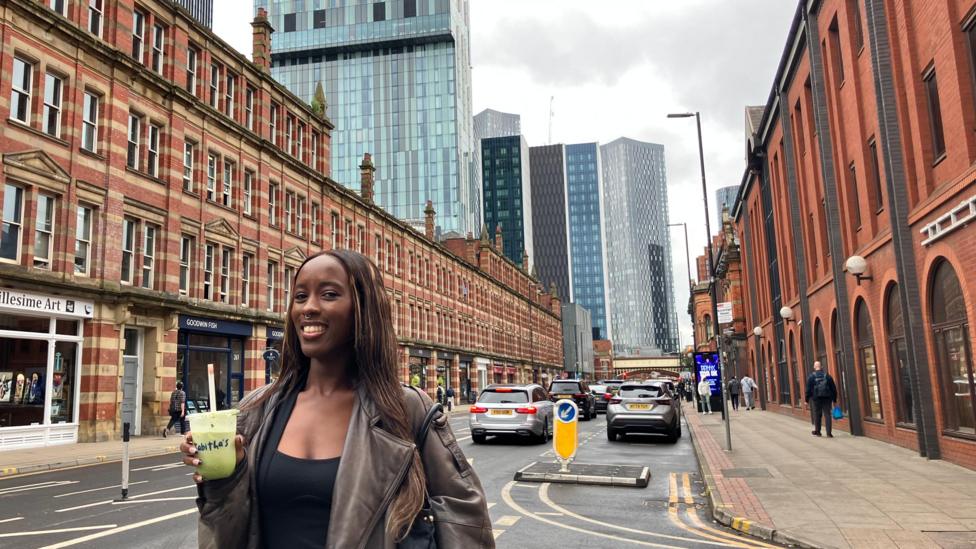
Towers of luxury apartments rise above waterside bars near Deansgate-Castlefield station. On warm sunny days, the area is bustling.
"Everyone is always there during the summer," Ruwaydah says. "It's like influencer heaven."
Ruwaydah started creating TikTok videos about her favourite Manchester locations six years ago after moving into one of the city's high-rise apartments.
The city appears to be experiencing a moment of prominence. Its economic achievements are widely recognized, its former mayor is a potential prime minister candidate, and influencers like Ruwaydah are showcasing why they consider Manchester a great place to live.
'Nothing is too far away - I walk everywhere'
Content creators such as Ruwaydah have an audience eager for recommendations ranging from food and drink to apartment advice and dance classes, reflecting Manchester's youthful and expanding population.
Ruwaydah highlights the city's compact nature as a key factor in her videos' popularity.
"I can walk everywhere in 30 minutes," the 33-year-old explains. Much of her content is filmed during her daily activities, whether meeting friends or going out with her toddler.
If she spots a cafe or bakery she likes, she samples their offerings and records a video.
Because she "never feels like anything is too far away," she is encouraged to post on TikTok frequently, contributing to her growing online audience since relocating from London.
Paul Swinney, chief economist at The Data City, attributes the abundance of businesses and shops in Manchester city centre to local leadership's revitalization efforts dating back many years.
He specifically references initiatives from the 1990s under council leader Sir Howard Bernstein aimed at transforming the city centre to attract investment and white-collar employment.
"There was a lot of investment that went into clearing out old buildings, converting them, and constructing new buildings for office space."
With improved facilities and a tram network facilitating movement, national and international companies established offices in Manchester, Swinney notes.
This influx marked the city's transition from a manufacturing economy to a service-oriented one, including finance, law, and creative sectors.
To accommodate new office workers, luxury apartment towers were constructed, alongside bars, restaurants, and cafes like those Ruwaydah features.
This article contains content provided by Instagram. We request your permission before loading any such content, as it may use cookies and other technologies. You may wish to review Meta’s Instagram cookie and privacy policies before accepting. To view this content, please select ‘accept and continue’.
One such worker is Harry, a 23-year-old from Chester who secured a graduate position at a solicitors' firm after university.
He resides in a new apartment near Piccadilly and is pursuing a legal qualification. Harry began posting TikTok videos about his revision, fitness, and nutrition routines last autumn.
He credits the presence of other content creators for helping him overcome initial hesitation about making videos.
"I always saw people recording in the gym and I was like... why are they doing that?"
'People here are just different'
Harry soon realized his judgment stemmed from his own insecurities. He created his first video in October and, with his audience growing, plans to launch a YouTube channel.
Coincidentally, his flatmate started producing similar TikTok content around the same time.
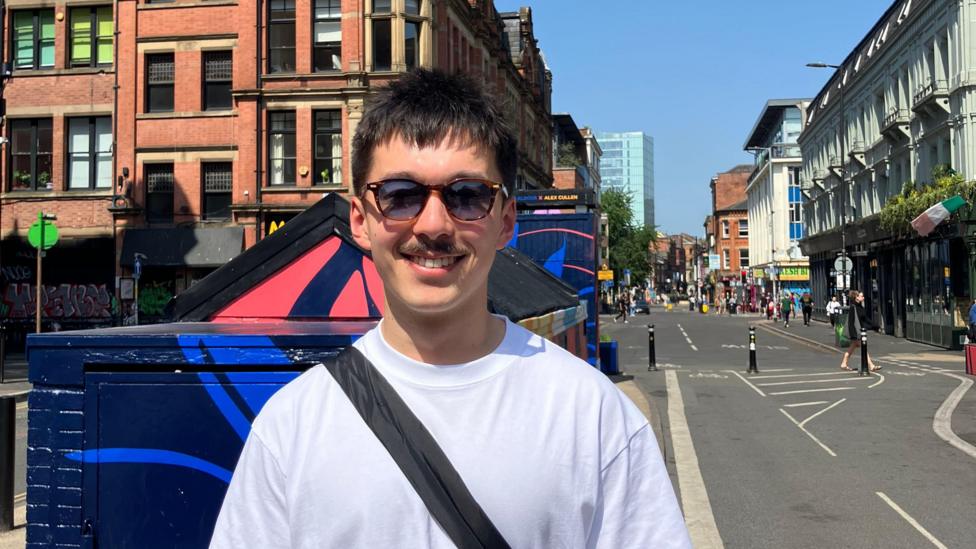
They exemplify Manchester's youthful demographic. Census data from 2021 shows the largest age group is 20-24-year-olds, which increased by 9.7% since 2011.
Approximately 70,000 students live in the city, according to council documents. A consultancy, ING, found Manchester was the joint fastest rising city in Europe last year based on online mentions.
Harry says creating social media videos has boosted his confidence, attributing this to the city's atmosphere that fosters self-assurance and disregard for others' opinions.
"It's a swagger," he says. "It's so distinctly Mancunian... people here are just different."
Andy Spinoza, author of Manchester Unspun, observed a similar sentiment after moving to Manchester as a student in the 1970s.
"There's this thing called Mancunian exceptionalism, which is 'we're the best city in the world and everyone else can do one.'"
He explains this confidence has deep historical roots dating to Manchester's rise as an economic powerhouse during the 19th-century Industrial Revolution.
Despite heavy bombing during World War Two due to its manufacturing importance, Manchester became a creative hub from the 1980s, with bands like New Order and Oasis achieving global fame.
Spinoza states this exceptionalism was central to the city's creative revival 40 years ago, making it an exciting place well before the recent influx of workers and content creators.
"I call it a social experiment of, mainly young, people living in the sky," he says.
Sufia, who moved from New Zealand three years ago, is one such resident.
She quit her job when her dance classes, which she posts about on TikTok, gained popularity.
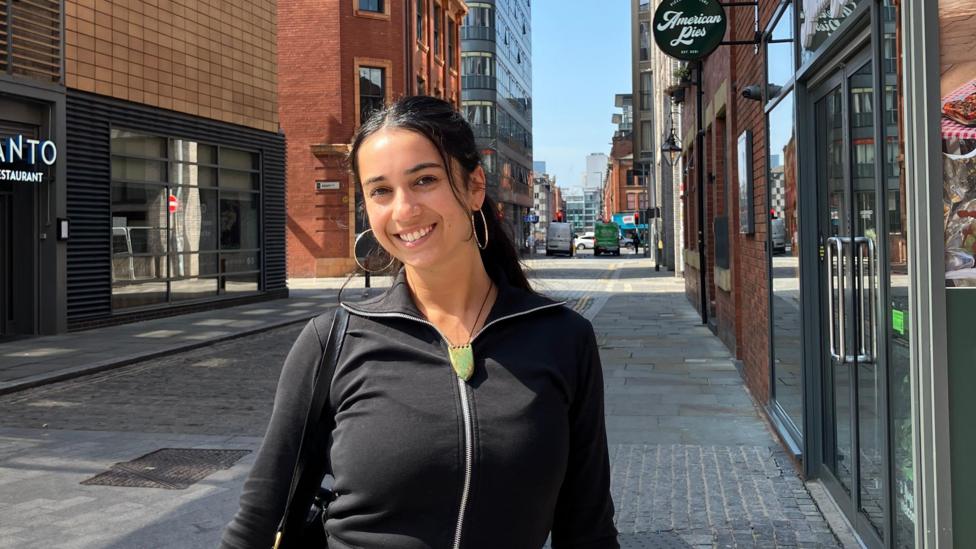
The 25-year-old initially planned a temporary stay in Manchester, using it as a base to travel Europe and beyond.
However, her TikTok dance videos quickly turned a hobby into a business.
"We've been sold out for seven months," she says. Her classes accommodate various skill levels and can have up to 40 attendees.
She praises the friendliness of Northerners and the welcoming atmosphere.
"Northerners are so friendly," Sufia says over matcha in a cafe near her Ancoats apartment. "I've felt so welcomed."
Her success led her to leave her full-time marketing role in February to focus exclusively on her dance business.
High-rise buildings in areas like Ancoats, which suffered significant deprivation post-war, illustrate Manchester's redevelopment. However, Swinney cautions that the city's economic "growth miracle" may be overstated by official data.
"There hasn't been this huge explosion of [economic] productivity," he says.
He notes that median wages in Greater Manchester have only risen 1% since 2019 when adjusted for inflation.
Concerns exist regarding the safety of some high-rise apartments, with some requiring repairs. In April, a developer faced court action for using taxpayer funds for remedial works.
Outside the city centre, Swinney believes council policies could foster economic growth in surrounding areas.
He cites transport as an example, noting Greater Manchester was the first area outside London to regain local control of its bus network since deregulation in the 1980s.
'The tram is so good that I sold my car'
The buses operate within the Bee Network alongside trams and bicycles, connecting Manchester city centre with nearby areas such as Salford, Bury, and Rochdale.
However, trains are not fully integrated into the Bee Network and face criticism for inadequacy. Some tram routes are considered slow, and the £2 bus fare cap raises financial sustainability concerns.
Lamar, 29, lives in a new apartment in Trafford, a borough southwest of the city centre.
Lamar creates TikTok videos about personal finance and investing when not working or studying.
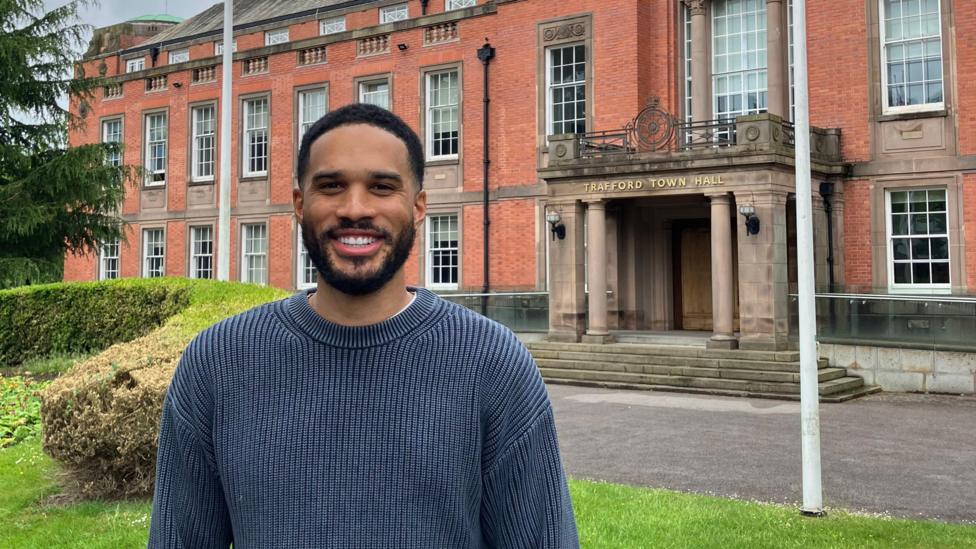
He relocated from Milton Keynes three years ago and works at an IT firm near Deansgate.
"I leave my house and I'm in the office in about 30 minutes," he says.
Lamar sold his car shortly after moving due to the quality of public transport, with four tram stops within a 15-minute walk.
He is pursuing an Open University economics degree and began posting TikTok videos about 18 months ago.
Like other creators, Lamar feels Manchester's environment encourages creativity.
During his job interview, the hiring manager complimented his TikTok videos despite them not being on his CV.
"That was quite cool," he remarks.
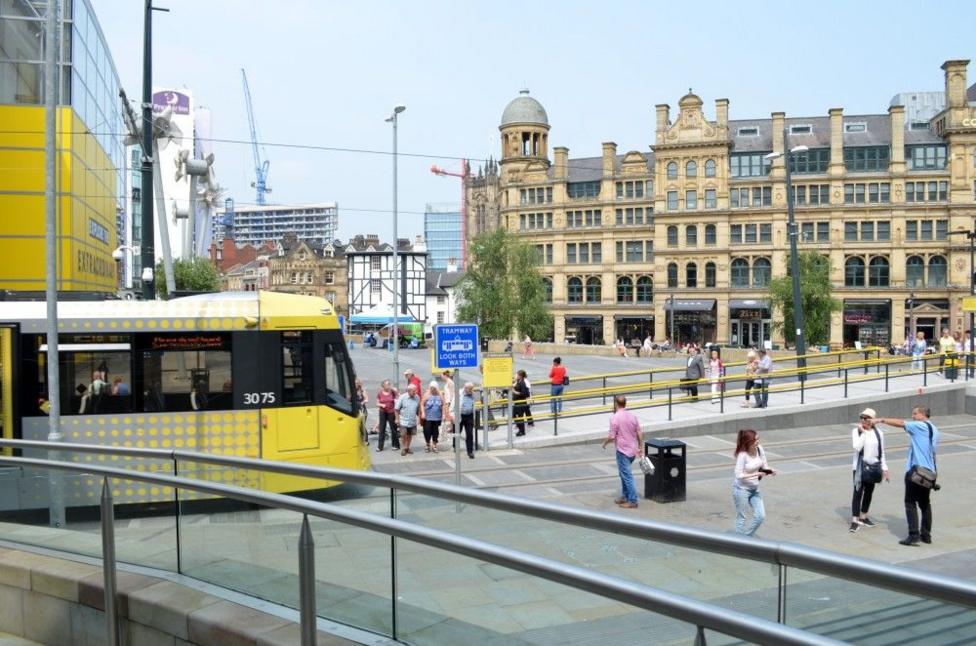
Greater Manchester is unique outside London in having similar powers to manage transport.
As we parted outside Trafford town hall, a student recognized Lamar and credited his videos for inspiring him to start saving into an ISA two months prior. They took a photo together.
Lamar laughs at the suggestion he is TikTok's equivalent of Martin Lewis.
"I swear this has only happened to me once before."
Ruwaydah's TikTok success led her to establish a social events business, which she intends to expand next year.
During our coffee meeting—she chose a vanilla mascarpone matcha in Deansgate—she explained:
"This has all started from Manchester. The vibe of Manchester is everything. And I think you need to be here and experience it to get that."


