

Introduction
This series is not merely a retelling of the notorious drug lord Pablo Escobar’s life. Instead, it presents his son’s traumatic coming-of-age story, marked by chaos and violence, evoking a tone reminiscent of The Sopranos.
You might assume that another TV series about Pablo Escobar is unnecessary, given how extensively his life has been portrayed in popular culture. Escobar’s ruthless Medellín cartel dominated the 1980s and 90s, and in this century alone, his biography has inspired numerous books, Hollywood films, the Netflix series Narcos, and even Kanye West’s 2016 album Life of Pablo. However, the new Spanish-language series Dear Killer Nannies offers a fresh and unexpected perspective on this archetypal villain’s life, focusing minimally on the violence that typically defines his story. Co-created by Escobar’s son Juan Pablo Escobar, the show leans more towards a coming-of-age drama than an action series.
Perspective and Plot
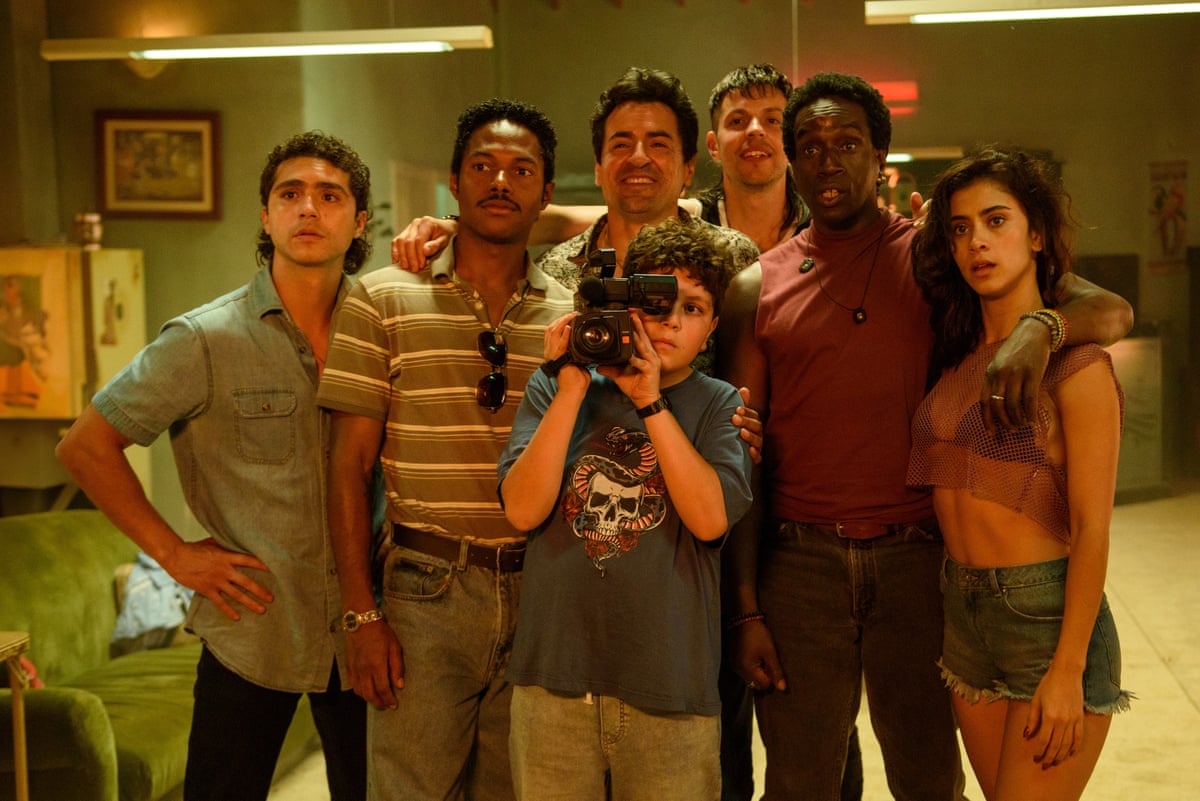
Rather than tracing Escobar’s rise, fall, and death during a shootout with Colombian special forces, the narrative centers on seven-year-old Juan Pablo, also known as “Juampi.” Juampi is portrayed as sweet, sensitive, and tender, embodying the innocence typical of most boys before encountering the harsh realities of patriarchy. The series opens with Juampi’s head bobbing above a lake’s surface, smiling and enjoying the sun, when a speedboat suddenly approaches, causing him to panic. The boat narrowly avoids him at the last moment. This introduces Juampi’s “nannies,” associates of his father who double as childcare providers while Escobar is abroad managing cartel affairs. The premise raises immediate questions about the potential dangers of such an arrangement.
Thematic Elements and Emotional Impact
The challenges Juampi faces are, in some respects, predictable: exposure to murder, violence, sex, and widespread drug use, alongside difficulty connecting with peers his own age. While these elements could be perceived as mere shock tactics—such as the scene where Juampi gains entry to a nightclub and is offered a dance by a topless woman—the series prioritizes exploring the emotional consequences of these experiences on Juampi’s development. This focus on the psychological effects of chaos and violence echoes themes familiar from other acclaimed dramas.
For example, the climax of the first episode depicts Juampi inadvertently witnessing a violent act against a cartel enemy, an event traumatizing even for seasoned adults, let alone a seven-year-old. While this incident establishes the gravity of Juampi’s environment, the series continues to reveal how such moments haunt him through flashbacks, nightmares, and bedwetting. These experiences contribute to Juampi’s emotional hardening over time. Concurrently, the series chronicles another profound tragedy through Juampi’s perspective: the painful realization that his father is not the heroic figure he once believed, but rather responsible for thousands of murders. The narration, voiced by Juan Pablo himself, adds depth and intimacy, resembling a therapeutic reflection.

Relatable Themes and Character Development
Many themes resonate beyond Juampi’s extreme circumstances, touching on universal experiences related to families marked by violence and trauma. Early in the series, Juampi is told:
“Future is a word that doesn’t mean a thing for people like us … people like us can only move forward day to day to day.”
He is also warned not to trust anyone outside the family and is burdened with the responsibility of being the “man of the house” when his parents are away on business, despite being only seven years old. While Juampi’s situation is extraordinary, his story reflects a broader narrative of forced maturity and loss of innocence.
Production Quality and Performances
Dear Killer Nannies is notable not only for its emotional depth but also for its technical execution. The transitions between Juampi’s childhood, adolescence, and occasional glimpses of adulthood are seamless, suggesting the foundation for a larger narrative arc. Moments of surprise and misdirection are used sparingly but effectively. The performances, especially by child actor Miguel Tamayo, complement the intelligent script, making it easy for viewers to become engrossed in the series’ concise half-hour episodes.
Conclusion
Although it might seem redundant to produce another show about the violence defining Escobar’s life, Dear Killer Nannies shifts the focus to Juampi, a child caught in the crossfire. More importantly, it offers an emotionally insightful exploration of adultification, loss of innocence, masculinity, and trauma—experiences that many viewers may recognize in their own lives. While the series includes expected elements such as car crashes and shootouts, its most profound impacts are quieter and devoid of bloodshed.
Dear Killer Nannies is currently available on Disney+.


