
Celebrating Ned Thomas's 90th Birthday and Reflecting on Y Byd
Ned Thomas, the author, editor, and former journalist, recently celebrated his 90th birthday. He reflected on the unrealized potential of the proposed Welsh daily newspaper, Y Byd, which he was involved with.
According to Thomas, Wales would "undoubtedly have benefited" if the plans to establish Y Byd had been realized. In a special interview with Cymru Fyw, he stated that Y Byd would have ensured that "journalists scrutinized institutions," addressing what he perceived as a lack of such oversight.
The newspaper's funding depended on government support at the time, and when the necessary amount was not provided, the project had no choice but to be terminated.
The minister from that period told Cymru Fyw that the initiative "was not going to work," but for Mr. Thomas, the "disappointment remains vivid in memory."
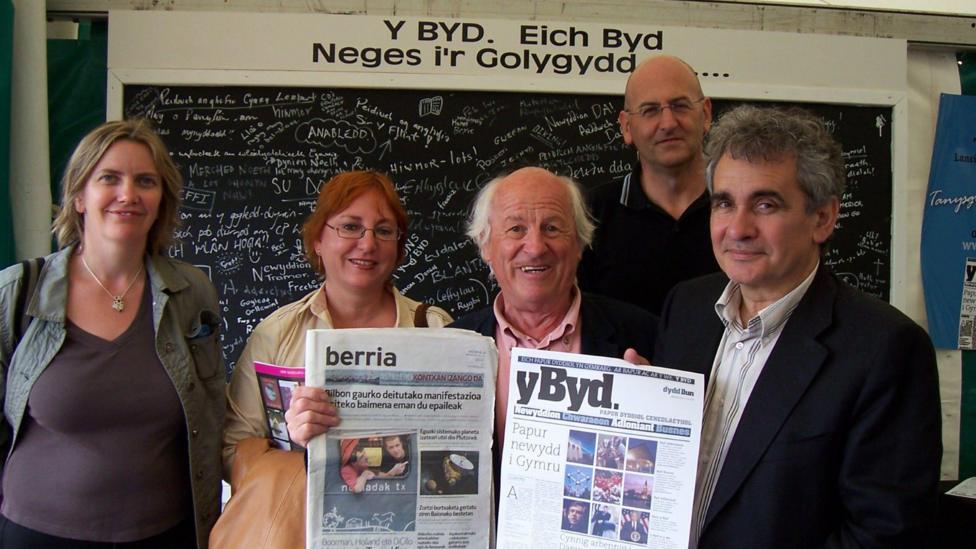
"With the advent of devolution, Wales needed what a daily newspaper offers,"said Mr. Thomas, who had previously worked as a journalist for The Times and other newspapers.
"The Assembly needed that, and the Assembly government, whichever party was in power."
As an author, former director of the University of Wales Press, and founder of the Mercator Centre specializing in minority languages, he also noted that "another reasonable motivation to establish a daily newspaper was seeing successful papers in countries like the Basque Country."
In 2008, the dream ended after Rhodri Glyn Thomas, then heritage minister in the Labour-Plaid Cymru coalition government, announced that an additional £200,000 was available for the Welsh press, but companies would have to compete for the funds.
Some had expected £600,000 to be available.
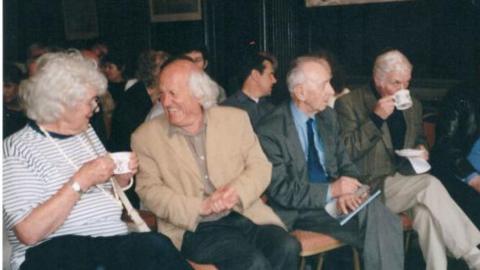
Having the support of Jan Morris and John Roberts Williams at a Friends and Shareholders meeting of Y Byd in Portmeirion in 2004 was a "key moment" for Ned Thomas.
"The disappointment remains vivid in memory after we established the initial team – people with extensive experience.
We had also spent eight hard years gathering sponsorship, funds, and shareholders – and many kind people had donated artwork and so on on occasions.
We had support from every party. That was very important, of course, and the ironic thing is that it was the devolved government – and specifically a Plaid Cymru minister – that ended the dream.
I am absolutely convinced that if Labour alone had been in power, Wales would have had a daily newspaper. Labour was the last to declare their support, but Mark Drakeford, who was working for Rhodri Morgan at the time, came to see me and said Labour was in favor of a Welsh daily newspaper.
As I have said before, I think issues like funding the Botanical Gardens were more important to the heritage minister at the end of the day. Who knows?"
Plaid Cymru declined to comment on the matter.
Denial of 'Dream Shattered'
In response this week, Rhodri Glyn Thomas denied the above claims entirely.
"The Botanical Gardens funding would have come from a different budget – it had nothing to do with me and would have been approved by the business minister and Ieuan Wyn Jones.
The truth is that Y Byd was not going to work. Two of the main investors told me it was not sustainable, and although a survey chaired by Tony Bianchi showed support for a daily paper, there was not enough evidence that the paper would succeed.
If I had given money to Y Byd, the truth is the paper would have ended – and as a result, the magazines Barn and Golwg would also have ended because they would not have received sufficient funding.
There was no promise at all."
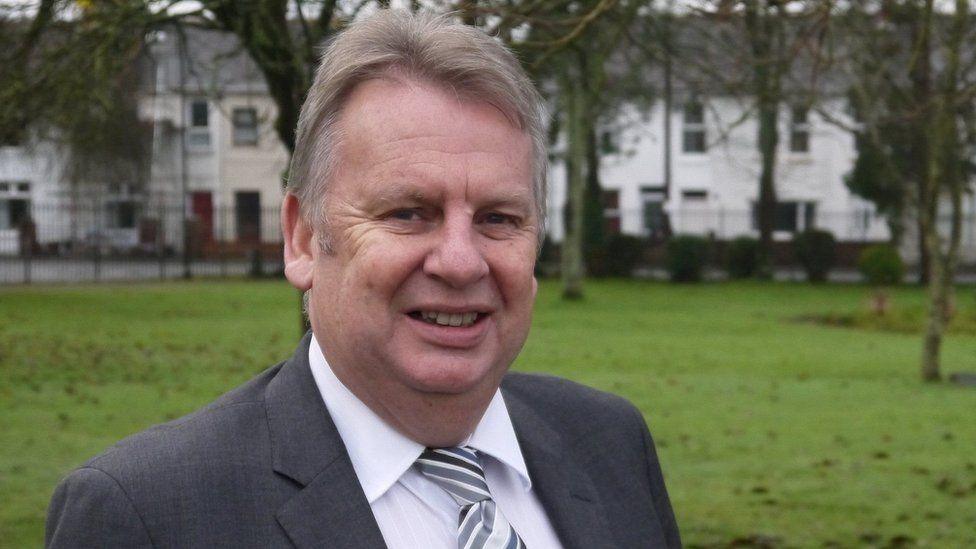
Rhodri Glyn Thomas said the futures of Golwg and Barn would have been at risk if the government had funded Y Byd.
Today, Ned Thomas believes Y Byd would be an online paper, as newspapers shrink due to lack of funding and advertising.
"Y Byd would have been a paper containing original journalism – not slavish translations from English.
We would have ensured journalists had time to hold our main institutions to account – that watchdog work is so important for democracy."
Raised in Germany, England, and Switzerland, Ned Thomas was a prominent journalist in Spain, Moscow, and London and says having the opportunity to write in English about Wales was extremely important.
In 1969, the family moved to Wales – to Llwynpiod near Tregaron – and after some wandering, he felt at that time that Wales was where he truly belonged, having heard children speaking Welsh while playing in the fields.
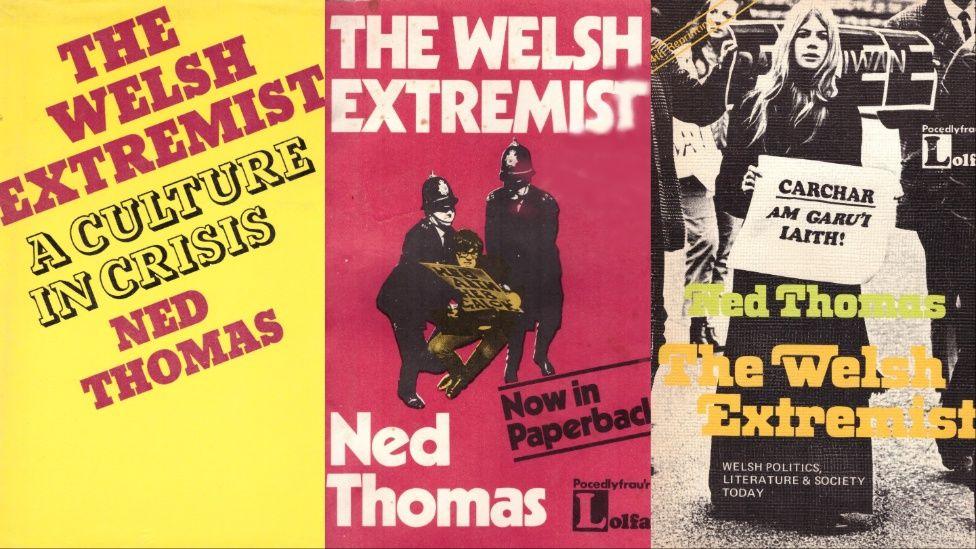
This was the period of establishing Planet and writing The Welsh Extremist – a Culture in Crisis published by Gollancz (and later Lolfa) – a volume widely reviewed in major London newspapers.
"I was very fortunate with my connections in the London press.
There was a very favorable review by Caradog Prichard in the Daily Telegraph. Goronwy Rees published my chapter on Gwenallt in Encounter, and the most influential was Raymond Williams's review in under the headline 'Who Speaks for Wales?'
I received dozens of letters – many very emotional. Some recalled their childhood in Wales, others justified parents who had not passed on Welsh to them.
As for Planet, the magazine was a means to give a voice to Welsh people in English – a voice that would not have been heard otherwise."
It was very important to highlight Gwynfor Evans's campaign (seen here with his wife, Rhiannon, in 1980) for a Welsh channel in the English-language media, said Ned Thomas.
At the end of 1979, as part of the fight for a Welsh-language television channel, Ned Thomas was one of three who switched off the Pencarreg TV transmitter – the others were Pennar Davies and Meredydd Evans.
He says his leading journalistic connections were again very helpful in spreading the cause of those passionate about the channel.
"I was fortunate to be able to write quite a bit in the New Society and the Listener magazines. Harri Pritchard Jones and I had also arranged to give attention to Gwynfor's campaign in the international press, but I think my main achievement was getting Geoffrey Smith of The Times to write a supportive article."
Local Papers: Balancing Digital and Print
As Ned Thomas looks back on his full and colorful career, there is much more to say about his achievements – including the Academy Dictionary during his time as Director of the University of Wales Press, teaching students about Anglo-Welsh literature while lecturing at Aberystwyth University, and promoting Welsh literature abroad through programs such as Literature Across Borders.
What remains crucial throughout our conversation is the desire to discover the truth and journalists' duty to do so.
"What I do every morning these days," he said, "is read local papers from Russia and Ukraine. That's where you get the truth about what's happening without propaganda.
Deep journalism and promoting Wales beyond the country's borders is absolutely essential."
Follow Cymru Fyw on Facebook, X, Instagram, or TikTok.
Send any story ideas to cymrufyw@bbc.co.uk or contact via WhatsApp on 07709850033.
for the latest from Wales on your mobile device.


