

Wooden Platform Found Beneath Neolithic Island
Archaeologists have uncovered that an ancient artificial island located in a loch on the Isle of Lewis was constructed entirely upon a wooden platform. The Neolithic island, known as a crannog, situated in Loch Bhorgastail, appears from above to be composed of stone, although it was previously understood that timber existed beneath the surface.
Researchers from the University of Southampton conducted an excavation and have now confirmed that wood was used to support the entire structure. The team dated their discoveries to between 3500 and 3300 BC, corresponding to the early Bronze Age, and indicated that this construction technique was likely employed at other nearby sites throughout the Outer Hebrides.
"When we actually started excavating is when we realised that it was actually this coherent, quite large timber structure that was under what you would see as the stone island today.
While we still don't know exactly why these islands were built, the resources and labour required to construct them suggests not only complex communities capable of such feats, but also the great significance of these sites."
— Dr Stephanie Blankshein, University of Southampton archaeologist
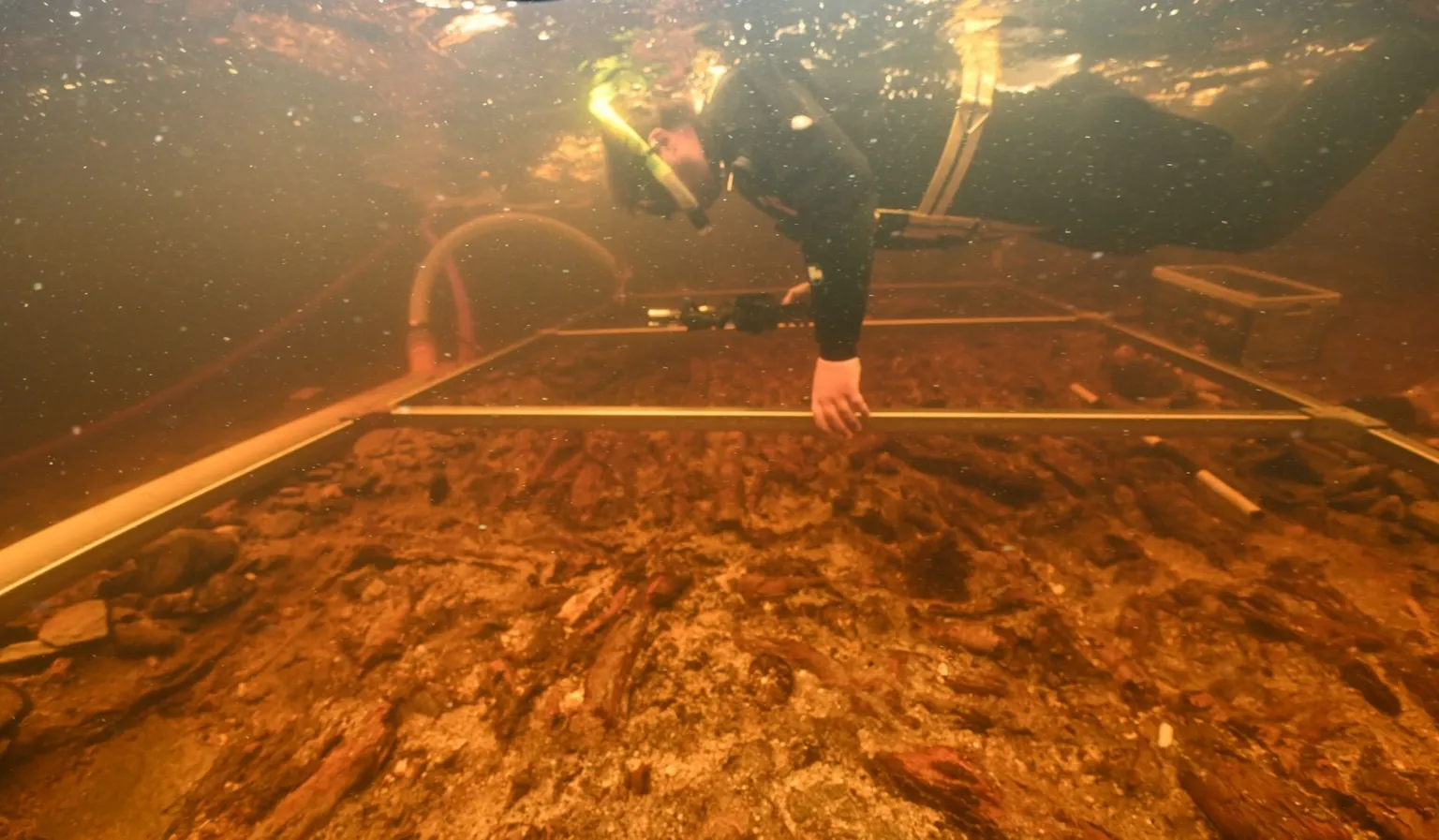
Findings and Artifacts
In addition to the layered wood and brushwood construction beneath the stone, archaeologists recovered hundreds of fragments of Neolithic pottery from the surrounding water.
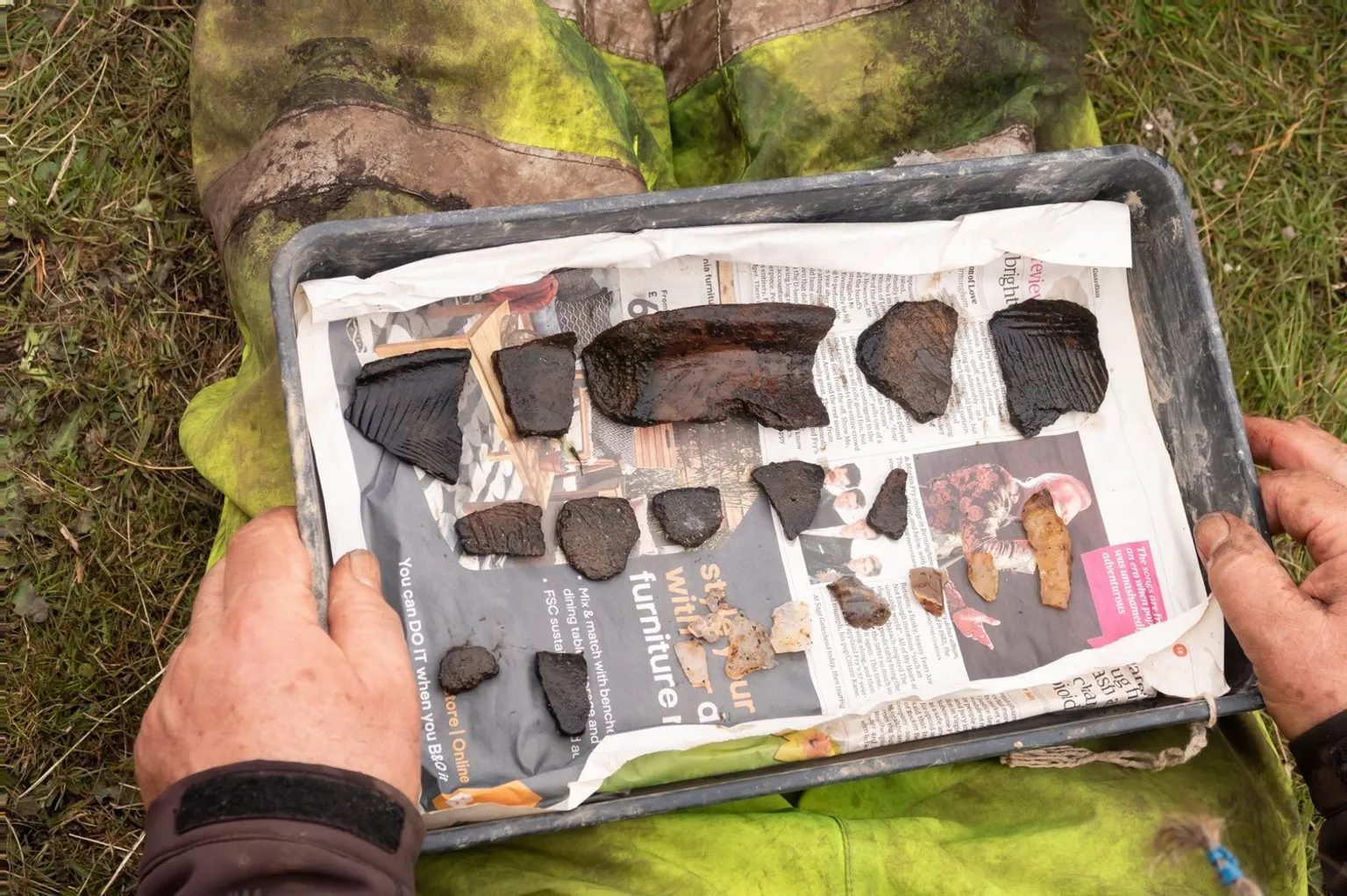
Crannogs are small artificial islands, typically thousands of years old, with hundreds found in Scotland's lochs. The site in Loch Bhorgastail was initially discovered in 2009. Since 2021, fieldwork has revealed the various stages of the crannog's development.

The researchers determined that the crannog was first established over 5,000 years ago, beginning as a circular wooden platform approximately 23 meters (75 feet) in diameter, topped with brushwood. Around 2,000 years later, during the Middle Bronze Age, an additional layer of brushwood and stone was added. Further activity occurred approximately 1,000 years later during the Iron Age.
A stone causeway, now submerged underwater, connects the loch shore to the island.
Innovative Imaging Techniques
As part of their fieldwork, the researchers employed photogrammetry to create images depicting the island both above and below the waterline. Photogrammetry involves capturing photographs of a subject from multiple angles and then using specialized software to "stitch" these images together, producing a high-resolution digital model.
Conducting photogrammetry in shallow water, such as around the crannog, presents challenges. To address this, the archaeologists developed a novel technique during their fieldwork. They utilized two small waterproof cameras equipped with low-light performance and a wide field of view. These cameras were fixed at a set distance apart on a frame, ensuring precise overlapping of imagery to compensate for any missing or disrupted data.
The cameras were maneuvered underwater by a diver, with positioning controlled to centimetre accuracy, a precision comparable to that achieved by aerial drones. This technique is detailed in a recently published article in the journal Advances in Archaeological Practice. The imaging was conducted in collaboration with experts from the University of Reading.


