

Record-Breaking Sale of Tyrannosaurus rex Fossil
A 67 million-year-old Tyrannosaurus rex fossil has been sold for £37.4 million ($50.1 million) at a Sotheby's auction held in New York, marking the highest price ever paid for a dinosaur specimen.
This fossilized predator stands over 12 feet (4 meters) tall and is considered one of the most complete specimens ever discovered, with more than 60% of its bones recovered, according to Sotheby's.
The identity of the winning bidder from the Tuesday sale has not yet been disclosed.
Discovery and Significance of 'Gus'
Nicknamed Gus, the T. rex was found in 2021 on a remote ranch located in the U.S. state of South Dakota.
"It's really incredible to see and to have the level of public interest,"said Cassandra Hatton, Sotheby's worldwide head of science and natural history.
"I think anytime you've got this, it is good for science. In general, more people are going to go to the museums, it adds dinosaurs and natural history into the conversation."
The sale surpassed the previous record held by a stegosaurus fossil sold in 2024 and is the first dinosaur fossil sale to exceed the $50 million mark.
Scientific and Market Implications
Some scientists have suggested to the BBC that this auction could signal a new era in fossil collecting dominated by ultra-wealthy individuals.

The skull of Gus reveals evidence of a perilous life.
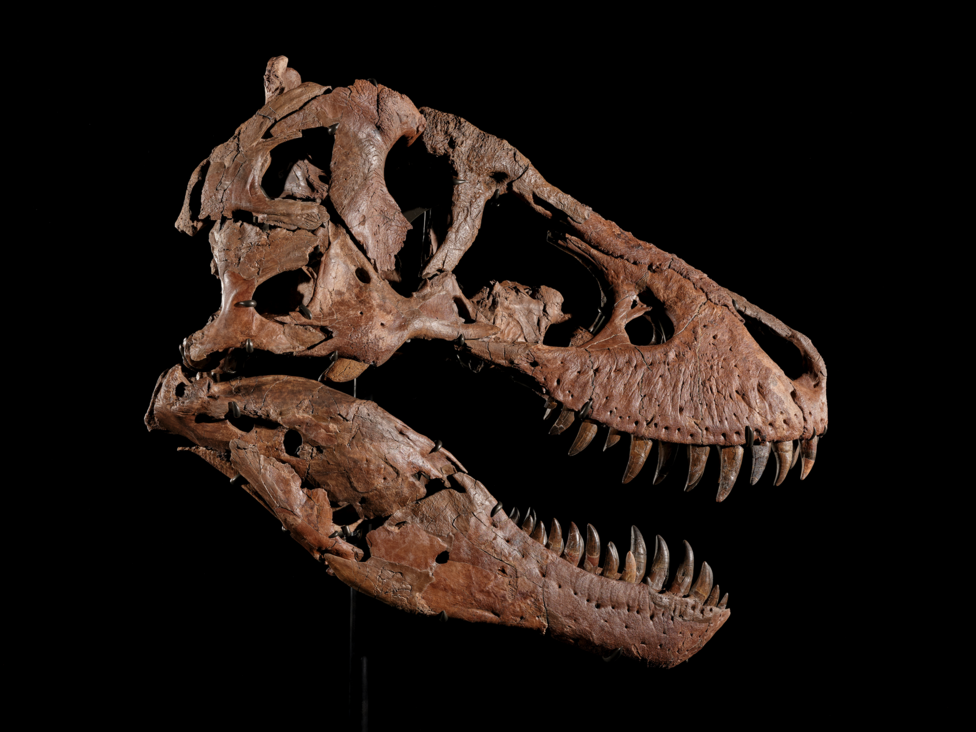
Hatton explained that the high price reflects the extensive time and resources invested in excavating and preparing the specimen.
The bones were excavated over three consecutive summers, from 2021 to 2023, during periods when the ground was thawed enough for digging.
Following excavation, it took an additional three years in the laboratory to reconstruct the T. rex fossil.
This detailed work uncovered bite marks on the skull and ribs that had healed from previous breaks, indicating injuries sustained during the dinosaur's lifetime.
These injuries may have occurred during scavenging activities or conflicts with other dinosaurs.
Future Display Prospects
While the buyer remains anonymous for now, there is precedent for such fossils being loaned to public institutions. For example, Apex, the stegosaurus that previously held the record, was loaned for four years to the American Museum of Natural History by its billionaire owner Kenneth Griffin.
This suggests that even if Gus has been acquired by an ultra-wealthy individual, it may still be exhibited in a museum accessible to the public in the near future.


