

Investor Sentiment Shifts After SpaceX IPO
SpaceX investors have experienced a shift from initial enthusiasm to growing concern during the company's first month as a publicly traded entity.
When shares of the company, co-founded and led by Elon Musk, became available to individual investors on 12 June, there was significant demand.
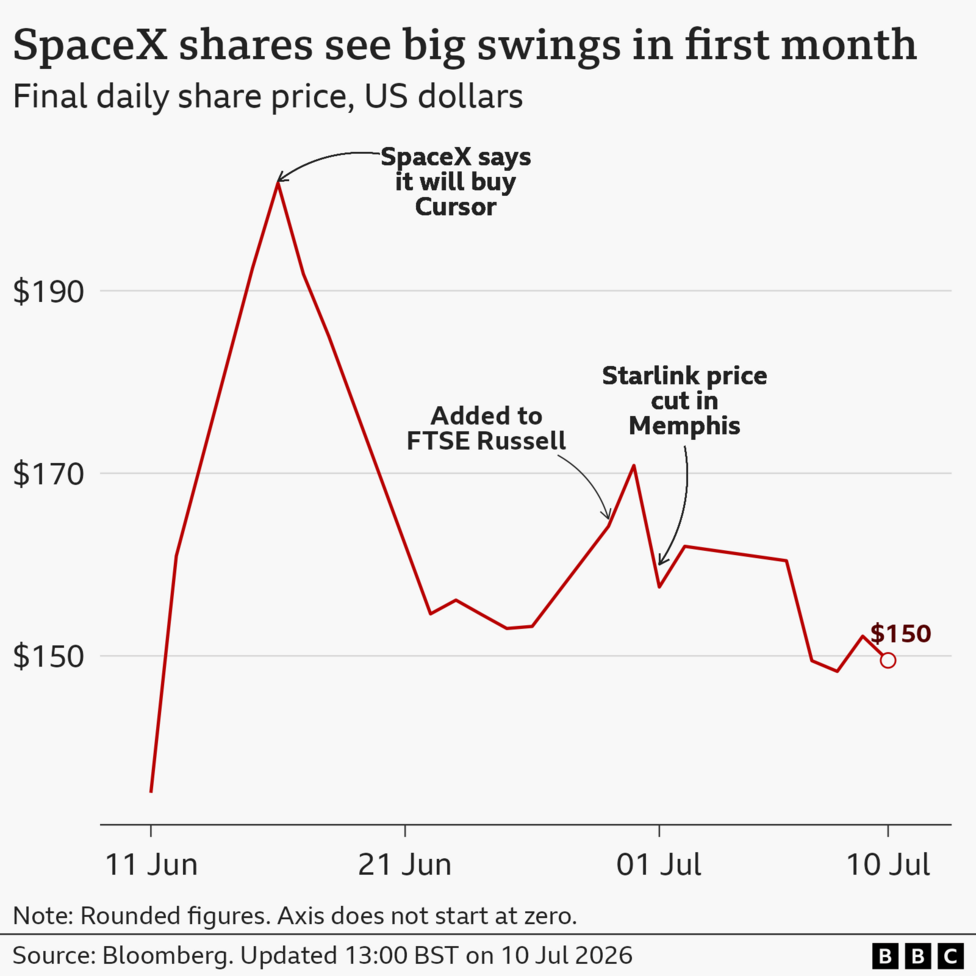
Although SpaceX set its initial share price at $135, the stock price surged to $150 on the first day, reached an intraday high of $176, and closed at $160.95.
This performance established SpaceX as the largest initial public offering (IPO) in history.
In the following week, shares climbed further, hitting an intraday peak of $225, which elevated SpaceX's market value above that of Amazon and Microsoft.
"With Elon Musk, any company he touches gets people excited," said Keith Snyder, analyst at investment research firm CFRA. "But this was also the first time people felt like they were able to invest in something that was being marketed as an AI play."
Willy Lee, an investor at Neosteller, which facilitates individual investments in private companies, agreed that the IPO excitement was largely driven by artificial intelligence (AI) prospects. "Everyone saw SpaceX as an AI story," he stated.
Earlier this year, SpaceX acquired Musk's AI startup xAI, recently renamed SpaceXAI, known externally for the chatbot Grok, which has attracted some controversy. Additionally, SpaceX began leasing data center capacity to other technology firms.
However, SpaceX's primary business remains the manufacture and launch of rockets and the deployment of telecommunications satellites under the Starlink brand. When Starlink announced price reductions in the Memphis, Tennessee area amid local concerns about a large data center project, SpaceX shares declined by 8% on that day.
As investors have gained a clearer understanding of SpaceX's current revenue sources, the stock price has begun to decline.
Despite a turbulent period for technology stocks overall, SpaceX has experienced a particularly notable downturn.
For example, when SpaceX was added to the Nasdaq100 index on 7 July, the index closed down 1.7%, while SpaceX shares fell by 4.4%. An earlier inclusion in the FTSE Russell index had provided a modest boost to the shares.
SpaceX did not respond to requests for comment.
At the conclusion of its first month of trading, SpaceX shares were priced around $145 each, representing a decline of approximately 18% from the initial day's high and 35% below the peak share price to date.
'Definitely Underwater'
This price decline implies that retail investors who purchased SpaceX shares during the initial five days of trading are currently facing potential losses.
"If you bought around the first tick you're definitely underwater," said Snyder.
"It started to look a lot like a meme stock," Snyder added, referencing cases such as GameStop and, more recently, Wendy's, where retail investor enthusiasm and online discussion drove stock prices higher without fundamental support.
Snyder anticipates that SpaceX shares could fall further, potentially to around $115 per share, based on the company's business performance. This valuation would place the company at approximately $1.5 trillion.
Elon Musk's stratospheric rise to trillionaire status - in charts

SpaceX's stock market blast-off could be Musk's biggest gamble yet
Samuel Kerr, head of equity capital markets analysis at Mergermarket, noted that the recent share price volatility has affected investors differently.
"If you're an IPO investor, you're ok," Kerr explained, referring to those who purchased shares at the IPO price of $135 or were insiders holding pre-IPO equity.
"If you bought in the first few days, you're not very happy right now," he added.
Elon Musk's Outlook and Strategic Moves
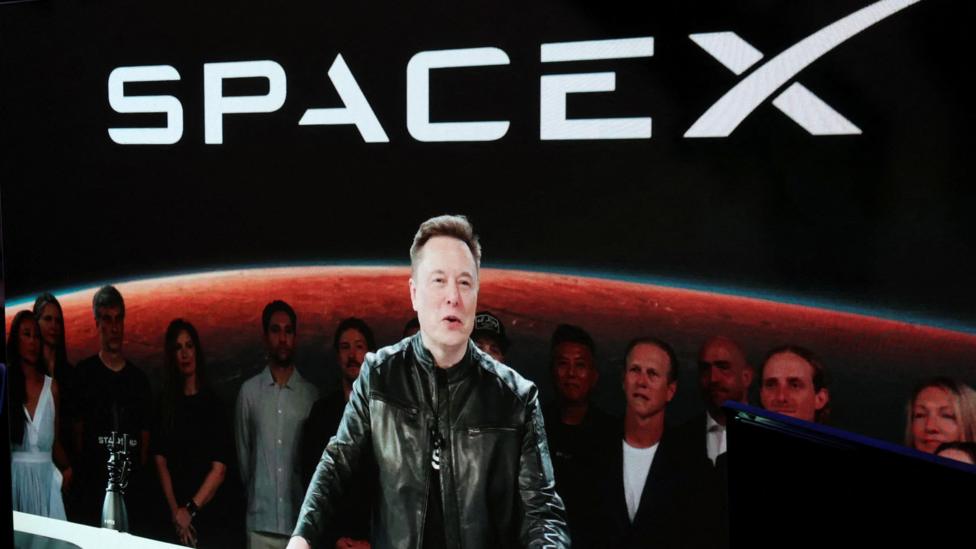
Despite the share price fluctuations, Elon Musk has expressed strong confidence in SpaceX's business prospects.
Following the company's public listing, which made him the world's first trillionaire, Musk projected that SpaceX would generate $1 trillion in annual revenue by 2030.
Musk has also demonstrated a willingness to utilize SpaceX shares and their volatility strategically.
For instance, when the share price surged on 16 June, SpaceX announced an all-stock acquisition of Cursor, a startup that developed an AI bot for writing computer code, in a deal valued at $60 billion.
By timing the acquisition during the stock price peak, Musk effectively acquired Cursor without cash expenditure, capitalizing on the elevated share value.
"It showed a level of market sophistication that almost no other issuer has," Kerr commented regarding the Cursor acquisition.
Since that announcement, SpaceX shares have declined.
Focus on Upcoming Earnings
Morgan Stanley, a lead underwriter of the SpaceX IPO, views the recent share price decline as temporary.
Last week, Morgan Stanley initiated coverage of SpaceX with a target share price of $300, representing a 33% increase over the company's highest trading price to date.
Currently, SpaceX operates at a loss and reported $18 billion in revenue last year, according to financial disclosures required for the public listing.
Musk's forecast of $1 trillion in revenue by 2030 would represent an increase of approximately 55 times the current revenue.
Market anticipation is growing for SpaceX's first public earnings report, which has not yet been scheduled but is expected in early August.
This earnings release will likely coincide with the conclusion of the "lock-up" period, during which SpaceX employees have been restricted from selling shares received as compensation. After this period, additional shares may enter the market.
The combination of increased share availability and a detailed disclosure of SpaceX's business operations and growth prospects could result in further significant price volatility.
"If SpaceX can do all the things it says it will do, yes, investors are sitting on the most valuable company ever," Kerr said.
"But it's got a lot of work to do to get there."


