

Mary Porter's First Aldi Experience in Manhattan
Mary Porter visited Aldi's new Manhattan store in New York City for the first time, seeking bargains. The longtime resident was impressed by a $4 jar of almond butter, which costs $22 in her neighborhood.
"Aldi has the reputation for being inexpensive, so I thought I would come and check it out, and by golly, it is amazing," Porter, 79, told the BBC, marveling at the savings alongside fresh spinach and organic raspberries in her basket.
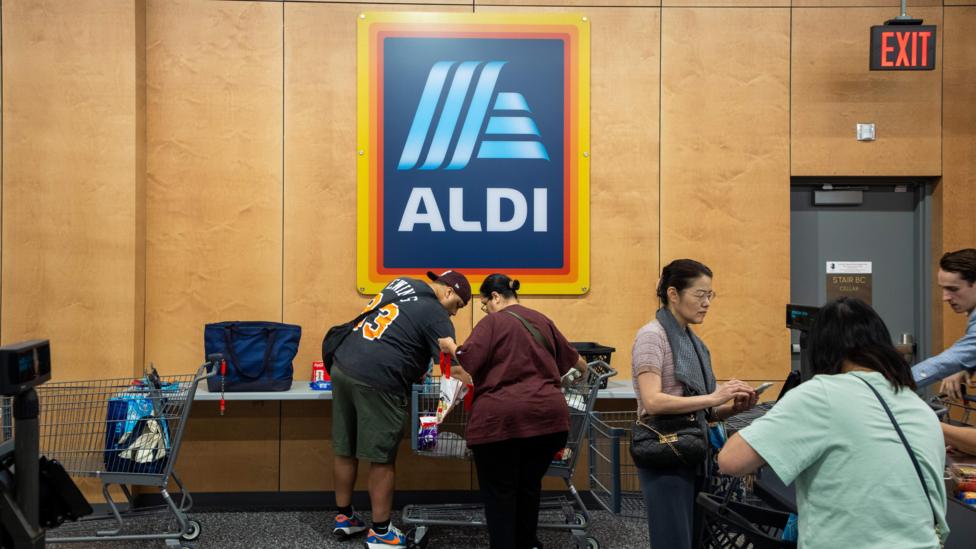
The store's entrance is discreetly located in an underground parking lot beneath The Ellery, a luxury apartment complex with rents starting near $5,000 (£3,725) per month.
Interestingly, the building's website excludes Aldi from its curated neighborhood guide, instead promoting more expensive nearby grocers like Whole Foods and Brooklyn Fare.
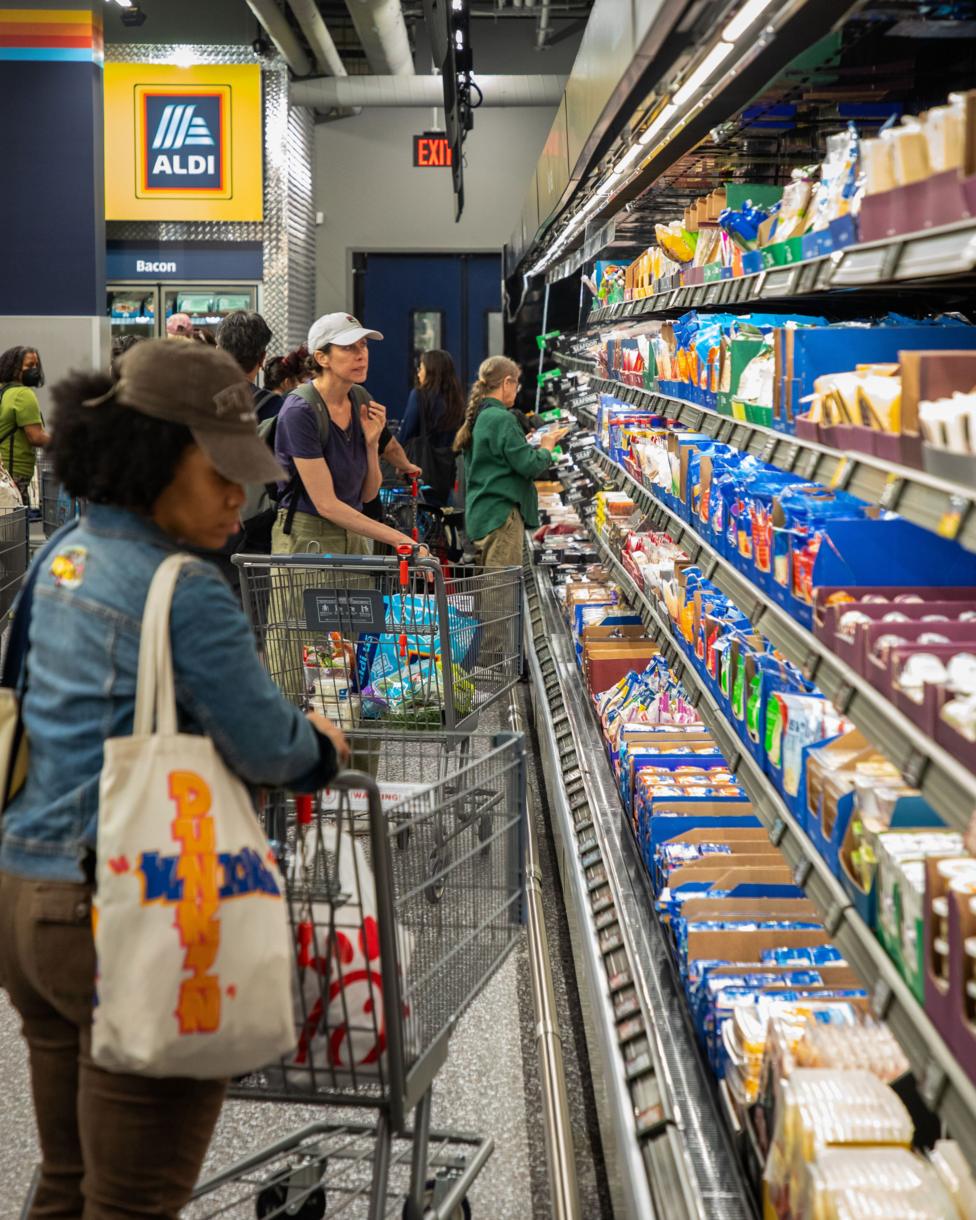
Inside the basement location, the atmosphere is lively. Even on a Tuesday afternoon in July, the brightly lit store is bustling with New Yorkers navigating narrow aisles carrying large canvas bags.
Aldi's $9 Billion US Expansion Strategy
Porter's discovery reflects Aldi's $9 billion plan to open 800 new stores across the US over five years, focusing on dense urban areas such as Manhattan. This represents a significant expansion for the German discount retailer, which entered the US market in 1976 and now operates nearly 2,800 stores nationwide.
The aggressive real estate push marks a strategic shift for Aldi, traditionally known for suburban strip mall locations and catering to lower-income consumers.
Competition and Market Positioning
US grocery incumbents may view Aldi's expansion with concern, recalling the brand's disruptive entry into the UK market in the 1990s.
Alongside German rival Lidl, Aldi captured significant market share by offering discount prices on high-quality products. The established "big four" UK grocers—Tesco, Sainsbury's, Asda, and Morrisons—were slow to respond, allowing Aldi and Lidl to attract their customers.
Today, Aldi ranks as the UK's fourth-largest grocer with a 10.8% market share.
Its rapid growth continues across Europe, aided by changing perceptions of Aldi from a strict discount retailer to a provider of quality products. The cost-of-living crisis in the 2020s further accelerated this trend.
In the US, Aldi is increasing its grocery market presence but remains far from Walmart's dominance.
Currently, Aldi holds 2.9% of the US grocery market, while Walmart controls roughly 20%.
Analysts suggest Aldi's strategy of remaining smaller is key to its success.
Location analytics firm Placer.ai reports Aldi is attracting middle- and higher-income shoppers with household incomes between $75,000 and $125,000.

Traditionally, hard discounters targeted lower-income groups, but persistent inflation has led wealthier consumers to seek savings by shopping at Aldi more frequently.
"Those shoppers have started to trade off a visit to a conventional grocery store or a quick service restaurant and started to go into Aldi more frequently," RJ Hottovy, Placer.ai's head of analytical research, told the BBC. "They're looking for ways to stretch their household budget."
Urban Store Experience and Shopper Perspectives
For urban commuters, Aldi's new city locations can offer a superior shopping experience compared to older stores. Kelvin Dozier, who normally shops at an Aldi in Brooklyn, recently began visiting the Manhattan store near his office for convenience.
"The one here - it's brighter," Dozier told the BBC, noting the fresh sweet navel oranges in his basket. "The one in Brooklyn is a little smaller. It almost seems temporary, but here it looks like a permanent location."
However, attracting city shoppers accustomed to premium brands remains challenging. Ralph Montenegro, a first-time Aldi visitor, remains loyal to other retailers.
"It has more variety than say Target," Montenegro said, praising Aldi's prices on staples like flour and fruit, though he prefers Trader Joe's. He also noted Aldi's heavy reliance on packaged, private-label processed foods as a drawback compared to the natural organic options he favors.
Business Model and Operational Efficiency
Aldi's focus on limited private-label products helps keep overhead costs low, according to Dustin York, associate professor of communication at Maryville University.
York explains Aldi operates a lean, highly efficient model, offering about 80% of the product range of traditional big-box retailers but at significantly lower costs.
Despite Aldi's growth, York believes it is unlikely to capture substantial market share from Walmart due to the latter's size and resources.
"I call Walmart the battleship, and I call Aldi a kind of submarine," York said.
However, Aldi faces significant challenges in urban real estate.
"Their biggest kryptonite is real estate cost," York warned, citing Manhattan's retail rents ranging from $350 to $700 per square foot.
Logistical Challenges in Manhattan
Manhattan's infrastructure also poses difficulties for Aldi's supply chain.
On Bloomberg's Odd Lots podcast, Aldi's US chief commercial officer Scott Patton described the complex logistics involved in stocking the Manhattan store.
"Supplying the Manhattan store requires trucking inventory from South Windsor, Connecticut, using shorter, specialized trucks to navigate tight city streets," Patton said. "We come at night because of the congestion. Each truck requires a two-driver team to handle the city's turning radiuses. One driver watches for blind spots while the other unloads the groceries. To keep shelves stocked, we run three to four of these trips every night, calling the operation a 'logistical symphony'."
Comparing Aldi and Walmart's Market Strategies
Retail analyst Jerry Sheldon of IHL Group notes that Aldi cannot simply out-discount Walmart due to the latter's vast resources.
"The reason Aldi cannot simply out-discount its way to the throne is that Walmart fights with a war chest and Aldi fights with a scalpel," Sheldon explained.
Walmart invests over $20 billion annually, primarily in technology, automation, and supply chain improvements, including robots in warehouses and AI-driven delivery forecasts.
Sheldon also highlights Walmart's additional revenue streams from advertising and memberships, which Aldi lacks.
"Aldi is a brilliant single-purpose machine, while Walmart is a money machine that happens to sell groceries cheaply. That gap is the whole ballgame," Sheldon said.
Consumer Impact
For shoppers like Mary Porter, the competition between retailers is less relevant than the immediate savings.
"I get on the subway with my big bag and go home with my cheap groceries. I mean, I'm so happy. This is amazing," Porter said.
Additional reporting by Archie Mitchell


