

Royal Mail Deliveries Present Challenges for Scotland's Island Communities
Business owners across Scotland's islands report feeling compelled to adapt their operations due to unreliable postal services, raising concerns about their long-term viability.
One electrician informed that she has purchased additional equipment to avoid disruptions caused by delayed mail, while a jeweller expressed particular concern about meeting delivery deadlines for significant occasions such as birthdays and Christmas.
The regulatory body Consumer Scotland has urged Royal Mail to enhance service standards and implement fairer pricing for island communities, where delivery surcharges can reach up to £50.
Royal Mail acknowledged that servicing island areas involves some of the "most complex delivery routes in the UK," relying heavily on ferry and air transport that can be cancelled at short notice due to severe weather conditions.
The company also highlighted its £500 million investment plan across the UK aimed at improving services.
UK's First Drone Mail Service Launches in Orkney
"We Couldn't Tell the Truth About Dire Island Post"
Amy Garrick-Wright, a self-employed electrician based in Shetland, depends on Royal Mail to send her test instruments for regular calibration.
However, she reported that delivery unpredictability has forced her to purchase a second test meter to maintain business continuity.
"If my main meter goes away for calibration and doesn't come back for a month, I can't be without it," she said. "So I've had to buy a second meter. It's that sort of planning that you're forced to have to do.
"I just don't assume it's going to be reliable in the first place."

She recounted an incident where a specialist ladder remained undelivered for a month until she intervened, and described delays in receiving letters from HMRC that postponed her tax registration.
Hospital letters sometimes arrived "almost to the day of the appointment," she added.
Consumer Scotland's study revealed that island communities in Orkney, Shetland, and the Western Isles experience unreliable deliveries, surcharges ranging from £10 to £50, and instances where retailers refuse to deliver altogether.
The watchdog emphasized that postal services are a "critical economic lifeline" for the 94 inhabited islands, whose economies contributed approximately £3 billion to Scotland's economy in 2023. However, fragile delivery systems are hindering small businesses, including heritage producers like Harris Tweed and Fair Isle knitwear.
In Orkney, jeweller Martin Fleet described Royal Mail as "a bit of a lifeline" to his business for over 30 years but now seeks assurances regarding the future of services, particularly the airmail service that has transported island post since the 1930s.

"Without that service, we simply couldn't operate our business. It's as simple as that," he said.
"We have to make sure that Royal Mail don't forget about us in Orkney, Shetland and the Western Isles."
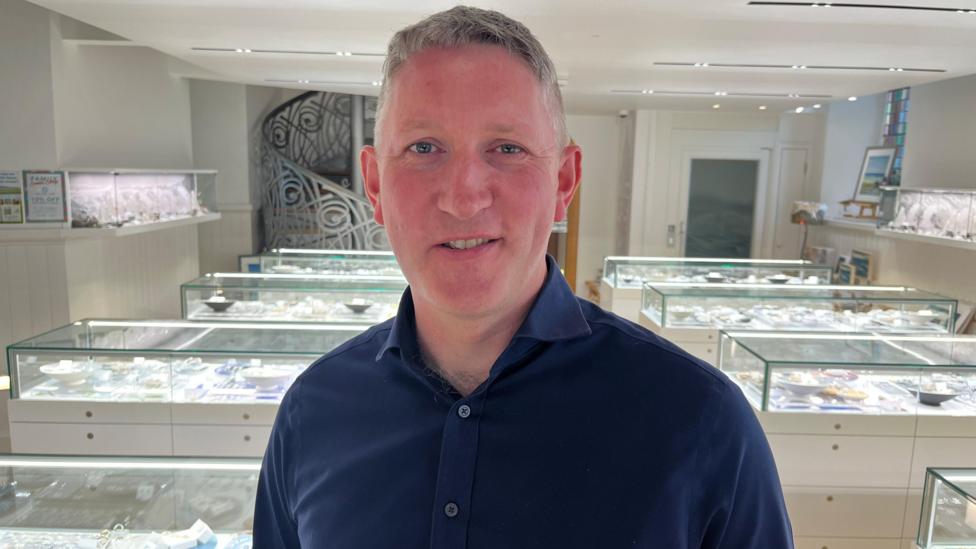
He noted that pressures on his company, Sheila Fleet Jewellery, intensify during peak periods.
"Birthdays, anniversaries and Christmas in particular," he said. "You can't really move Christmas, so you've got to make sure you make those deadlines."
Both business owners commended local postal workers, attributing issues to systemic problems rather than individual employees.
"That's not the fault of the postal workers, who work extremely hard," Garrick-Wright said. "But structurally there's huge issues that aren't being addressed."
Consumer Scotland Calls for Regulatory Changes
Tracey Reilly of Consumer Scotland noted that island residents have realistic expectations but are let down by regulatory gaps.
The watchdog has received reports of hospital letters arriving after appointments and delayed prescriptions.
"Every area in Scotland has a postcode-based delivery target, and those are set and enforced by Ofcom," she explained. "But the island communities are actually exempt from those targets.
"We'd like to see them brought within the overall regime. It doesn't have to be the same target but we want some guaranteed minimum level of service, because we think that's only fair."
Research by Consumer Scotland found that 18% of people across Scotland encountered delivery surcharges, rising to 75% in the Highlands & Islands.
"For consumers, it can really increase the cost of living - sometimes the cost of delivery is actually more than it costs to purchase the item," Reilly said.
The report includes eight recommendations such as transparent and potentially capped surcharges, clearer delivery information for shoppers, and minimum service standards for island postcode areas.
Potential Fourth Penalty for Royal Mail
These calls for improvement coincide with increased scrutiny of Royal Mail's UK-wide performance.
Regulator Ofcom initiated an investigation in June after Royal Mail missed its delivery targets for the fourth consecutive year, achieving 75.7% of first-class mail delivered on time against a 93% target and failing local targets in all 118 UK postcode areas.
Since its acquisition by the Czech-owned EP Group last year, Royal Mail has been fined £37 million over three years and may face a fourth penalty.
The company has pledged £500 million to enhance its service.
A Royal Mail statement said:
"When a flight or ferry is cancelled, mail remains within our network and is moved using the next available service, including alternative routes where possible. The length of any delay depends on when transport links resume and capacity becomes available.
Cancellations can happen at short notice and may affect individual routes differently, which means it is not always possible to give customers advance notice of every disruption."
Government Response
Responsibility for postal services lies with Westminster.
Postal Affairs Minister Blair McDougall acknowledged that postal services have not met island customers' expectations "for quite some time."
"Securing Royal Mail's future has been a priority, which is why last year we negotiated a wide range of commitments from the new owners, including that they cannot take money out of the business until performance improves and a commitment to remain the UK's USO provider.
We have no plans to change the minimum requirements of the USO in legislation, and this government will continue to hold their performance to account."


