

Insider Trading Suspicions During Trump's Presidency
Throughout US President Donald Trump's second term, traders have placed millions of dollars in bets shortly before he made major announcements. The BBC analyzed trade volume data across several financial markets and correlated these with some of the president's most impactful market-moving statements.
The investigation revealed a consistent pattern of trading volume spikes occurring just hours or even minutes before Trump's social media posts or media interviews became public. Some analysts suggest these patterns resemble illegal insider trading, where bets are placed based on non-public information. Others argue the situation is more complex, with some traders becoming more skilled at predicting the president's interventions.
Below are five notable examples illustrating these patterns.
9 March 2026: 'The war is very complete, pretty much'
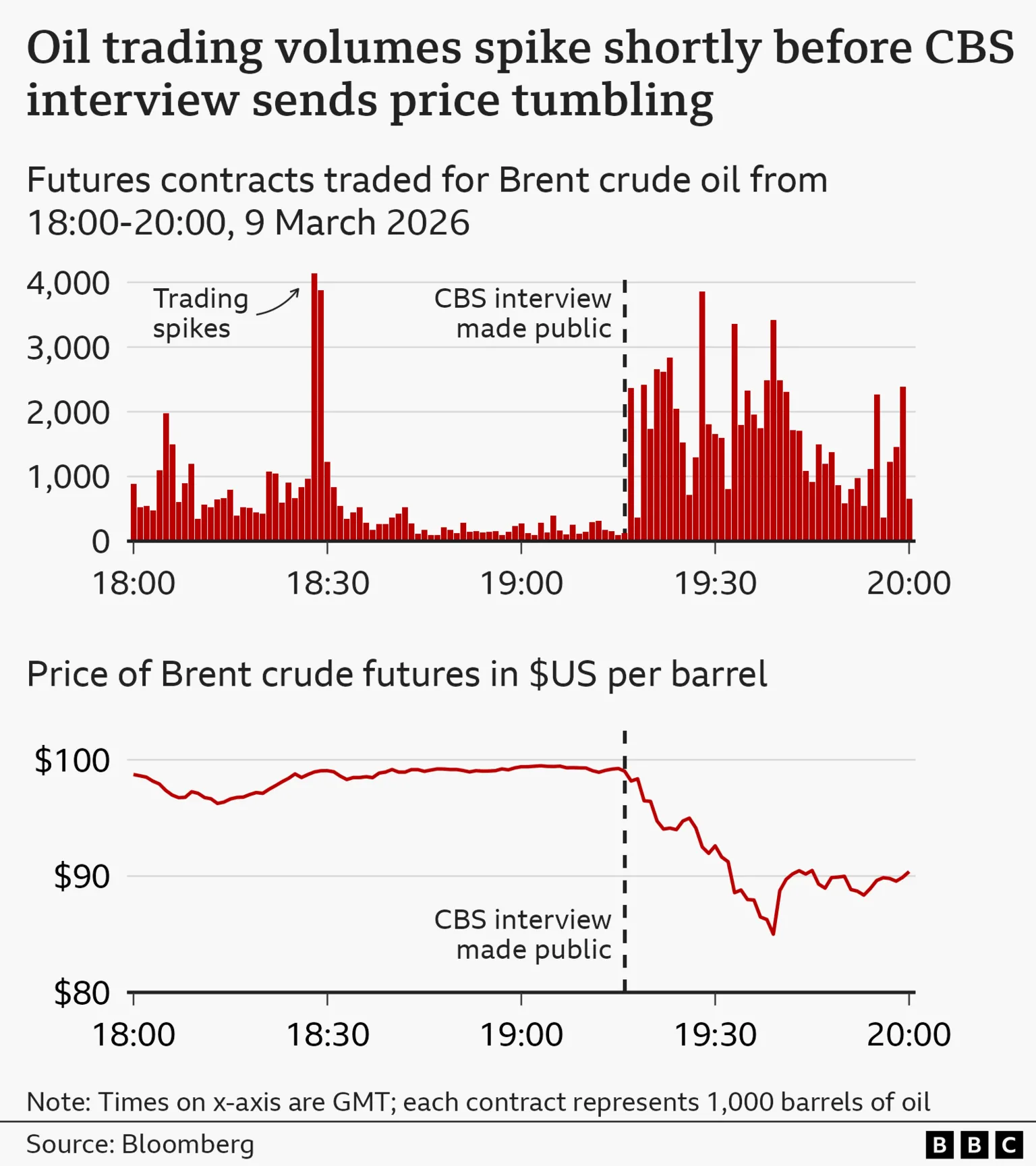
Significant movements were observed in oil futures trading. Nine days into the US-Israel conflict with Iran, Trump stated in a CBS News phone interview that the war was "very complete, pretty much." The interview was first publicly known at 15:16 Eastern Time (19:16 GMT) when the reporter posted about it on X.
Following this news, oil traders reacted by selling oil, causing prices to drop approximately 25%, reflecting expectations that the conflict might end sooner than anticipated. However, market data showed a substantial surge in bets on oil prices falling at 18:29 GMT, 47 minutes before the reporter's post.
The traders who placed these bets would have profited millions from the subsequent price movement.
23 March 2026: 'Complete and total resolution to hostilities'
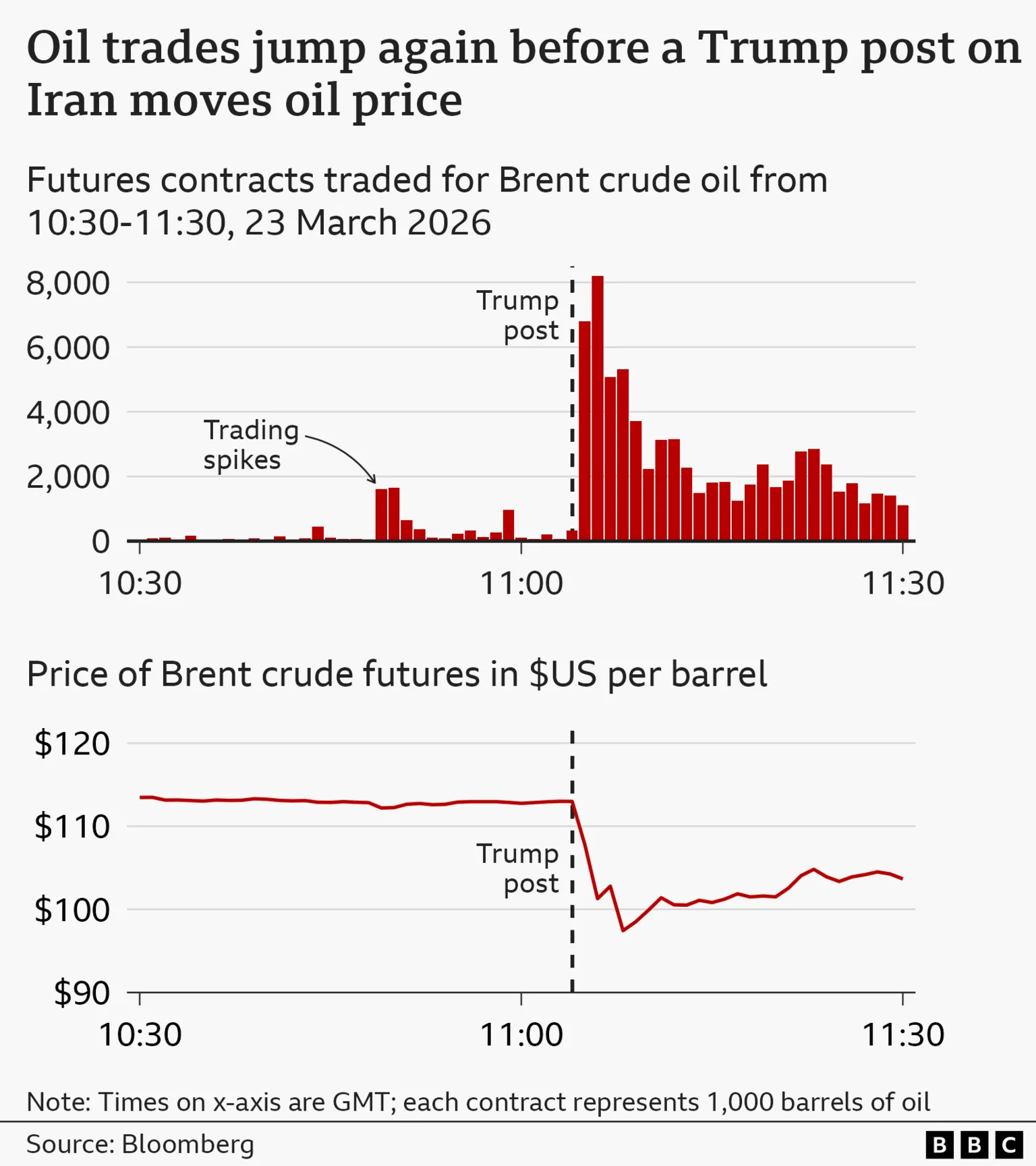
On 23 March, two days after threatening to "obliterate" Iran's power plants, Trump posted on Truth Social that Washington had engaged in "VERY GOOD AND PRODUCTIVE CONVERSATIONS" with Tehran regarding a "COMPLETE AND TOTAL RESOLUTION" to hostilities.
This announcement surprised diplomatic observers and traders alike. Immediately, stock prices rose and the US benchmark oil price, which had been increasing, fell sharply.
As reported by the BBC at the time, 14 minutes before the president's post, there was an unusually high volume of bets on the US oil price. Similar patterns were observed in trading contracts for Brent crude, another major oil benchmark.
One oil analyst described the trades as
"abnormal, for sure,"to the BBC.
9 April 2025: 'Liberation Day' pause
Beyond the Middle East conflict, other trading activities have raised questions. On 2 April 2025, Trump announced "Liberation Day," imposing sweeping tariffs on goods from nearly every country worldwide, causing global stock markets to plunge.
A week later, Trump announced a 90-day "pause" on these tariffs for all countries except China, leading to a significant stock market rally. The S&P 500 index surged by 9.5%, marking one of its largest single-day gains since World War II.
Unusual trading activity preceded this announcement, with an exceptionally high number of bets placed on a fund tracking the S&P 500. Contract trades surged to over 10,000 per minute shortly after 18:00 BST, compared to hundreds earlier that day.
Some traders wagered over $2 million on the stock market rising that day, despite seven consecutive days of losses. This surge could have yielded profits nearing $20 million.
Following these events, several senior Democrats in the US Senate wrote to the Securities and Exchange Commission (SEC), urging an investigation into whether the president's announcements benefited administration insiders and associates at the expense of the public.
When approached by the BBC, an SEC spokesperson declined to comment on these allegations. The White House also did not respond to BBC requests regarding the unusual trading activities analyzed in this report.
3 January 2026: Maduro seized
The rise of online prediction markets has also attracted scrutiny. Blockchain-based platforms like Polymarket and Kalshi allow users to speculate on diverse topics, including weather, sports, and US foreign policy.

Donald Trump Jr., the president's son, is an investor in Polymarket, serves on its advisory board, and acts as a strategic advisor to Kalshi. He has been contacted by the BBC for comment.
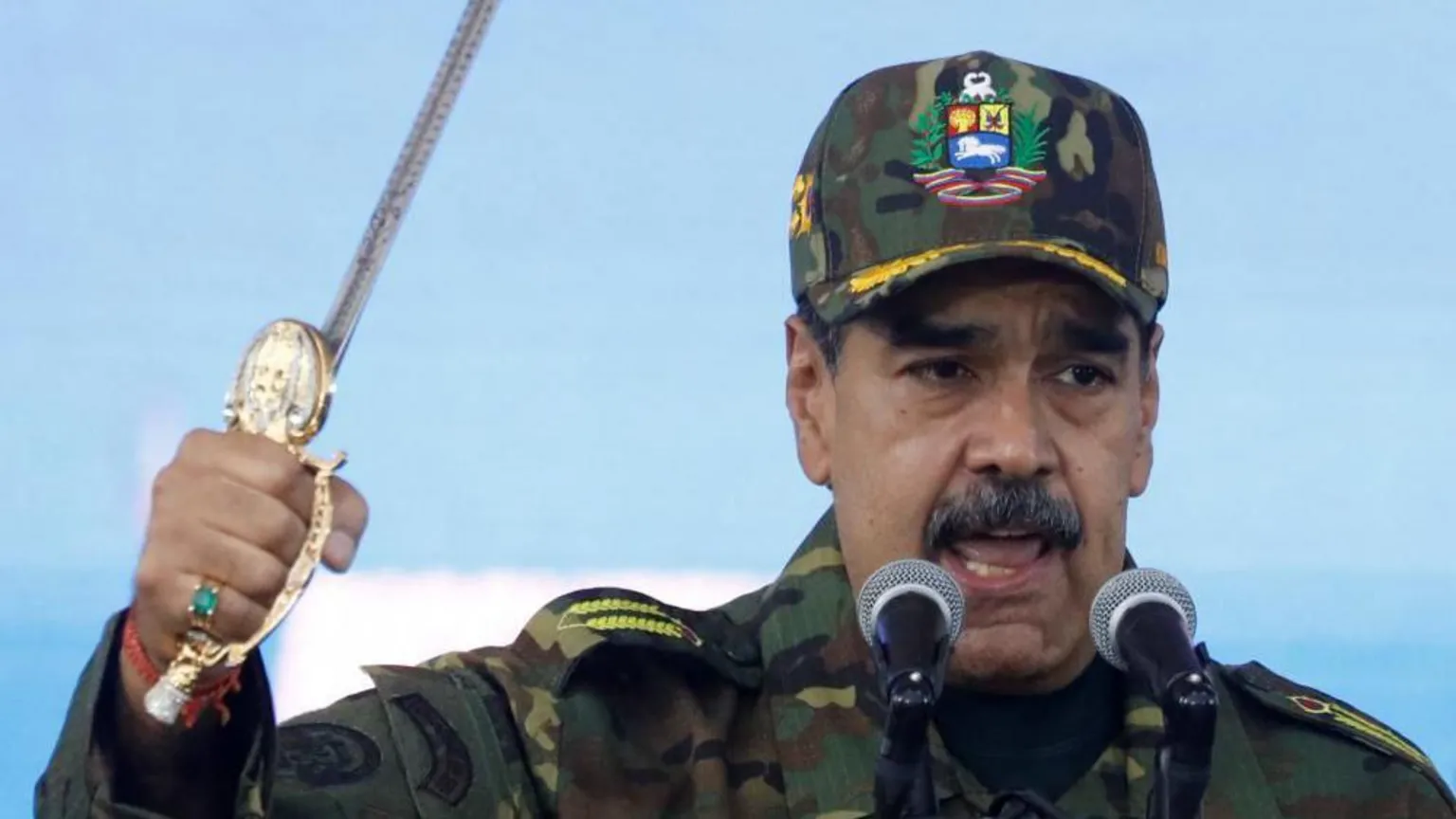
In December 2025, a user created a Polymarket account named Burdensome-Mix. On 30 December, this account placed its first bet predicting Venezuelan President Nicolás Maduro would be out of office by the end of January 2026.
Between 30 December and 2 January, Burdensome-Mix wagered a total of $32,500 on this outcome.
When Maduro was captured by US special forces and removed from power the following day, Burdensome-Mix won $436,000.
Shortly after, the account changed its username and has not placed any further bets.
28 February 2026: Strikes on Iran
According to blockchain analysis website Bubblemaps, six accounts were created on Polymarket in February 2026. All placed wagers predicting a US strike on Iran by 28 February.
When President Trump confirmed the attacks in the early hours of that day, these accounts collectively earned $1.2 million.
Five of the six users have not placed additional bets since. However, one account recently earned $163,000 by correctly betting on a US-Iran ceasefire by 7 April, which was officially announced on that date.
Polymarket stated to the BBC that it
"sets, maintains, and enforces the highest standards of market integrity"and
"proactively" works with regulators and law enforcement to uphold these standards.
In March 2026, both Polymarket and Kalshi introduced new rules aimed at preventing insider trading.
Prediction markets fall under the jurisdiction of the Commodity Futures Trading Commission (CFTC). The CFTC did not respond to the BBC's request for comment, but its chair recently told a Congressional committee that the agency has
"zero tolerance"for fraud and insider trading.
Additionally, the White House reportedly sent an internal email to staff in the previous month, warning against using insider information to place bets on prediction markets.
White House spokesman Davis Ingle told the BBC that
"any implication that Administration officials are engaged in such activity without evidence is baseless and irresponsible reporting."
Challenges in Proving Insider Trading
Insider trading has been illegal for most Americans since the Securities Act of 1933. The law was extended in 2012 to cover US government officials, though no prosecutions have occurred under this provision to date.
Paul Oudin, a professor specializing in financial regulation law at ESSEC Business School, explained the difficulty in enforcement:
"The financial authorities will not carry out a prosecution if they can't figure out who the source of information is,"
None of the US financial authorities contacted by the BBC acknowledged the insider trading allegations.
Oudin added,
"You can have massive trades on a financial instrument that clearly show that someone was privy to what Donald Trump was about to declare. Yet there is a strong chance that no-one will be prosecuted."


