

Holiday Let Owner Warns Welsh Legislation Could Lead to Bankruptcy
A man operating four holiday cottages on his property near Newtown in Powys has expressed concerns that Welsh government regulations introduced three years ago will force him into bankruptcy upon retirement.
Paul Martin explained that two of his cottages are "restricted to holiday use" and are located very close to his main residence, making them unsuitable for sale as separate residential properties.
Under current legislation, self-catering holiday accommodations not let for at least 182 days annually can be classified as second homes and may be subject to council tax, sometimes at a premium rate.
The Welsh government noted that many operators with property restrictions are exempt from the premium rate. Additionally, starting April 2027, properties transferred into council tax will have a year at the standard rate before any premium applies.
Martin faces paying council tax on five properties this year, including two at a 75% premium. He described his business as "unsellable" due to these costs.
"This legislation will destroy me," he said.
"I can't see anyway to meet these costs when I retire."
Martin moved to the site with his wife and two children in 2007 and operates the main family home as a bed and breakfast. He invested his savings and borrowed funds to convert ruined outhouses and barns into the cottages.
He indicated that his only option might be to dismantle the cottages and render them uninhabitable by removing kitchens and bathrooms.
"After all my investment and hard work, it is heartbreaking."
Martin criticized the legislation for lacking a clear definition of what constitutes a second home.
"I do not have four second homes in my garden," he said.
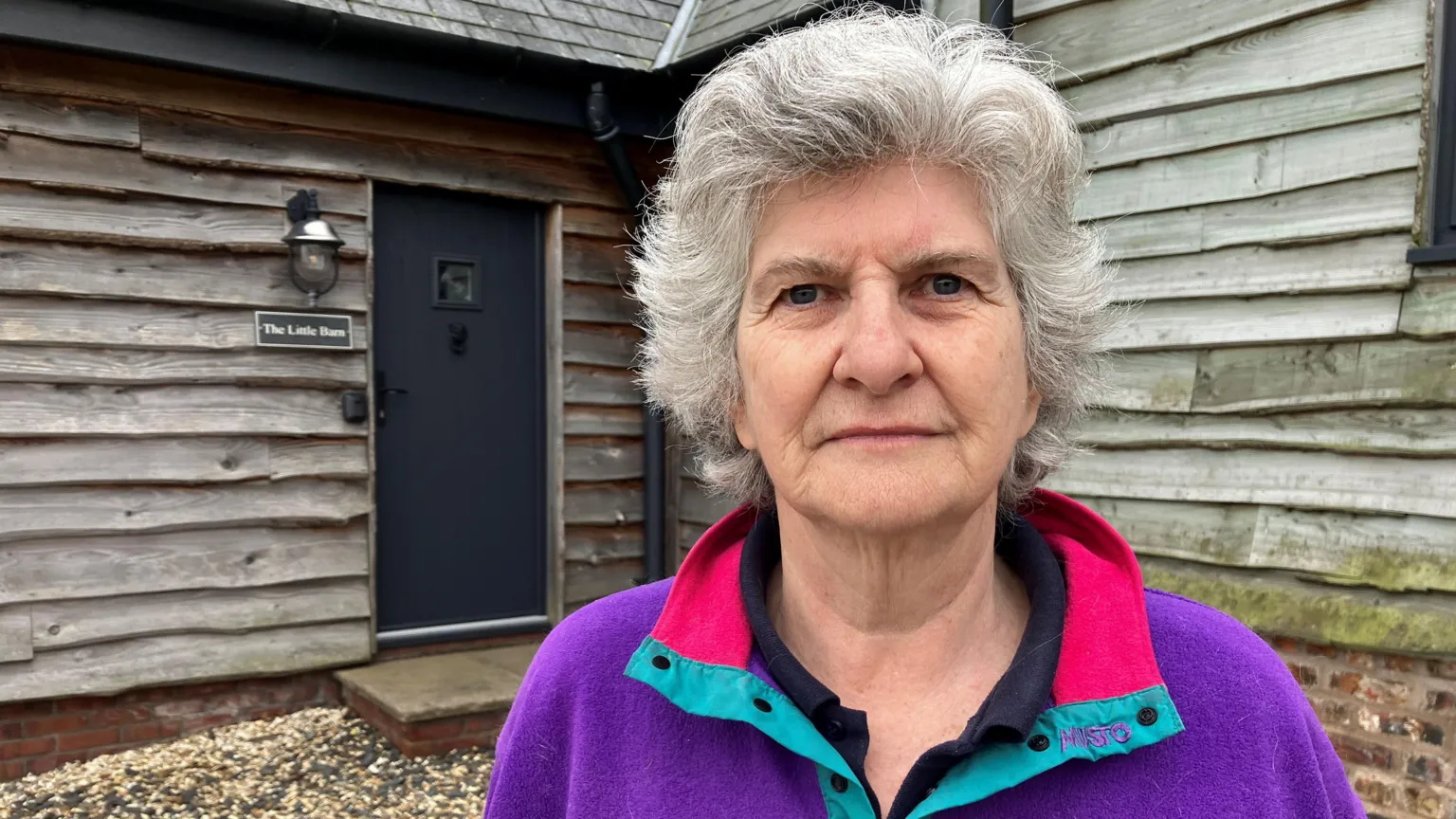
Another local resident, Liz Molyneux, also near Newtown, is currently paying a council tax premium on an annexe attached to her home. This year's bill exceeds £4,000.
The annexe was rented as a holiday let by the previous owner, and Molyneux briefly continued this practice. She is now resuming holiday rentals to cover the council tax costs.
"There is no way it can be a second home," she said.
"Its electricity runs through my house, its water runs through my house, its oil comes from my oil tank - the two properties are integral."
Powys council stated that decisions regarding council tax liability are not made by the council itself. When a property is listed for council tax, the council is legally obligated to charge the specified amount.
However, the council has discretion to consider reductions in cases of "genuine hardship." The cabinet recently reviewed the impact of backdated premium rate bills on some owners and recommended a discretionary exemption from the 75% backdated premium, which is currently progressing through the council's formal decision-making process.

What are the rules around holiday lets in Wales?
Previously, properties made available for let for at least 140 days and actually let for 70 qualified for lower business rates rather than council tax. This system remains in place in England.
In Wales, the threshold was increased so that properties must be available for at least 252 days and let for 182 days to avoid being classified as second homes and liable for council tax, which in some areas includes an additional premium.
This legislation was introduced to address the affordable housing shortage in parts of Wales popular with tourists and second home owners.
Recent amendments allow tourism operators who narrowly miss the 182-day threshold to average their letting days over multiple years to meet the requirement. Owners can also donate up to 14 days of free holidays to charity to reach the 182-day target.
Owain Meirion, chair of Cymdeithas yr Iaith, the Welsh language society, emphasized the importance of measures addressing housing shortages to protect the Welsh language and culture.
"An excess of second homes competing with local buyers is a direct threat to the future of the language and measures to deal with that should be welcomed.
Governments could look at knock-on effects that aren't desired but they shouldn't override the general principle of the legislation," he said.

What do the political parties say?
Welsh Labour stated:
"We believe everybody should have access to a decent, affordable home to buy or rent in their own communities so they can live and work locally.
We are using the planning, property and taxation systems to achieve this as part of a joined-up package of solutions to a complex set of issues."
Reform UK commented:
"The 182 rule for holiday lets has caused serious damage to small-scale operators, retirees and family businesses.
We will lower the threshold in consultation with the industry so genuine holiday lets are not driven out of the market."
Plaid Cymru emphasized the need to carefully consider the wider impact of the rule on residents and businesses to avoid unintended consequences. They have advocated for exemptions.
"Plaid Cymru's priority is to deliver more genuinely affordable homes for local people."
The Welsh Conservatives expressed concerns about the 182-day rule within the tourism sector.
"The Welsh Conservatives have previously made it clear that the current 182 day threshold is too high and that a threshold closer to 105 would represent a more proportionate and realistic requirement for many providers."
Requests for comment have been made to the Wales Green Party and the Welsh Liberal Democrats.

Additional reporting by Craig Duggan.


