
Energy Price Cap Increase Raises Typical Annual Bills by £221
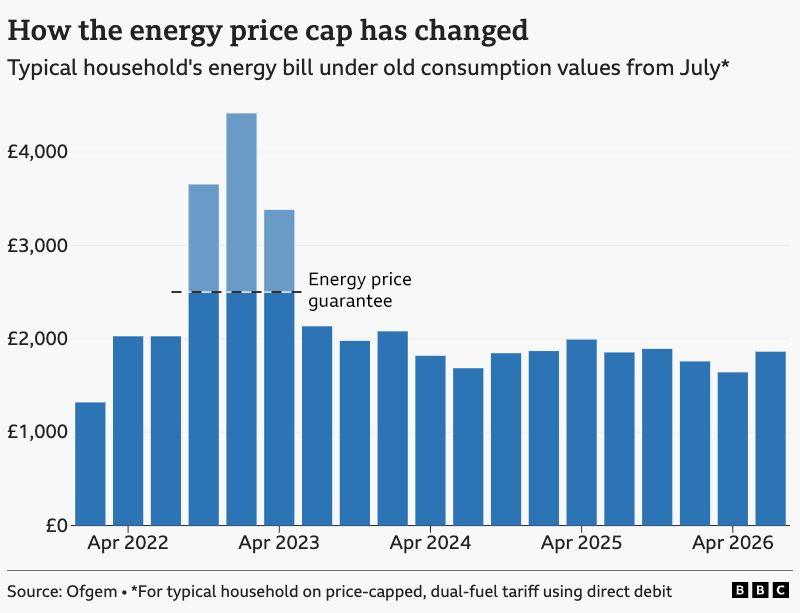
From 1 July, the typical annual energy bill rose by £221 to £1,862, following the latest adjustment to the energy price cap set by regulator Ofgem. This 13% increase affects millions of households across England, Scotland, and Wales, reflecting elevated wholesale oil and gas prices driven by the ongoing US-Israel conflict with Iran.
What Is the Energy Cap and How Is It Changing?
The energy price cap sets the maximum unit price that suppliers can charge customers on standard variable tariffs for gas and electricity consumption. It applies to approximately 33 million households in England, Wales, and Scotland and is reviewed quarterly by Ofgem.
Of these households, around 19 million pay via direct debit, about 7 million pay by standard credit (paying upon receiving a bill), and roughly 6 million use prepayment meters.
The typical annual usage figure pertains to dual-fuel households on standard variable tariffs paying by direct debit. Between 1 July and 30 September, gas prices are capped at 7.33 pence per kilowatt hour (kWh), up from 5.74p, while electricity prices are capped at 26.11p per kWh, up from 24.67p.
Consequently, a typical household’s bill will increase to £1,862 from £1,641 during the previous quarter (1 April to 30 June).
Actual bills vary depending on energy consumption and payment method. For customers paying by standard credit, the typical annual bill will be £2,005, up 13% from £1,772. Prepayment meter users will see bills rise to £1,812 from £1,597, also a 13% increase.
Ofgem regulates the energy market in England, Scotland, and Wales; Northern Ireland operates under a separate system.
What Constitutes a Typical Household?
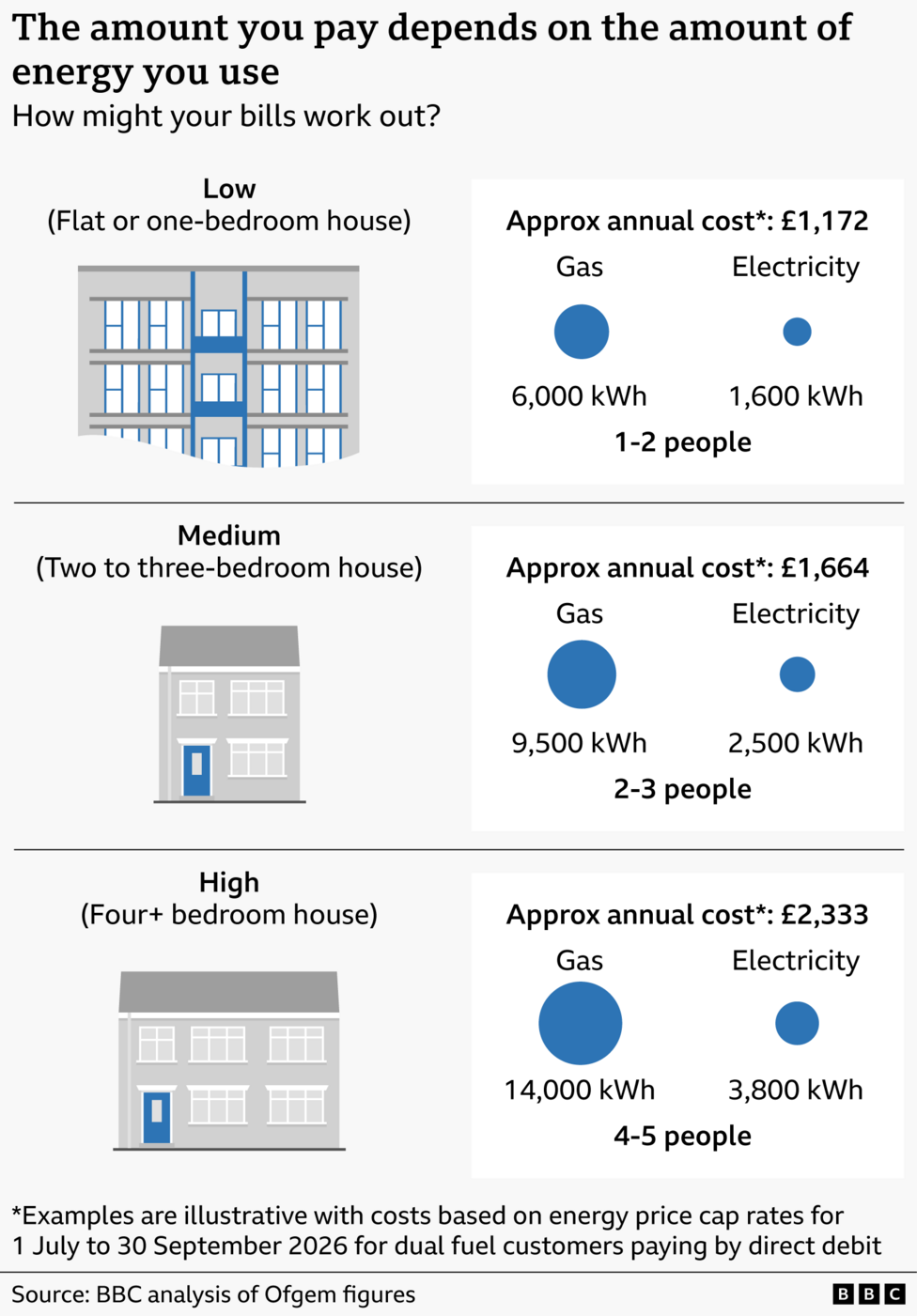
While the price cap sets unit prices for energy, individual household bills depend on total energy usage and payment methods. Factors such as location, property type, energy efficiency, household size, and weather conditions influence consumption.
The Ofgem cap is based on a "typical" household’s annual energy use with a single bill for gas and electricity paid by direct debit, the most common payment method.
Previously, Ofgem estimated a typical household’s annual consumption at 11,500 kWh of gas and 2,700 kWh of electricity. However, due to recent reductions in energy use prompted by high prices and efficiency improvements, these estimates have been revised downward.
The new typical consumption figures are 9,500 kWh of gas and 2,500 kWh of electricity annually. Using these updated values, the typical average bill since 1 July is £1,663.
Based on these figures, typical annual bills for dual-fuel direct debit households under the current cap would be £1,490, indicating a 12% increase from the previous period, consistent with the 13% rise under the former assumptions.
Ofgem last updated its consumption estimates in 2019 and 2023.
Standing Charges and Their Changes
Ofgem also regulates standing charges, which are fixed daily fees covering the costs of connecting households to gas and electricity supplies. These charges vary slightly by region and payment method.
Between 1 July and 30 September 2026, average standing charges for direct debit customers will be 57.19p per day for electricity and 29.04p per day for gas, largely unchanged from the previous quarter.
Campaigners have criticized standing charges as disproportionately impacting low energy users since they constitute a larger share of their bills.
In response, Ofgem has proposed that all energy suppliers offer at least one tariff with a low standing charge but a higher unit cost for energy, providing customers with more choice and control. The regulator acknowledges this approach may not suit everyone.
Charities, campaigners, and the suppliers' trade body criticized the proposal for merely shifting costs within the bill rather than reducing them.
MPs have warned that plans to adjust standing charges could have unintended consequences.
Meter Readings and Energy Cap Changes
Submitting an accurate meter reading when the energy cap changes ensures customers are billed correctly and not charged estimated usage at outdated rates. This is particularly important when prices increase.
Customers with functioning smart meters do not need to submit readings as their bills are automatically calculated.
Outlook for Energy Prices in Autumn 2026
Ofgem’s interim chief executive, Tim Jarvis, informed the BBC that disruptions to energy prices caused by the ongoing conflict involving Iran may persist longer than initially expected.
Global energy costs surged after the US and Israel attacked Iran on 28 February. In retaliation, Iran effectively blocked the Strait of Hormuz, a critical shipping route that transports about 20% of the world’s oil and gas supply.
Jarvis stated that the level of the next price cap, effective 1 October, will largely depend on whether a peace agreement holds and how quickly the Strait of Hormuz reopens fully.
The energy consultancy Cornwall Insight forecasts a slight decrease of 0.5% in the cap in October.
Since households typically consume more energy during winter months, the cap level at that time is particularly significant.
The regulator will announce the details of the next cap by 26 August.
Should Consumers Fix Their Energy Prices?
Approximately 40% of households (around 21 million) have fixed-term energy contracts. These customers are unaffected by changes to the energy price cap until their tariff ends.
Fixed deals provide price certainty for a set period, often a year or longer. However, if energy prices fall during the contract, customers may be locked into higher rates and could face penalties for early termination.
Ofgem advises that switching to a fixed deal can protect customers from future cap increases but recommends understanding all associated costs, including exit penalties.
Experts suggest using comprehensive energy price comparison websites to identify the best available deals.
Recent Changes to Energy Bill Calculations
Since 1 April, charges related to the Energy Company Obligation (ECO) insulation scheme have been removed. For the next three years, renewable energy projects will be 75% funded by general taxation instead of levies on energy bills.
Previously, energy bills in England, Scotland, and Wales included additional charges to fund insulation for low-income households and subsidize renewable energy projects such as wind and solar power.
Nearly all households in these nations benefit from this reduction, though the exact savings vary.
However, the costs of maintaining and upgrading energy infrastructure, including power lines, cables, and gas pipes, are increasing.
In December 2025, Ofgem approved a £28 billion investment plan to enhance the electricity and gas grids in Great Britain. This initiative aims to strengthen energy supply, reduce exposure to volatile prices, and decrease reliance on gas.
Customers will contribute to these upgrades through an additional £108 added to energy bills by 2031. These charges began appearing in April 2026, adding approximately £6 per month to the typical household bill under the energy cap.
In April, the government announced plans to reform electricity pricing to reduce household bills’ vulnerability to gas price spikes and to enable customers to benefit more from the lower costs of renewable energy sources.
The government has not specified potential bill reductions but anticipates "significant" savings, with changes possibly implemented by spring 2027.
Heating Oil Prices and Support
Heating oil is not covered by the energy price cap. Approximately 1.5 million UK households use heating oil and have experienced sharp bill increases following the Middle East conflict, with some users seeing costs more than double.
This issue is particularly severe in Northern Ireland, where about 500,000 homes (nearly two-thirds of households) rely on heating oil.
The government has announced a £53 million support package aimed at vulnerable households using heating oil, targeting low-income families in rural areas.
Support Available for Energy Bills
Energy suppliers are required to offer affordable payment plans or repayment holidays for customers struggling to pay bills. Most also provide hardship grants.
Recent data indicates that energy debt and arrears in England, Wales, and Scotland have reached £4.79 billion, a 15% increase over the past year. More than one million households currently have no repayment arrangements, a record high.
Ofgem plans to introduce a scheme in 2026 that could cancel debts for nearly 200,000 benefit recipients who have made some effort to repay. This initiative could reduce supplier debts by up to £500 million but will require an additional £5 charge on all gas and electricity bills.
Government programs such as the Household Support Fund and the Warm Home Discount scheme also assist low-income households. The Fuel Direct Scheme allows debt repayment directly from benefit payments.
Additionally, about nine million pensioners received the Winter Fuel Payment in 2025/2026, worth £200 or £300, following a government reversal on eligibility criteria.
Get in Touch
How are rising costs caused by the Iran conflict affecting your quality of life or business?

For further information on how the Iran war may influence your finances and energy bills, and on potential petrol and diesel price increases in the UK, please refer to related coverage.


