

Winston Churchill: The Painter at Wallace Collection, London
Winston Churchill, the British prime minister during the Second World War and again in the 1950s, was foremost a politician and statesman, but also an amateur painter. His paintings, which he himself described as “daubs,” were created primarily to relieve the stresses of office, especially during wartime. These works are not technically refined but possess an overpowering joy and innocent charm, reflecting the output of a Sunday painter rather than a professional artist.
“The simplest objects have their beauty,”Churchill declared, encouraging others to paint without seeking fame or recognition. He exhibited modestly and anonymously in minor salons during the 1920s. While his work may reveal the efforts of a very minor impressionist-leaning painter, any connection to the established art historical canon is irrelevant. The paintings are significant primarily because of their creator’s identity and serve as primary historical sources. They document where Churchill was, when, and what he observed: stately mansions while visiting friends; bottles of his favourite drinks; Blenheim Palace and its grounds; holidays on the French Riviera; and views from his travels as a statesman, such as Jerusalem in 1921, shortly after the Cairo Conference, which he chaired as colonial secretary under Prime Minister Lloyd George.
Curators Xavier Bray and Lucy Davis wisely avoid imposing political interpretations on these scenes, though they note occasional symbolic links, such as the cannon pointing out to sea in The Beach at Walmer (circa 1938), a favourite Churchill family bathing spot, which coincides with his public warnings about Nazi Germany.
Assembled in a collection of just under 60 paintings, sourced from across the UK and private collections—a remarkable achievement—the works radiate an overpowering joy and charming amateurishness. They were created for pleasure without pretension. There is intrigue in observing an amateur artist keenly learning his craft. Churchill’s seascapes of the south of France demonstrate a love of bright, simplistic yet dazzlingly contrasting colours, which the curators identify as his best work. Conversely, some subjects, such as the figures and donkeys in his Marrakech scenes, are less successful and might make even LS Lowry blush.
Despite difficulties in capturing buildings with luminosity—an effect that requires a skilled impressionist—Churchill’s paintings maintain a consistent vivacity derived from the speed of application. This is evident in works like Sketch of Lake Carezza and The Twenty Minute Sketch (1949).
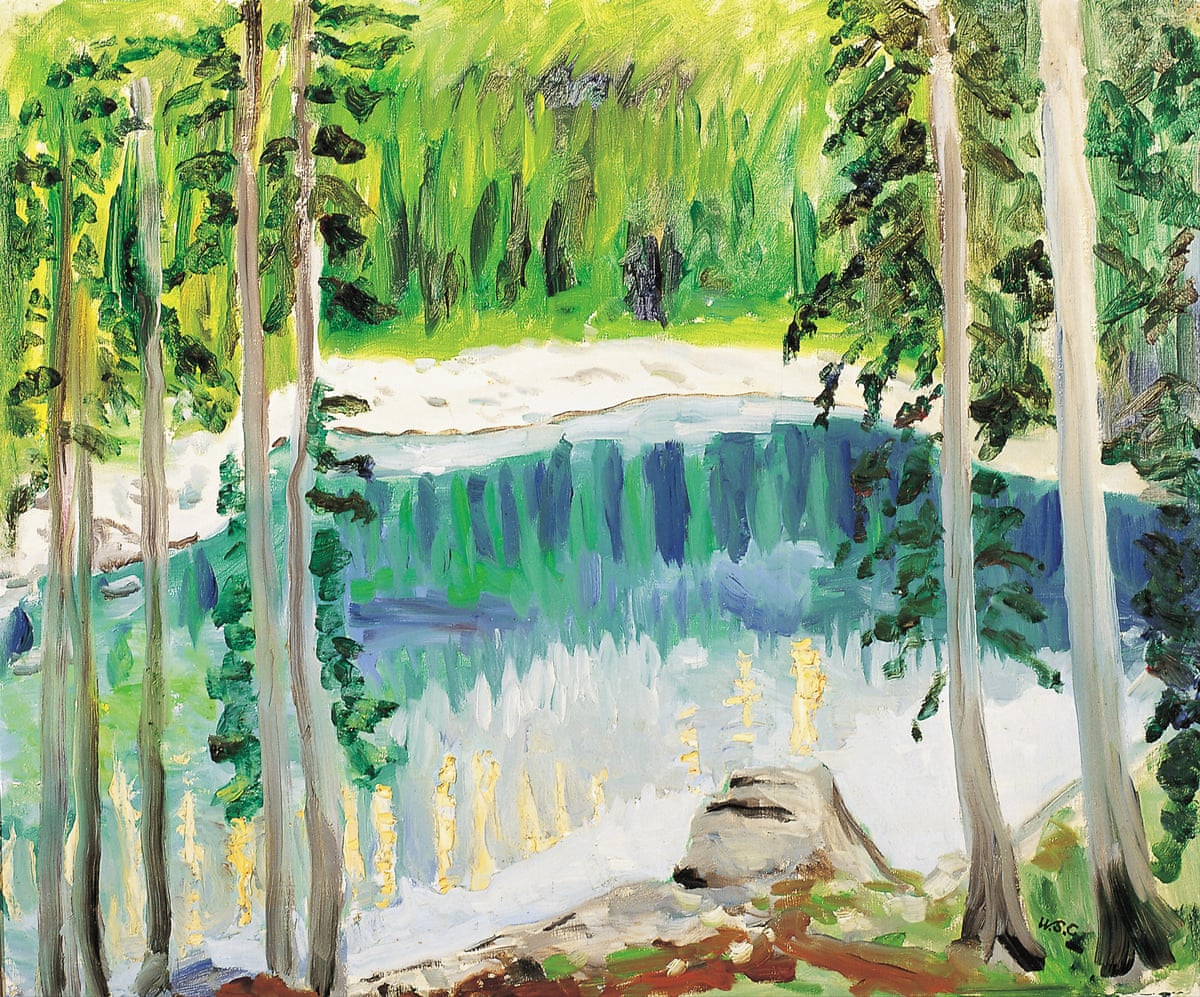
Generally, Churchill found greater success in conveying general surface impressions of light, water, and sky through broad dashes of colour rather than detailed painterly modelling or representational forms.
It is unsurprising to learn that Churchill adopted techniques from Walter Sickert, including establishing an initial monochrome layer beneath the colour. He also used a projector to transfer compositions, many based on photographs, onto squared canvases, effectively tracing them.
The fact that many paintings originated from photographs contributes to a peculiar sensation of scenes feeling detached from any action, a feeling amplified by knowledge of Churchill’s concurrent political activities. The compositions often lack strong focal points and feature vast empty spaces, as seen in 1916’s The View from Mrs Cassel’s House at Branksome Dene Near Poole, Dorset and The Italian Garden at Sutton Place (circa 1930s). Adding figures would likely not have improved these compositions.
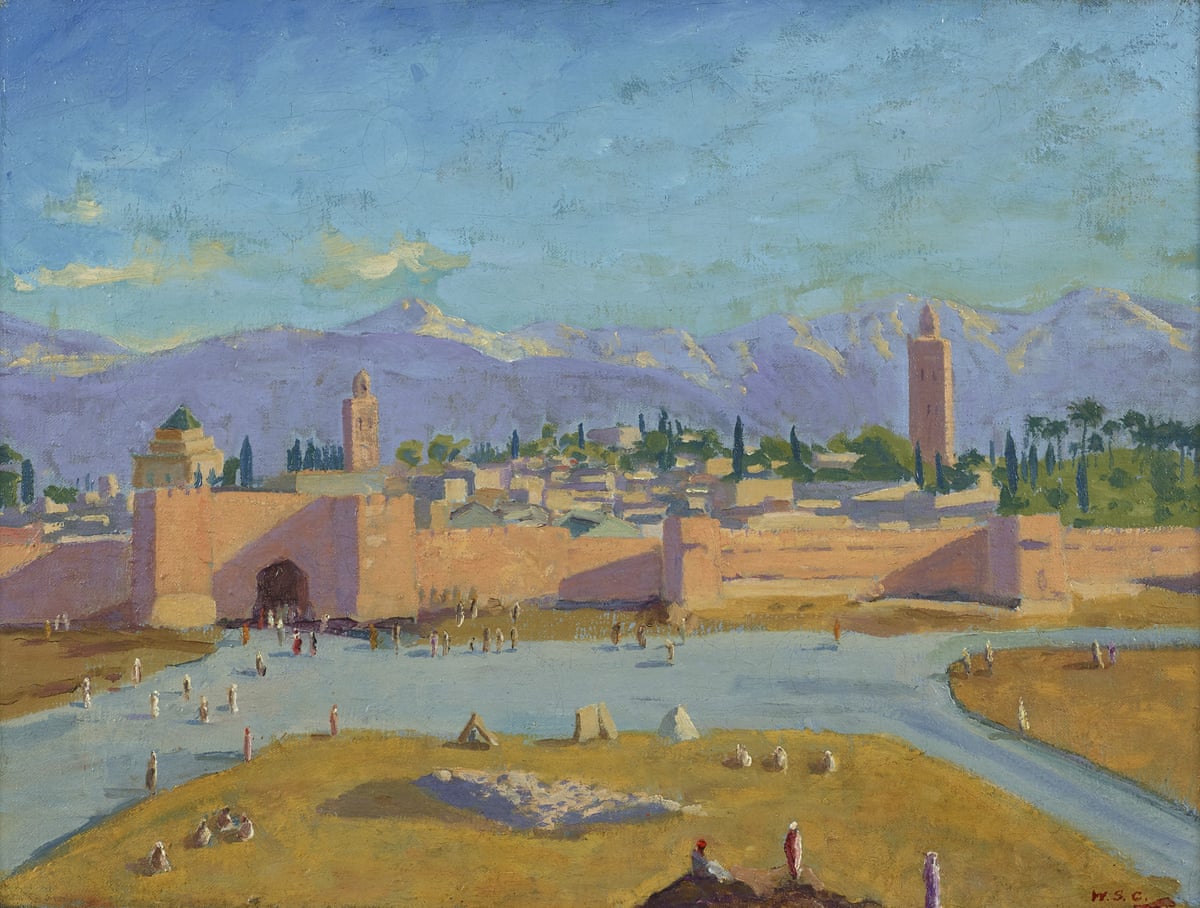
This exhibition serves as a curiosity for both fine art enthusiasts and those interested in Churchill as a historical figure. Visitors can view Churchill’s eyeglasses (+2 strength in each lens) and his beloved palette, loaned from Blenheim Palace. The exhibition’s conception likely predates the February attacks on Iran, but its opening coincides with unprecedented global turmoil. Churchill’s gifting of these modest creations to US presidents including Roosevelt, Truman, and Eisenhower, and his use of painting as a gentle hobby to soothe his temper, reflect a form of genteel diplomacy and leadership that now seems archaic. In today’s global climate, these works represent a hermetic cocoon of civility and a passion for painting for its own sake.


