

Spider-Noir: A Stylish Homage to 1940s Noir with a Superhero Twist
All smoke, shady dames, and black-and-white cinematography, Marvel’s latest Spider-Man offering is fast, witty, and confident.
As the Marvel Cinematic Universe continues to expand—some might say bloat or chase profit in increasingly less rewarding ways—Prime Video’s new series, Spider-Noir, invites viewers to set aside some traditional lore while retaining other elements. It is important to clarify that the arachno-inflected character featured here is portrayed by Nicolas Cage but is not the same spider character he voiced in 2018’s Spider-Man: Into the Spider-Verse, although their voices are similar. The earlier character was Peter Parker, as is traditional, whereas this one is Ben Reilly. The choice to cast Cage, one of the most divisive and idiosyncratic actors in modern cinema—whose presence is as inseparable from his roles as sourness is from lemons or sweetness from honey—may puzzle some, but such decisions are part of Hollywood’s fabric.
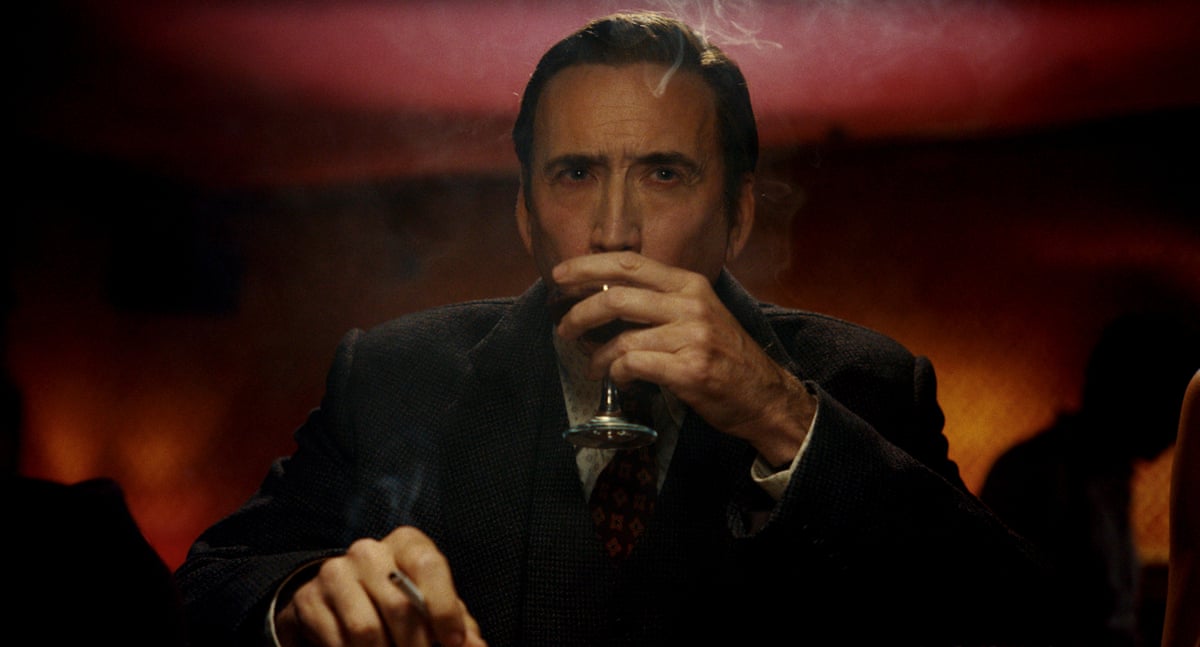
As the title suggests, Spider-Noir is conceived as a homage to the hard-boiled films and fiction of the 1940s. The series was filmed in black and white and then digitally colorized, allowing viewers to choose their preferred viewing format. This choice may spark online debates, though the decision to colorize a noir tribute is arguably a concession to popular demand, and some may find the colorized version less authentic.
The show is richly atmospheric, filled with shadows, cigarette smoke, sassy secretaries, and shady dames, alongside superheroes and supervillains. Ben Reilly was once the superhero known as The Spider—distinct from Spider-Man, likely for legal reasons—who protected New York until five years ago, when he failed to save the woman he loved. Since then, he has retired his mask—a notably woolly one, reflecting the Depression Era before Lycra’s invention—and now works as a private investigator rather than a superhero.
When the series begins, Reilly is hired by an unseen client to locate a man named Addison. Upon finding him, Reilly discovers Addison can transform into a human torch, setting fire to everything around him. However, Addison is vulnerable, as demonstrated when another private investigator, also hired by an unseen client, shoots him. The mystery deepens: who is Addison, and why is the client so secretive?
Reilly’s metaphorical spidey-sense is triggered—not to be confused with his actual spidey-sense, which alerts him to imminent violence but usually a second too late to prevent fight scenes. Another character, Flint Marko (played by Jack Huston), serves as bodyguard to Cat Hardy (Li Jun Li), the shadiest of shady dames. Flint appears to have the ability to transform into sand when angered—a man made of sand. This suggests that Reilly and Addison are not the only individuals in New York with hidden powers. When Flint disappears, Cat hires Reilly to find him, drawing him deeper into a web of intrigue and danger.
At the center of this web is the gangster Silvermane (Brendan Gleeson), who has controlled the city for the past five years. He wields influence over the police and politicians, with the only recent challenge to his power being an attempt to burn down his mansion. The question remains: who is behind this attack?
The series unfolds with more clues, characters, hidden abilities, and plot twists. While none of these elements are groundbreaking, the pacing and entertainment value compensate effectively. The production is executed with style and confidence, and the script offers sharp dialogue and witty banter, occasionally veering into screwball comedy during exchanges between men and women, maintaining alignment with classic noir templates.
Nicolas Cage fans will appreciate his presence, while those less fond of his style need not worry. Cage’s performance is most effective when heavily stylized and mannered, which masks his more eccentric tendencies and, at times, lends credibility. He is supported by strong performances from Karen Rodriguez as Janet, a sassy secretary; Lamorne Morris as Robbie Robertson, Reilly’s persistent journalist friend; and Brendan Gleeson as the menacing villain, whose menace arises more from terror than superhuman strength.
If Spider-Noir were a blond, it might not quite succeed in making a bishop kick a hole in a stained glass window, but it would certainly give him cause to consider it.


