
From Port Talbot to Literary Recognition
When Jon Doyle received an unexpected text from his publisher, he initially feared his debut novel was about to be dropped. Instead, he learned that his book, Communion, set in his hometown of Port Talbot, had been selected for a prestigious list that previously recognized authors such as Sally Rooney, known for Normal People, and Booker Prize winner Douglas Stuart.
Doyle, who remains in his family home in Taibach, expressed his disbelief and joy upon hearing the news, describing the moment as a "small victory" and recalling how he "punched the air" in celebration.
Despite Port Talbot's notable history of producing acclaimed actors like Richard Burton, Anthony Hopkins, and Michael Sheen, Doyle, 37, shared that it took him considerable time to appreciate his hometown as a setting capable of inspiring the kind of literature he aspired to create.
"I'm Port Talbot born and bred," said Doyle.
"My great-grandfather was a steelworker, my grandfather was a steelworker, and then basically all my uncles from the next generation down were in the steelworks as well."

The Story Behind Communion
Communion follows the narrative of an unnamed Hollywood star who returns to Port Talbot to direct a community play that envelops the entire town over a weekend. This storyline pays homage to Michael Sheen's 2011 production, The Passion of Port Talbot, which garnered international attention for the town.
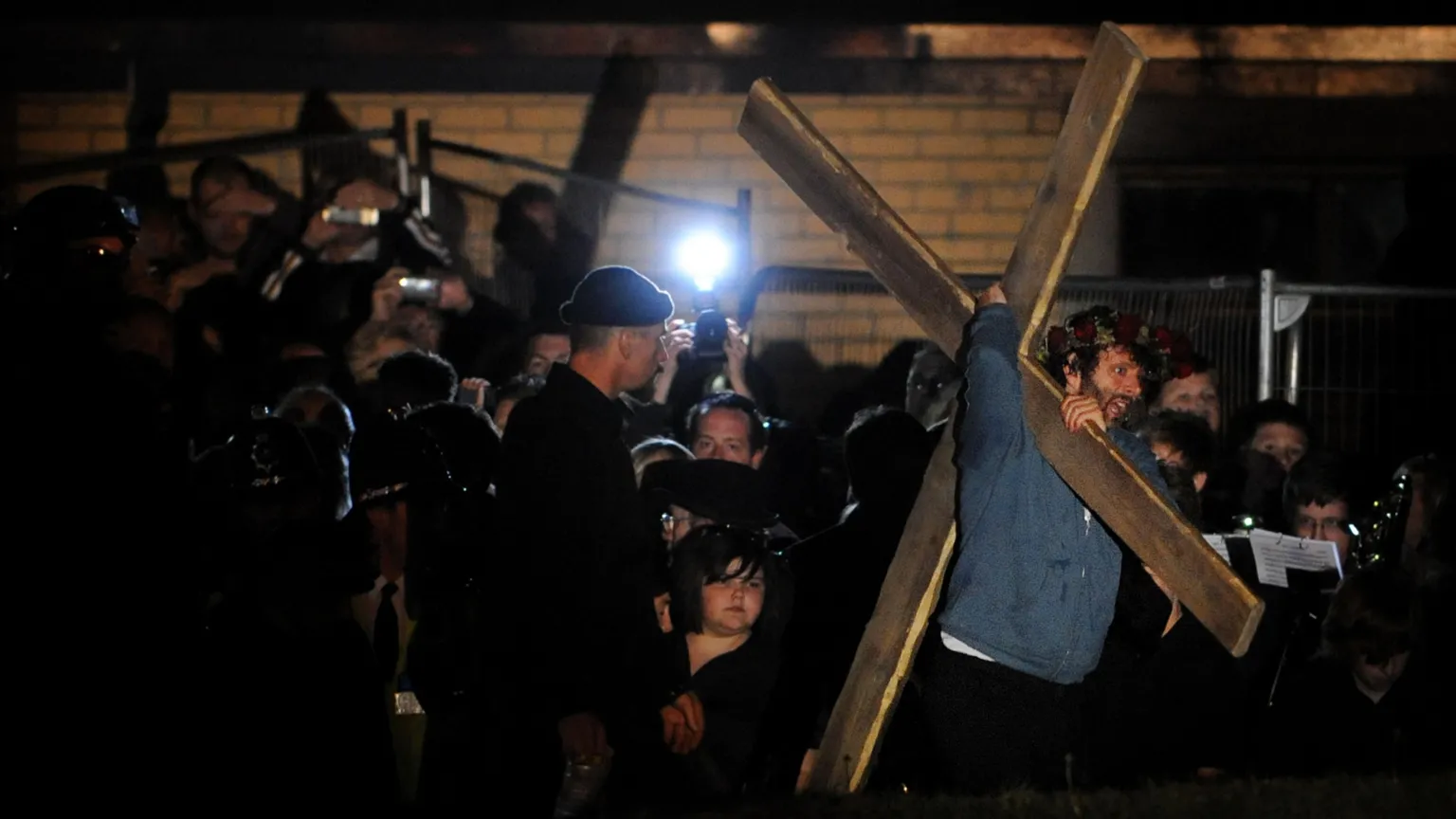
The novel was crafted during a challenging period for Port Talbot. In October 2024, Tata Steel ceased operations of its last blast furnace, with plans to replace it with a new electric arc furnace by the end of 2027. Although this new technology promises a greener process, it will require significantly fewer workers, resulting in the loss of over 2,000 jobs.
Doyle's narrative intertwines these real events with a fictionalized account of the industrial action that followed Tata Steel's announcement of the blast furnace shutdown.
"I'd probably finished the first draft before it really became clear what was happening," Doyle explained.
"The works have been in various stages of danger for years and years and years. There's always been a blade above our heads."
As he revised the novel, Doyle observed the unfolding debates surrounding the closure and incorporated the diverse perspectives into his characters.
"I could sort of look at the arguments on the news and with friends in town and talk to people. It let me tap into all the various different points of view on offer.
[In the book] people literally contradict themselves in the same sentence. I think you could be a steelworker and you could be proud of where you work, your heritage, your family history within that industry and be concerned about the environment. Those two things can exist within the same person."

'Somewhere I'm Proud to Be From'
Following the success of the opening chapter of Communion, which won the Writer's and Artist's Yearbook working class writers' prize, Doyle attracted interest from prominent literary agents.
Doyle credited the charity Literature Wales for providing crucial support that helped him reach this milestone.
"It was life-changing," he said.
Through Literature Wales, he received mentorship, funding, and joined a community of 14 writers at similar career stages who support each other primarily through a WhatsApp group.
Most recently, Communion was named among the Observer's best debut novelists of 2026, a list that has previously highlighted bestsellers such as Rooney's Conversation with Friends and Jessie Burton's The Miniaturist.
Doyle expressed pride in being the only novelist on this year's list who does not reside in London. He and his twin brother, Liam, purchased their mother's home in Port Talbot.
"This is where I'm from and I don't see myself leaving... it's somewhere I'm proud to be from."
However, Doyle acknowledged that the portrayal of Port Talbot in his novel represents only one perspective and that others may have different views.
Reading and Representation
Doyle reflected on his school years, noting that while he "didn't mind" school, he preferred playing football over reading.
"I think sometimes when it comes to reading, there's this sense that has to be the only thing you do, you know?
So the reason kids don't read is because they're on their Xbox all day. Well, I was on my PlayStation all day and found time to read. You can find space to do those things alongside just being a normal kid.
If we presume no young men or boys want to read, and we don't give them access to books, then they won't read."
Doyle expressed a desire for books to be presented to young people in ways that do not "automatically feel like homework." He praised teachers' efforts but noted that the literature taught in schools often consists of older works that may not engage students effectively.
"Teachers are doing God's work, but the way books are presented in school, it's older books... It's not fun, it's not interesting, it's not speaking to them on a level which other books could.
If we addressed that problem and made reading something more immediately applicable to those boys at that time in their lives then maybe, because reading's a habit at the end of the day, if you got used to it at a certain age, it's something you'd carry on through, and that's all I did."


