

Architectural Career and ABK Partnership
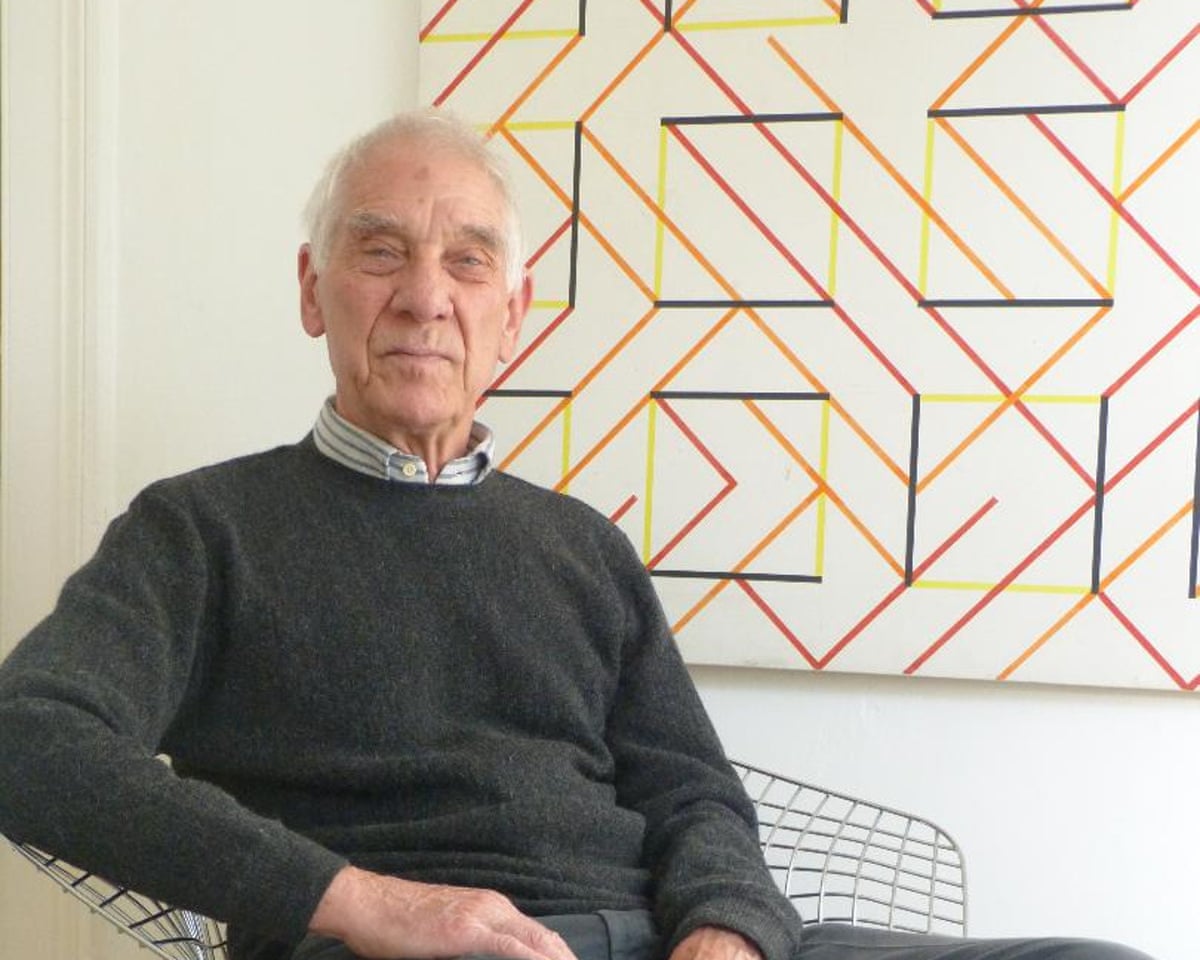
Peter Ahrends, who passed away at the age of 93, was a founding partner of the architectural firm Ahrends, Burton and Koralek (ABK) established in 1961 alongside fellow architects Peter Koralek and Richard Burton. The three met as students in 1951 at the Architectural Association in London and maintained a professional partnership and lifelong friendship spanning over five decades.
ABK’s portfolio encompassed a wide range of projects including Oxford colleges, public libraries, housing developments, retail spaces, and industrial buildings. Notably, all three partners actively contributed to the design process. They articulated their architectural philosophy by stating:
"Architecture should not be a question of whether or not we put Corinthian capitals on our facades. It is about people and their lives; about making spaces that will have a living, dynamic and significant relationship with the life and activity they will contain."
Early recognition came through commissions such as a Bond Street gallery for art dealer John Kasmin, acclaimed by Forbes magazine as "London’s swingingest 60s art gallery," and a competition victory for the Berkeley Library at Trinity College Dublin. Completed in 1967, the library was described by a critic as:
"sitting like a mooring stone at the edge of Trinity’s green, its surfaces pale and pitted, its geometry lucid as a theorem."
Constructed from concrete and Wicklow granite, the building was a starkly modernist structure designed to assert itself alongside the neoclassical architecture nearby. In 2025, it was renamed the Eavan Boland Library in honor of the distinguished Irish poet.
Other significant educational projects included Chichester Theological College, a bold brutalist design in brick and concrete, and a business school at Oxford University (later Templeton College), built in seven phases between 1967 and 1990. A serpentine extension to Keble College, Oxford, completed in 1980, was a modern interpretation of William Butterfield’s polychromatic Victorian original. ABK’s creativity extended beyond academia to housing in Basildon, Essex; an arcadian factory for Cummins in Lanarkshire; and a distinctive warehouse complex for Habitat featuring bright green walls—matching the color of Terence Conran’s Porsche—and play structures designed by artist Allen Jones.
ABK’s work operated alongside mainstream modernism but resisted classification into a single style. Each project was treated as a unique narrative shaped by the dynamic interplay of the three partners. Paul Finch, writing in the Architects’ Journal in 2002, characterized their collaboration as one partner "getting ready to sound the drum," another "ponders on the nature of the drum," and the third "wonders whether actually a trumpet may be more appropriate."
National Gallery Extension Controversy
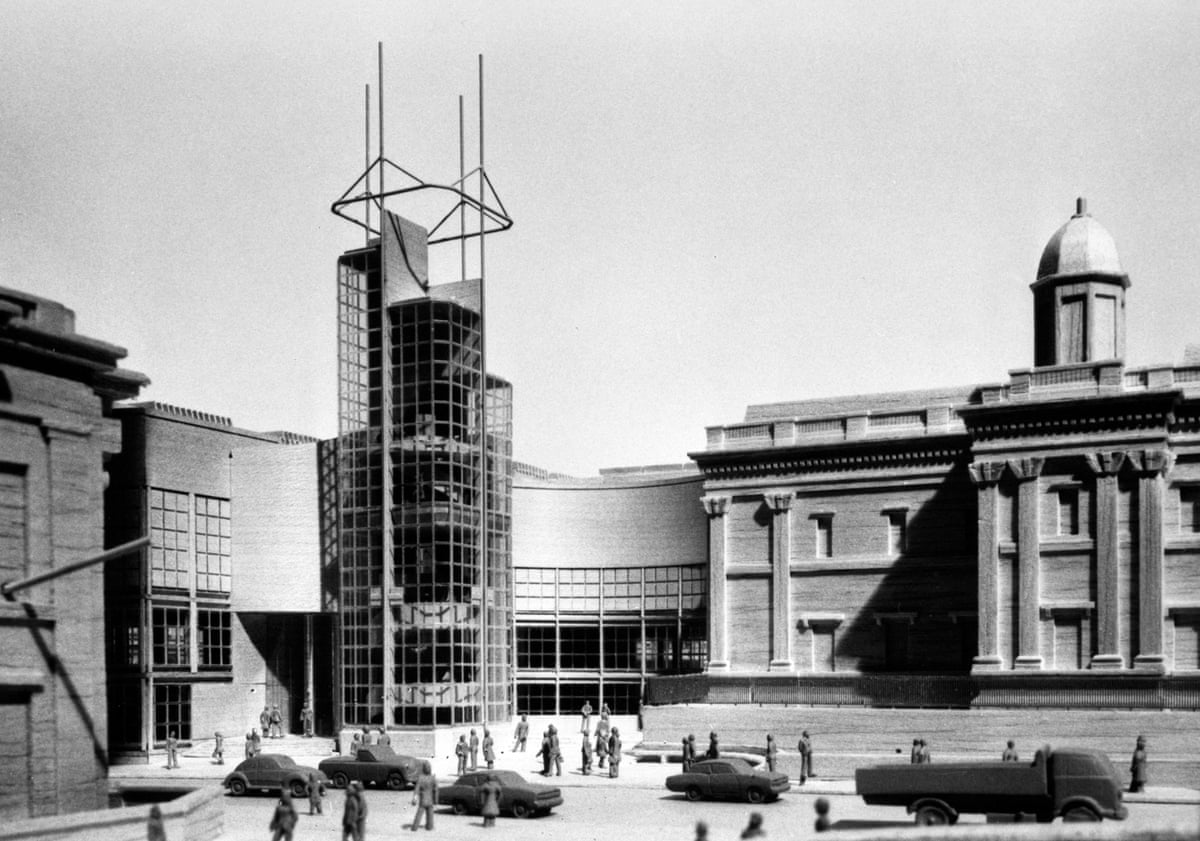
In 1984, ABK became the focus of public attention when their design for an extension to the National Gallery in London, which they had won through an open competition in 1982, was publicly criticized. The then Prince of Wales famously described the scheme as a:
"monstrous carbuncle on the face of a much-loved and elegant friend"
This remark was made during a gala dinner commemorating the 150th anniversary of the Royal Institute of British Architects (RIBA). The "carbuncle speech" was unprecedented in its directness and sparked widespread debate within and beyond architectural circles. Although the ABK partners noted that a "carbuncle" could also refer to a rare gemstone, their design was ultimately abandoned. The National Gallery subsequently commissioned a postmodern extension from American architects Robert Venturi and Denise Scott Brown, a project that received lukewarm reception.
The negative publicity from the prince’s intervention significantly affected ABK’s practice. Despite this, the firm retained loyal clients and gradually resumed work. Notable projects following the controversy included the British embassy in Moscow (1988), designed as a series of separate pavilions for residential and office use connected by elevated bridges; the high-tech St Mary’s Hospital on the Isle of Wight; and an experimental tensile structure at Hooke Park in Dorset, created in collaboration with German architect and engineer Frei Otto. Nevertheless, speculation remains about the potential achievements ABK might have realized without the impact of the "carbuncle speech."

Family Background and Early Life
Born in Berlin, Peter Ahrends was the son of Steffen Ahrends and Margarete Visino, making him a third-generation architect. His grandfather, Bruno Arons, who had Germanized the family’s Jewish surname to Ahrends, was a pioneer of European modernism. Bruno designed a housing estate at the Siemensstadt in Berlin’s Reinickendorf district, now recognized as a UNESCO World Heritage site. After relocating to Britain in 1939, Bruno was interned for a year on the Isle of Man alongside German artists and intellectuals including Kurt Schwitters.
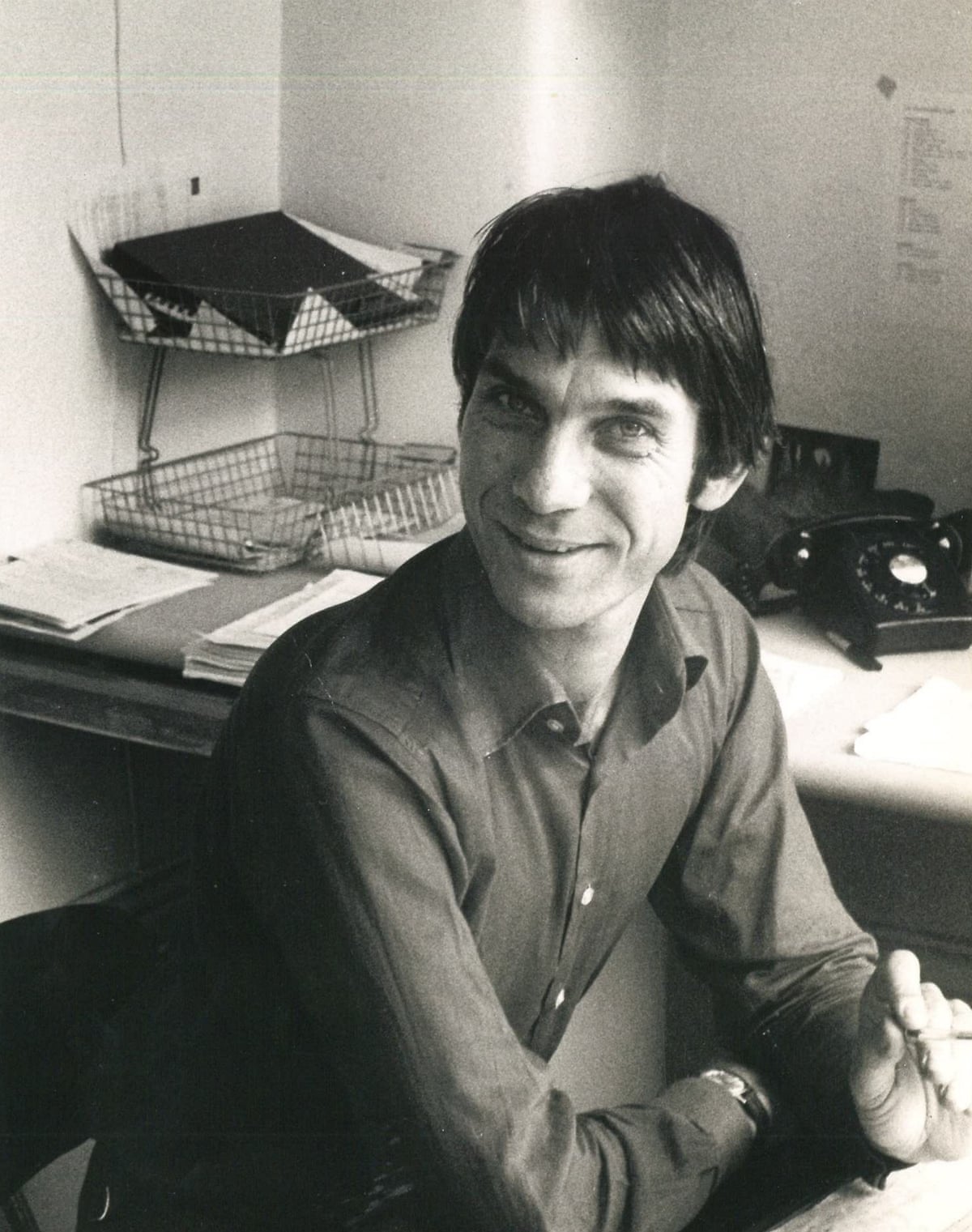
Peter’s father, Steffen, was educated at the Weimar Bauhaus and later worked under Ernst May, Frankfurt’s city architect responsible for Soviet new-town development in Moscow. Steffen emigrated from Nazi Germany in 1937 to South Africa, where he established a successful architectural practice, designing over 500 houses. Peter documented the intertwined careers of his father and grandfather in his 2015 book A3 Threads and Connections.
Raised in Johannesburg, Peter attended King Edward VII School. Following his parents’ divorce in 1944, he was sent to boarding school in East London, a coastal town 600 miles away. At age 11, he once traveled without a ticket on a train to Johannesburg and recalled being treated "very pleasantly" by railway police, in contrast to a young black man who was treated harshly for a similar offense. Reflecting on this experience, he noted:
"From that moment onwards there was a sensitivity to the existence of racism and its physical and social dimensions."
After completing apprenticeships as a carpenter and plumber—his father’s recommendation for practical training—Ahrends enrolled at the Architectural Association in London. He embraced the vibrant atmosphere of London during the Festival of Britain, a stark contrast to the apartheid regime tightening its grip on South Africa. As a student, he admired the works of Le Corbusier and American modernist Frank Lloyd Wright.
Personal Life and Activism
Following graduation, the ABK partners undertook a formative journey in a second-hand Land Rover across Europe and Turkey, culminating in the historic Persian city of Isfahan. In 1954, Ahrends married Liz Robertson, who had accompanied him on this trip. The couple had two daughters, Jacqui and Jane.
Ahrends briefly returned to South Africa but was repelled by the growth of apartheid. He became an ardent advocate for democracy, engaging with representatives of the African National Congress (ANC) and exiled South African activists including Harold Wolpe, Ruth First, and Joe Slovo. From 1986 to 1994, he chaired UK Architects Against Apartheid, an organization that at its peak included approximately 200 architectural practices. The group campaigned for cultural and academic boycotts and lobbied for the Royal Institute of British Architects to de-recognize the South African Institute of Architects.
Academic and Professional Contributions
Alongside his architectural practice and activism, Ahrends was deeply involved in education. He served as a professor at the Bartlett School of Architecture at University College London from 1986 to 1989 and was a visiting professor at Kingston Polytechnic during 1984-85. Additionally, he was a member of the Design Council between 1988 and 1993.
The original ABK partnership concluded in 2012 when Ahrends and Koralek retired. Burton had departed earlier in 2002 due to illness and passed away in 2017. In the late 1980s, Koralek established a successful ABK satellite office in Dublin, which continues to operate. Reflecting on their architectural approach, Ahrends remarked:
"If our architecture is ‘social’, it’s because it’s about people and the way they really live, not just aesthetics."
Later Years and Legacy
Liz Ahrends died in 2007. Peter Ahrends is survived by his daughters Jacqui and Jane, two grandsons, two great-grandchildren, and his partner, Marlene Rolfe.


