

Jonathan Baldock’s Held Exhibition at Arnolfini, Bristol
English artist Jonathan Baldock presents a tense and immersive world of folkloric psychedelia and pagan aesthetics in his exhibition Held at Bristol’s Arnolfini. The show features tapestries and ceramics that evoke a strange, eerie atmosphere that is both compelling and unsettling.
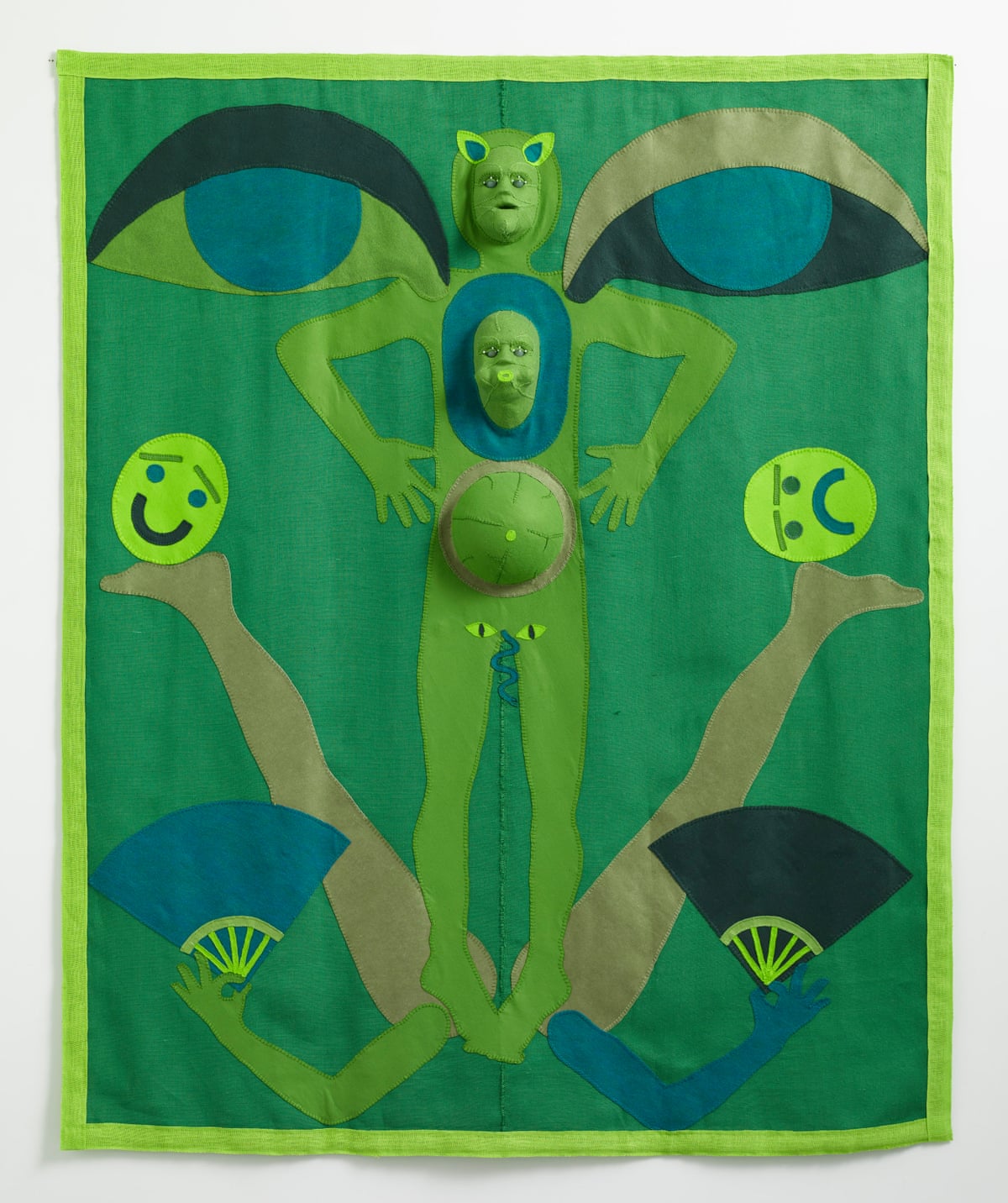
Arms stretch out, hands grasp, and lips pucker across the artworks, creating a sensation of being reached for or invited into an embrace. The exhibition’s pervasive sense of cuddliness carries an undercurrent of threat, suggesting a violent trap rather than comfort.
Baldock has constructed a world that blends folkloric and psychedelic elements with pagan symbolism. While the accompanying wall texts employ gentle, therapeutic language about “radical gestures” and “holding space for queer and working-class stories,” this tone contrasts with the exhibition’s actual intensity. The show is indeed concerned with queerness and working-class narratives, but it is far from soft or gentle. Instead, it is weird, menacing, and charged with tension, which contributes to its strength.
Upon entering, visitors feel as if they have stumbled upon a distorted rural ritual. The experience suggests an invitation to don one of the wheat masks displayed on the walls or to become a sacrificial figure bound within the scene. Two life-size felt figures stand at the entrance, their robes adorned with leaves and greenery. Pink openings at crotch level hint at alternative functions for these garments. Ceramic flowers on the walls have been anthropomorphized with noses and ears; a tongue protrudes from the center of a gray poppy, attempting to lick passersby. Hands emerge desperately from ceramic pots on the floor, as if bodies are trapped inside or trying to pull viewers into the installation.

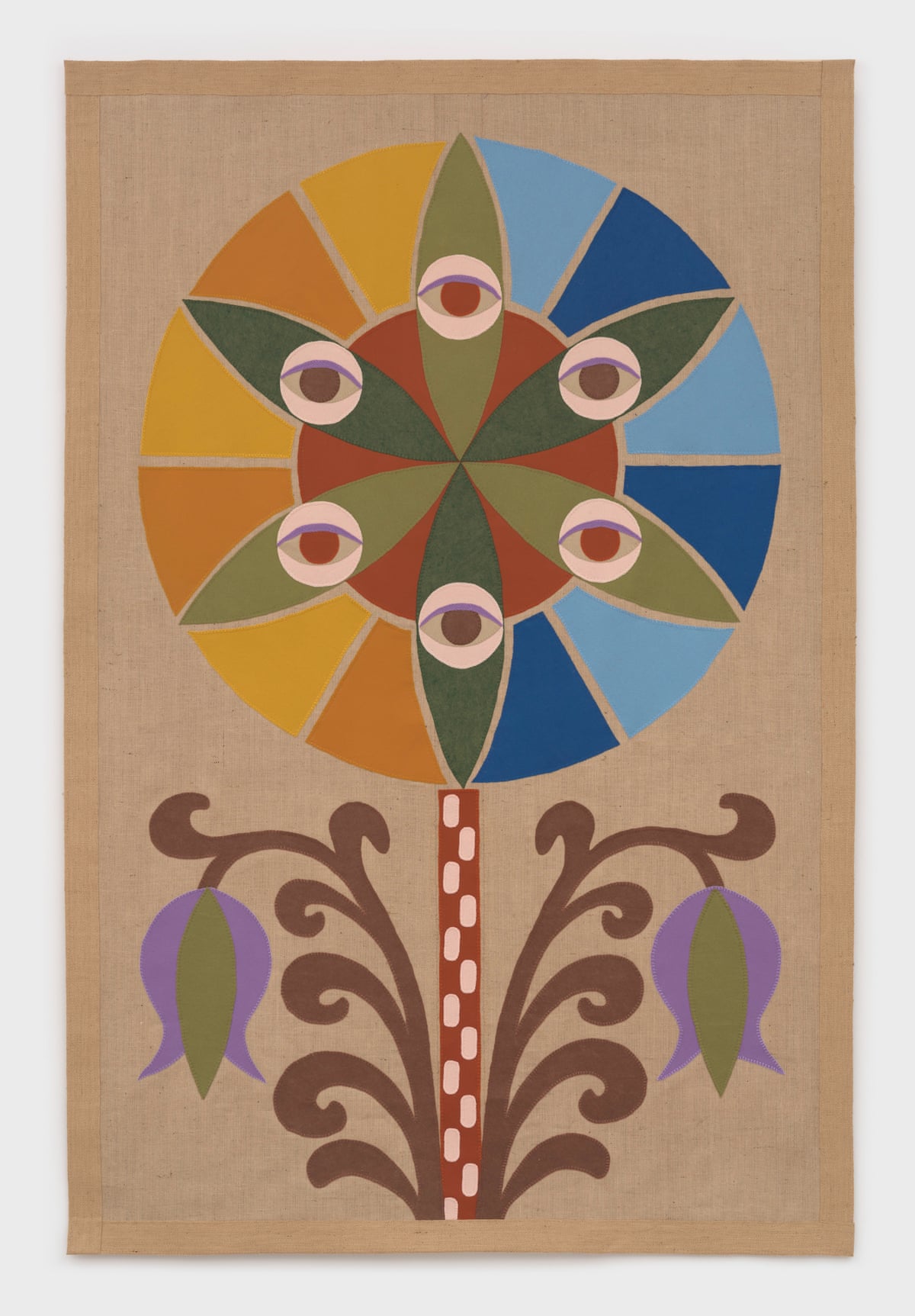
Visitors may feel compelled to escape this enchanted pagan realm where nature appears alive. However, moving into the next room, they are met with a pungent scent reminiscent of fur, wood, and damp moss. A deep bass rumble fills the space, accompanied by sounds of twigs snapping and breathing, possibly emanating from a giant bear sculpture positioned on a platform in the center. The bear’s breath and musk seem to permeate the room. Visitors are invited to climb onto the bear and be embraced by its massive arms, encouraged to remove their shoes and wrap themselves in its limbs. Yet, this embrace does not feel safe or comforting. The question remains whether the bear will hold or harm them.
The Central Tension: Care Versus Violence
This tension between care and violence, love and rejection, lies at the heart of the exhibition. The pagan imagery and rural psychedelia serve as a framework for Baldock’s exploration of his English heritage—both genetic and ancestral—while acknowledging his cultural and sexual estrangement from it.
The exhibition reflects on tribalism and community dynamics, emphasizing the binary of inclusion and exclusion, acceptance and rejection. This theme permeates the entire show, evoking the experience of being caught between belonging and alienation.
Baldock’s work is deeply personal, with numerous references to his mother, her support for his artistic career, and her English garden. The exhibition also incorporates elements related to sexuality, the human body, English history, and Japanese culture. Faces grimace from ceramic pots, flowers emerge from unexpected places such as anuses, and the walls are adorned with tapestries featuring geometric patterns, bodies, teeth, trees of life, Celtic knots, English roses, ancient inscriptions, and green men. The overall effect is dizzying, surreal, and aggressive.
Atmosphere and Soundscape
The unsettling and threatening atmosphere is enhanced by an ambient soundtrack that evokes the sensation of being stalked by a mythical creature in a dark forest. The exhibition conjures images of ancient rites filtered through the lens of 1960s hippie culture and contemporary millennial unease. It is as if the Wicker Man narrative were relocated from a remote Scottish island to semi-rural Kent in the early 2000s, creating a far more disturbing and sinister scenario.


