Monet’s Late Arrival to Venice
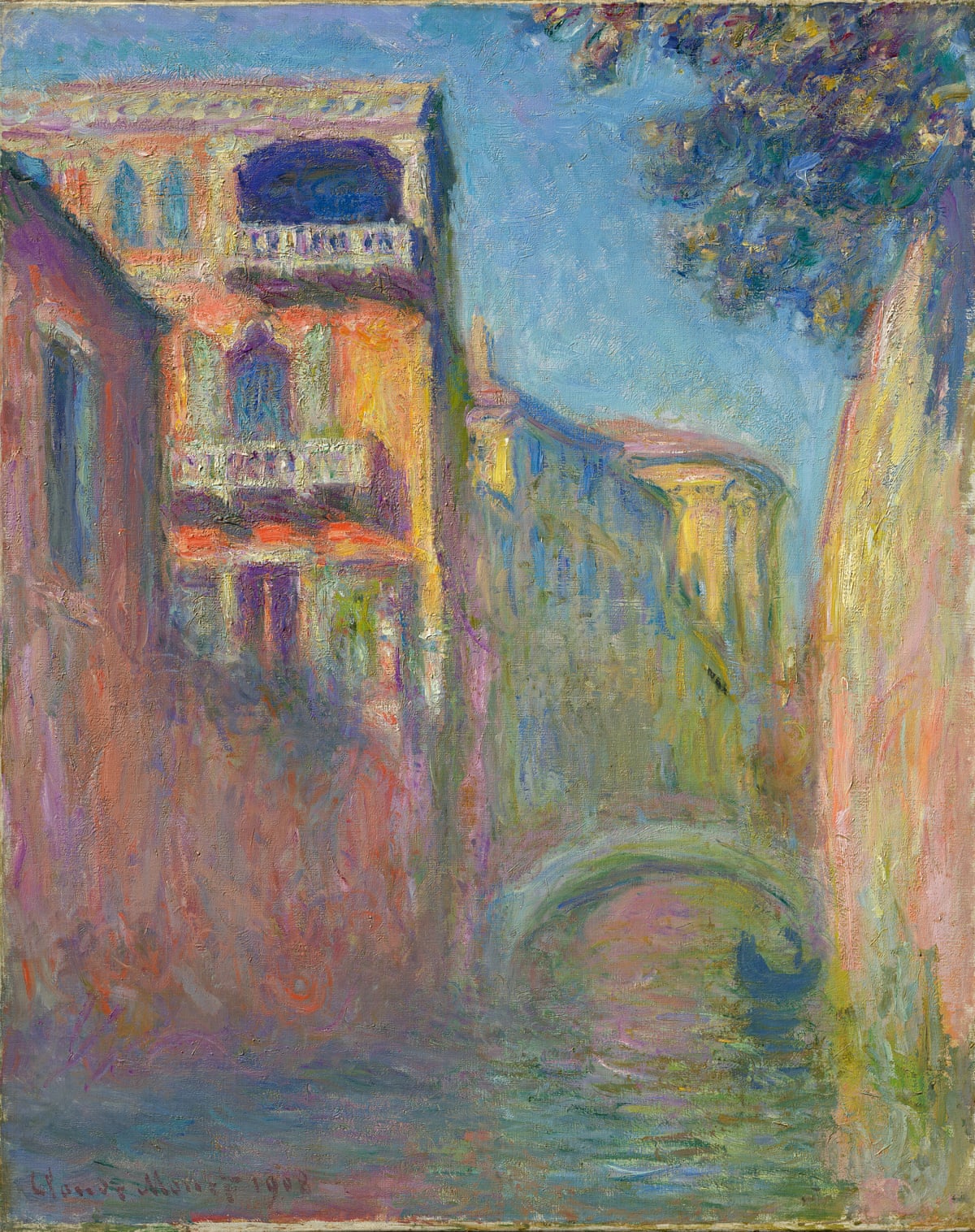
Claude Monet was 68 years old before he first visited Venice, a city that had long attracted many of Europe’s most renowned painters. Despite Venice’s rich artistic history, Monet had kept his distance until late in life. When he finally arrived, he produced dozens of paintings that are now the focus of a new exhibition at San Francisco’s de Young Museum, titled Monet and Venice.
“It might have been insecurity, because Venice had been painted so famously and by so many major names in western history,”said Melissa Buron, co-curator of the exhibition alongside Lisa Small. Buron explained that even a master like Monet could have felt intimidated by Venice’s artistic legacy.
An Exhibition of Venetian Masters
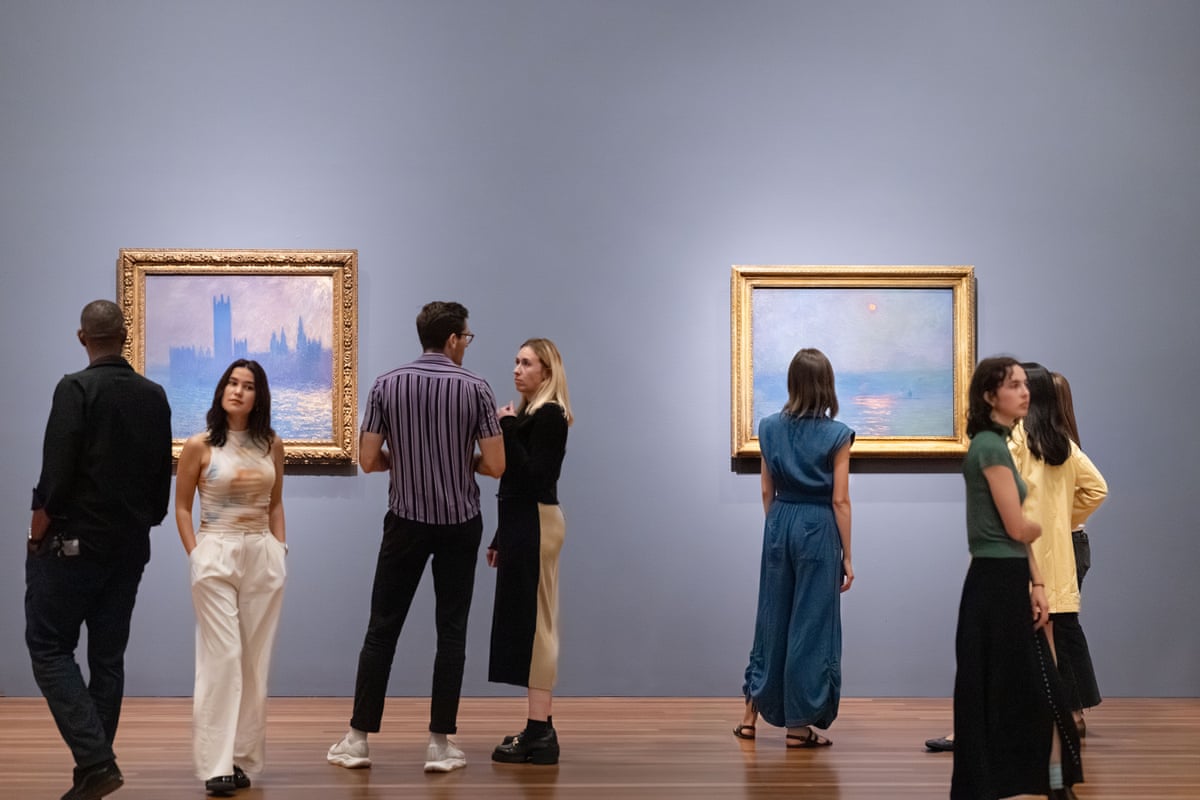
The exhibition gathers two dozen of Monet’s Venetian paintings and also features works by other great artists who depicted Venice, including James McNeill Whistler, Pierre-Auguste Renoir, John Singer Sargent, JMW Turner, and Paul Signac. In total, the show presents over 100 works, including Monet’s early pieces and some of his late waterlilies, creating an immersive experience that captures the allure of Venice.
An Unplanned Artistic Journey
Although pairing Monet with Venice may seem natural, the world might never have seen Venice through Monet’s eyes if circumstances had been different. Monet’s initial visit was planned for only two weeks—too brief for his extensive work—but he extended his stay to two months, allowing him to create numerous oil paintings.
“We wanted to emphasize in the exhibition that his trip to Venice was not predestined,”Buron said.
“I originally thought ‘he’s an artist of water and light, of course he would go to Venice,’ but it really almost never happened.”
Monet’s Integration into Venice
Upon arrival with his wife Alice, Monet was able to blend into the community of artists painting Venice’s iconic sights. Though recognized by some as a successful painter, the couple mostly mingled unnoticed among tourists. Buron described the trip as
“sort of like a second honeymoon for them to be able to have this experience in their twilight years.”
Connections with Fellow Artists
Monet was acquainted with Whistler, Sargent, Renoir, and Signac, and was familiar with their Venetian works. During his time in London in 1871, while avoiding the Franco-Prussian war, Monet would have seen Turner’s Venice paintings at the National Gallery. He also purchased one of Signac’s post-impressionist paintings of Venice’s Santa Maria della Salute church, which is included in the exhibition.
“I’m sure there was a sense of competition among some of the artists – they’re each trying to say something about Venice,”Buron noted,
“but there was a lot of sharing too, like suggestions about art suppliers to use.”This exchange was important since Monet had not initially planned an extended stay and had brought limited art supplies, making local vendors essential.

Exploring Venice Through Monet’s Eyes
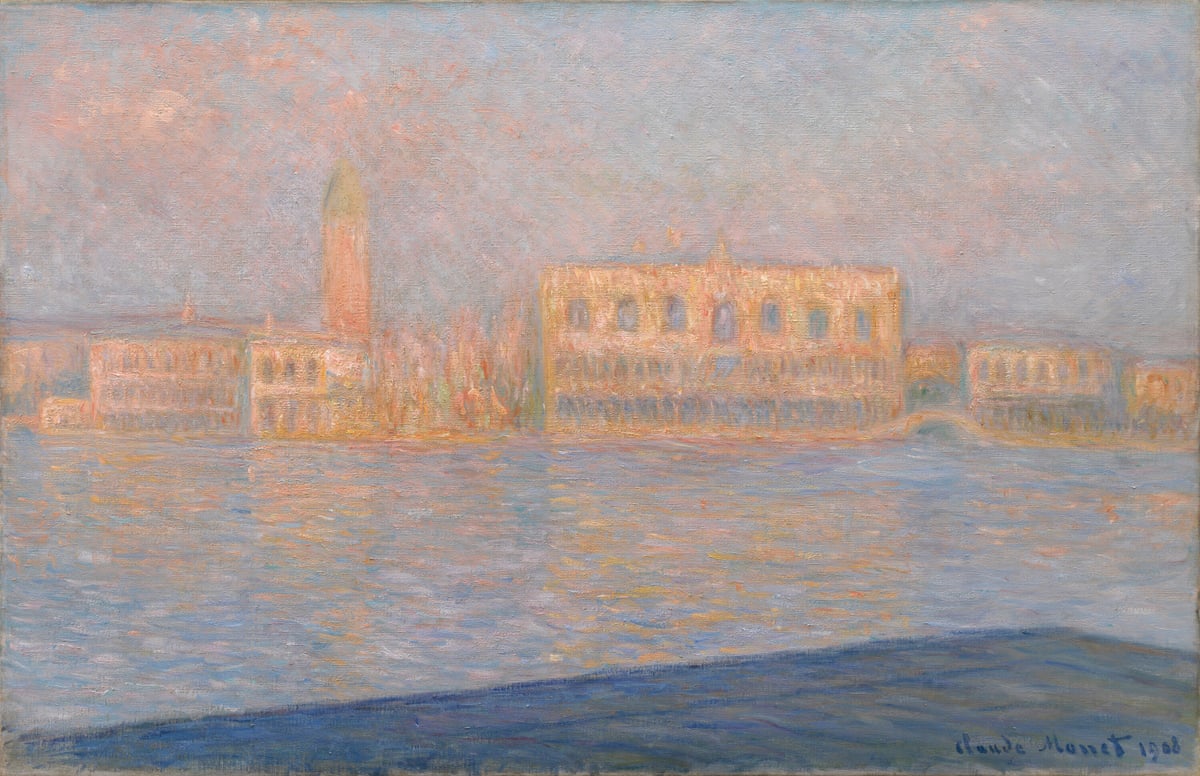
The exhibition is organized around the various parts of Venice Monet painted: the Grand Canal, Palazzo Contarini (painted from a gondola), San Giorgio Maggiore church, and the Palazzo Ducale. Many sites are represented by multiple, subtly varied versions of the same view, alongside unique works such as a single painting of the “red house,” a vivid firetruck-red building on a smaller canal.
“There are subtle variations between them, which I think is really interesting,”said Buron.
“For instance, in the two paintings of the Palazzo Ducale, they look so similar, but you do see one has a slightly warmer glow than the other one.”
The Exhibition’s Unique Format
Because of the many near-repetitive paintings, the exhibition encourages visitors to linger and observe the subtle differences in tone, texture, warmth, and framing Monet applied to each scene. This approach offers a distinct experience compared to other major artist exhibitions.
Venetian Influence on Monet’s Later Work
The final gallery features Monet’s waterlilies, highlighting how his time in Venice influenced his late masterpieces. Before his trip, Monet had declared he would abandon the waterlily series after a lukewarm response from his dealer Paul Durand-Ruel in 1907. However, after returning from Venice, Monet informed Durand-Ruel that he had changed his mind and was continuing the project.
“I think Monet being in Venice, where he’s surrounded by water and light every day, it’s plausible that because of that the waterlilies are something that he’s inspired to continue,”Buron said.
“And we have the evidence of him saying, ‘I’m going to quit [the waterlilies] once and for all,’ and then coming back to make even more ambitious work than he had before.”
Significance of the Exhibition
According to Buron, Monet and Venice represents the largest collection of Monet’s Venetian paintings displayed together since their original exhibition in 1912. The idea for the show originated when Buron admired one of Monet’s Grand Canal paintings in the de Young’s collection and envisioned a gallery filled with such works. Now, visitors in San Francisco can experience this vision.
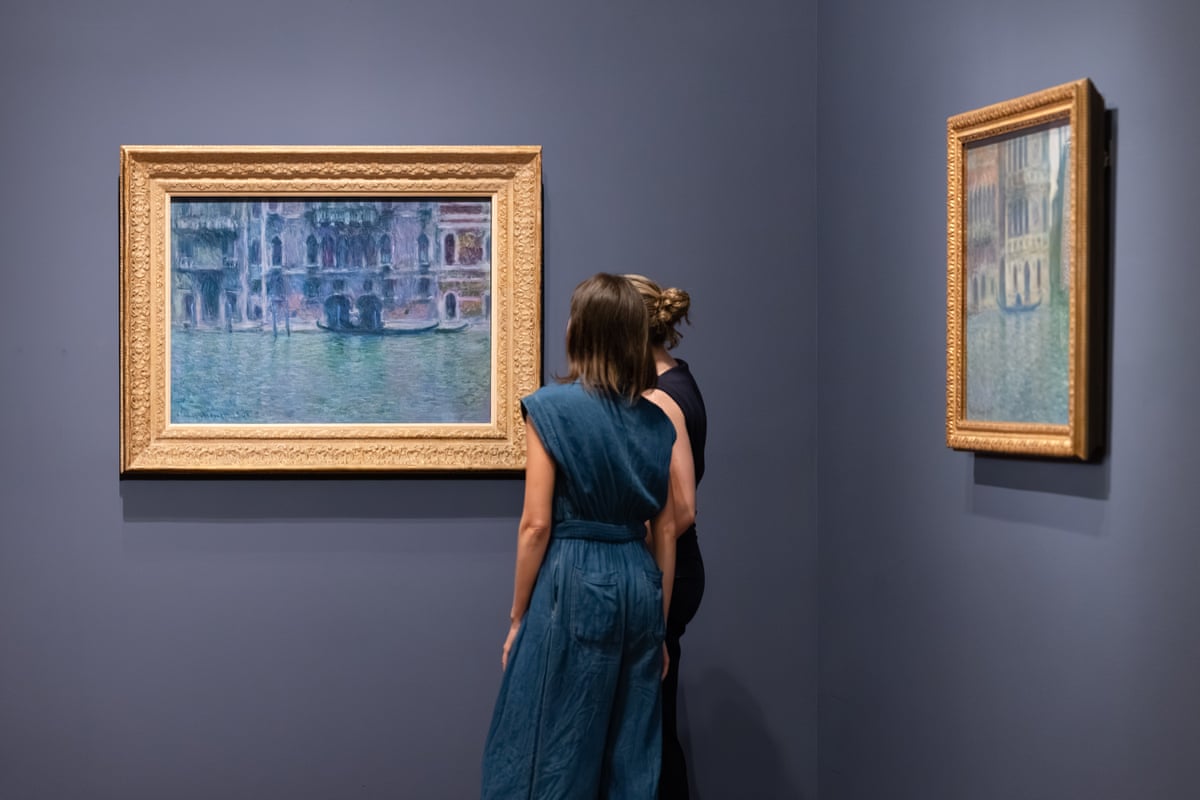
“It’s the light, and the way that he has captured this really evanescent moment in time. I mean, it’s just so beautiful,”Buron said,
“and this idea that he wrote about, it’s too beautiful to be painted, what a fascinating challenge for an artist.”
Monet and Venice is on display at the de Young Museum in San Francisco until 26 July.