Royal Academy, London
Michaelina Wautier’s powerful paintings have been misattributed to her male contemporaries for three centuries. Now, UK audiences have the opportunity to engage with the work of this 17th-century pioneer for the first time.
Art history is undergoing a revision of the traditional white male canon by uncovering overlooked female artists. Recently, there has been a surge of interest in Artemisia Gentileschi, whose extraordinary work has been highlighted in major exhibitions like the National Gallery’s, which have sought to separate her artistic achievements from the violent sexual assault that often dominates her biography. In contrast, there is limited documentary evidence about her contemporary Michaelina Wautier (circa 1614–1689), aside from her birth in Mons in the Spanish Netherlands (modern-day Belgium) and her residence with her artist brother Charles in Brussels near the royal court.
Both siblings share the distinction of being highly skilled artists who, despite living in a patriarchal society that hindered women’s artistic careers, produced work that was often misattributed to male artists. For Artemisia, her father Orazio was the frequent recipient of such misattributions; for Michaelina, it was her brother Charles or other Baroque painters of the time. Wautier’s oeuvre is particularly elusive because she worked across multiple genres—portraits, history and religious paintings, and decorative floral works, the latter typically associated with female artists—which further complicated the identification of her authorship.
In 2009, the monumental painting The Triumph of Bacchus was definitively attributed to Michaelina Wautier at the Kunsthistorisches Museum in Vienna. This grand canvas is now part of the Royal Academy’s exhibition showcasing the latest understanding of Michaelina’s evolving body of work. The scale and ambition of the painting, featuring intertwined nude anatomical forms, challenged long-held assumptions that such work could not have been created by a woman, especially since Michaelina included a self-portrait within it. Historically, women were denied access to formal art education and live model studies, raising questions about how she achieved such mastery.
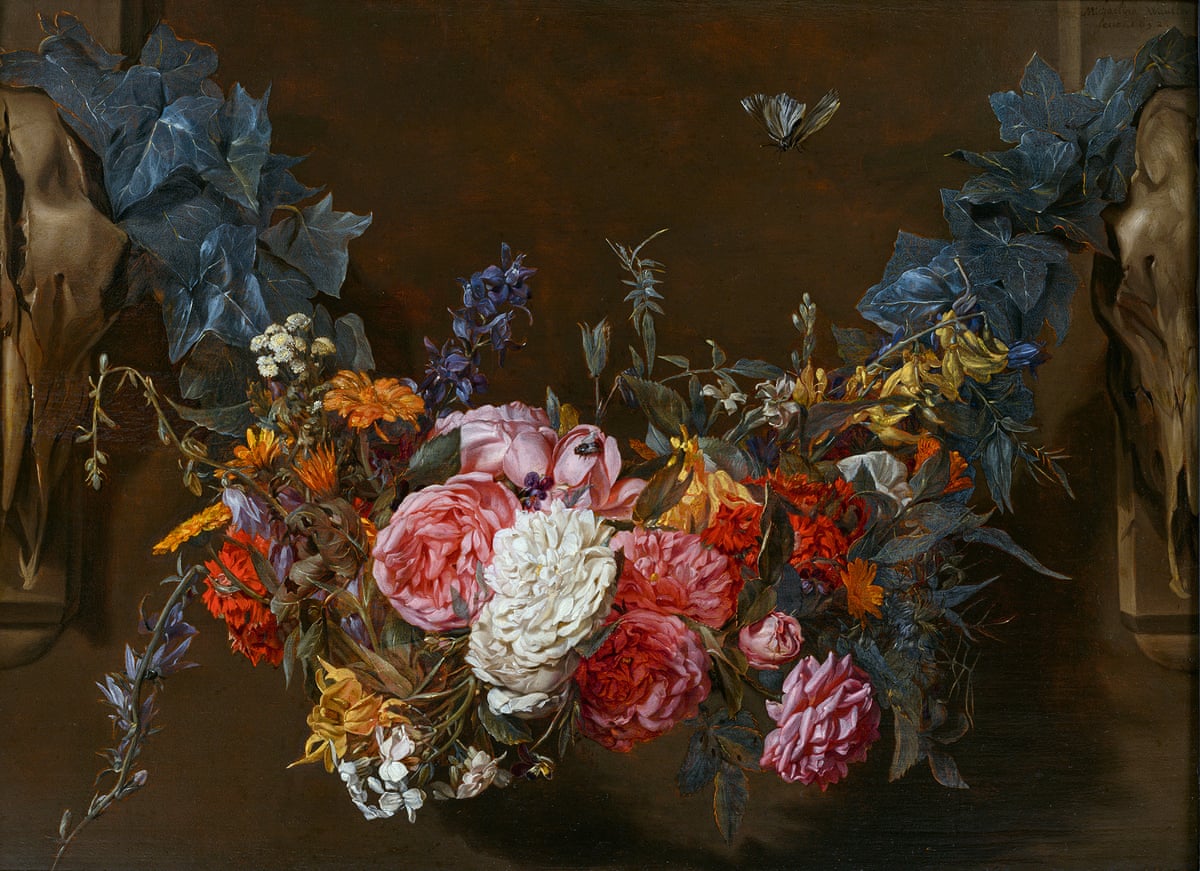
The exhibition represents a rare instance of art historical research unfolding in real time, employing scientific analysis, scholarship, and connoisseurship to unravel these mysteries. For example, of only two known garland paintings by Wautier, one is painted on a wood panel bearing an Antwerp mark, establishing its geographical origin. It also includes unusual imagery of ox skulls, a motif found on ancient Roman urns. Additionally, Wautier’s only known drawing depicts the Medici Ganymede bust, which was located in Rome at the time. This raises questions about whether she had the financial means to travel to Italy or the social connections to access such visual references indirectly.

The exhibition emphasizes the importance of connoisseurship—the identification of artistic authorship through the recognition of a distinctive painterly style. This skill is developed by experts who have dedicated their careers to closely examining and memorizing vast amounts of imagery. While auction houses and galleries often prioritize scientific and scholarly evidence due to its quantifiable nature, these methods are incomplete without connoisseurship.
What is especially remarkable about this exhibition is the arrangement of paintings across three galleries. The first two galleries display portraits and religious works by Michaelina alongside pieces by her contemporaries, including Rubens and her brother Charles Wautier. The third gallery presents her "most distinctive works," allowing for stylistic comparison essential to connoisseurship. This layout reveals that Michaelina and Charles likely shared similar technical training, possibly working in the same studio and using the same materials. Curators have even identified instances where Michaelina may have contributed to her brother’s paintings.
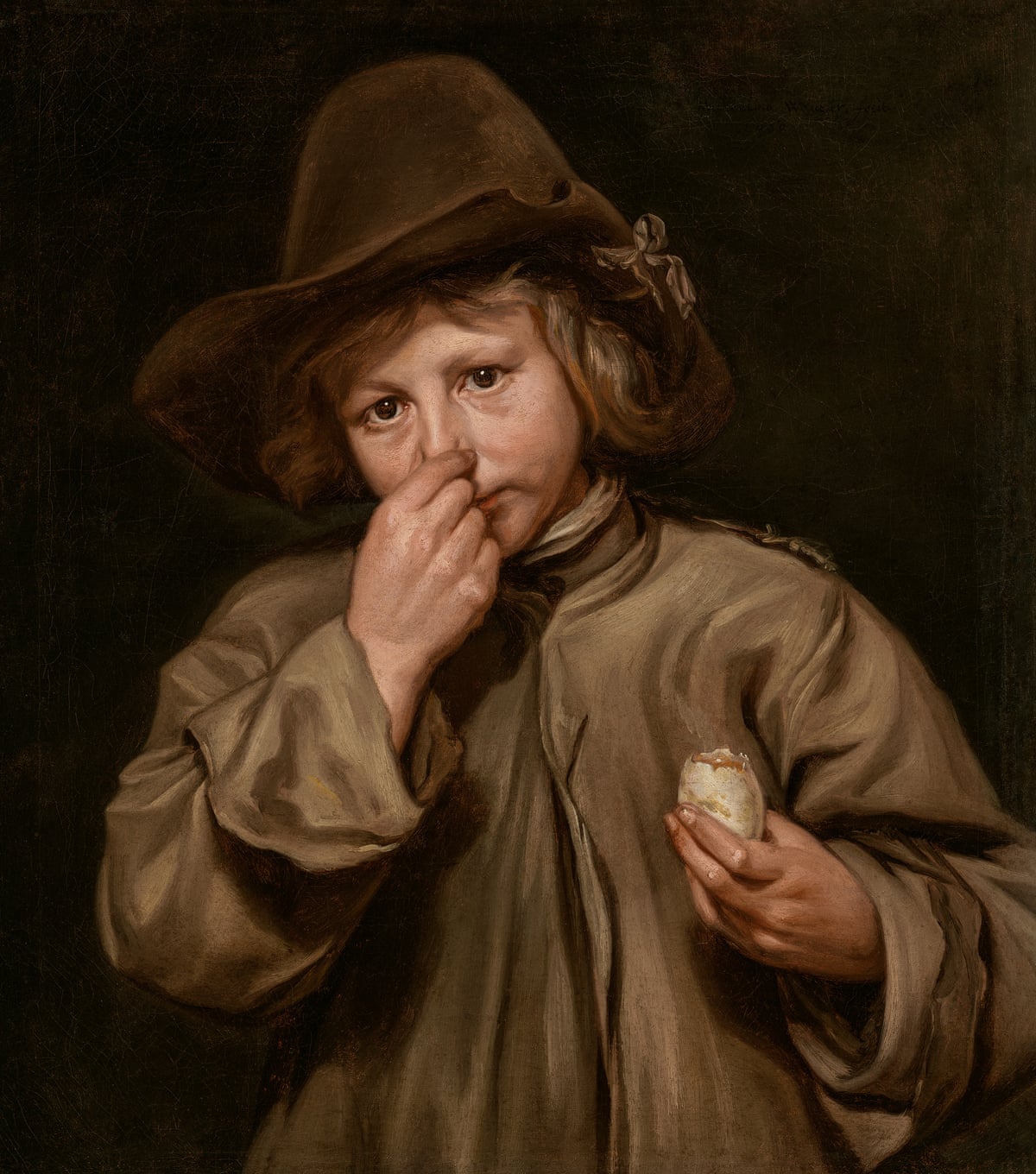
The gallery dedicated solely to Michaelina’s works is a highlight. Her "most distinct" pieces exhibit a painterly style that is both Baroque in character and uniquely her own, noted for features such as her particular fondness for wild, loose hair. These works are vibrant and luminous, often infused with a subtle sense of humor. For example, her Five Senses series subverts traditional representations: instead of the conventional image of a woman smelling a flower, the painting Smell depicts a grimacing boy recoiling with his nose scrunched from a rotten egg he holds.
This exhibition likely marks the first opportunity for UK audiences to experience Michaelina Wautier’s work in a comprehensive manner. Bringing together all her known works, which were previously almost absent from public consciousness, creates the impression of discovering an entirely new artist—one of exceptional and fully developed talent. Importantly, it also raises awareness of the need to continue efforts to identify further misattributed or lost paintings. The story of Michaelina Wautier’s recognition is ongoing.