Ancient Horned Pony Cap from Scotland Showcased in US Exhibition
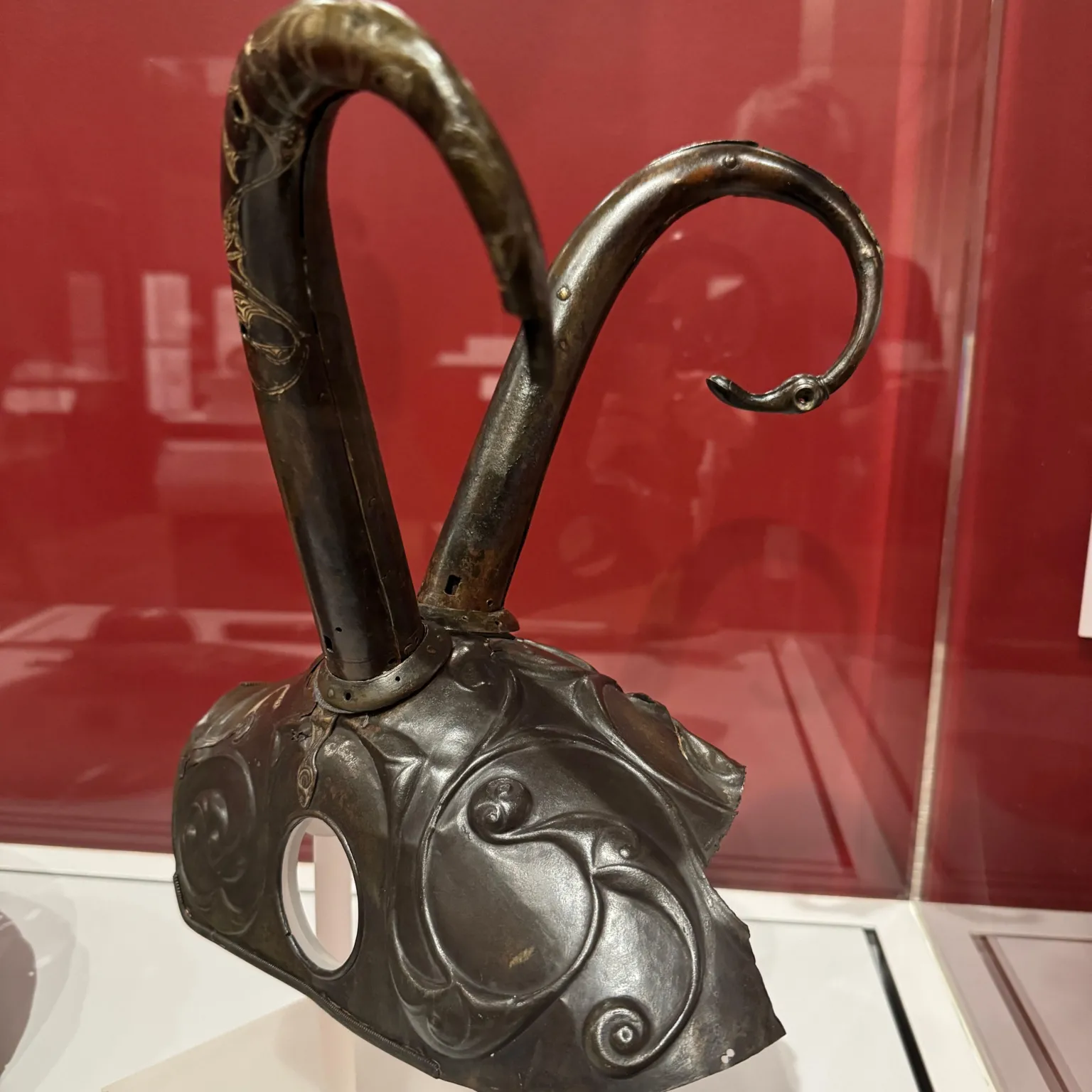
A horned pony cap recovered from a bog in southern Scotland over two centuries ago is currently one of the key highlights at a new exhibition in the United States.
Dr Fraser Hunter, Iron Age curator at National Museums Scotland (NMS), explained that the headwear would have given the animal the appearance of a "mythical beast".
The artefact, believed to be more than 2,000 years old, was discovered in 1812 at the site of the former Torrs Loch near Castle Douglas.
It is featured in the Celtic Art Across the Ages exhibition, which has recently opened at the Harvard Art Museums (HAM) in Massachusetts.
Hunter noted a particular interest in Celtic culture in the Boston area.
"The exhibition is based in Boston and, obviously, Boston has got this big tradition of Irish heritage,"
"So they're really keen to have an exhibition looking at Celtic art and the development of Celtic identity and our collections are really strong in this area."
Other objects on display include a Roman period brooch from Auldearn in the Highlands, an early medieval brooch from Rogart in Sutherland, a sculpture from Monifieth in Angus, and a "glorious wooden box" from near Birsay on Orkney.
Hunter commented on the diversity of the collection.
"There's a really wide range of materials over a wide range of dates, almost 1,000 years of history that's been sent across,"
However, the pony cap remains one of the "real star pieces of the show".

"It's a real internationally-important object, and it's also been one of these long-running puzzles,"
"It was found in 1812 when they were draining a bog at Torrs, south of Castle Douglas and they found both a cap and horns."
There was a prolonged debate about whether the cap and horns were originally joined after both ended up in the collection of Sir Walter Scott.
"He wasn't immune to sexing things up a bit and trying to improve how things looked,"
"But the original newspaper account that a colleague discovered a few years ago makes it quite clear that the horns and the cap were attached when it was discovered.
"So you have this amazing cap for a pony with the horns - it would have made it look like some mythical beast almost."
Hunter explained that ponies were significant status symbols at the time and might have been used to pull chariots, which he described as "the Ferrari of the period".
"The ponies, because they were part of this status ensemble, they too were kitted out,"
"Now - with nothing quite like this from anywhere else - it is an exceptional piece, but the idea of decorating horses and ponies is something you see quite widely.
"It may be with the horns on it, it's intended to make the ponies almost into some kind of mythical beast - they move beyond being just ponies and become something quite fantastical."
Susanne Ebbinghaus, curator of ancient art at HAM, expressed enthusiasm about hosting the exhibition.
"The Torrs pony cap and other fantastic objects from NMS are among the highlights of our exhibition Celtic Art Across the Ages, here at the HAM in Massachusetts,"
"These and other objects will introduce visitors from the Greater Boston area to unexpected forms of art and ornament.
"Perhaps some travellers from Scotland will come see the exhibition, too, when they are in town to watch the Scotland national football team play in the World Cup in June."
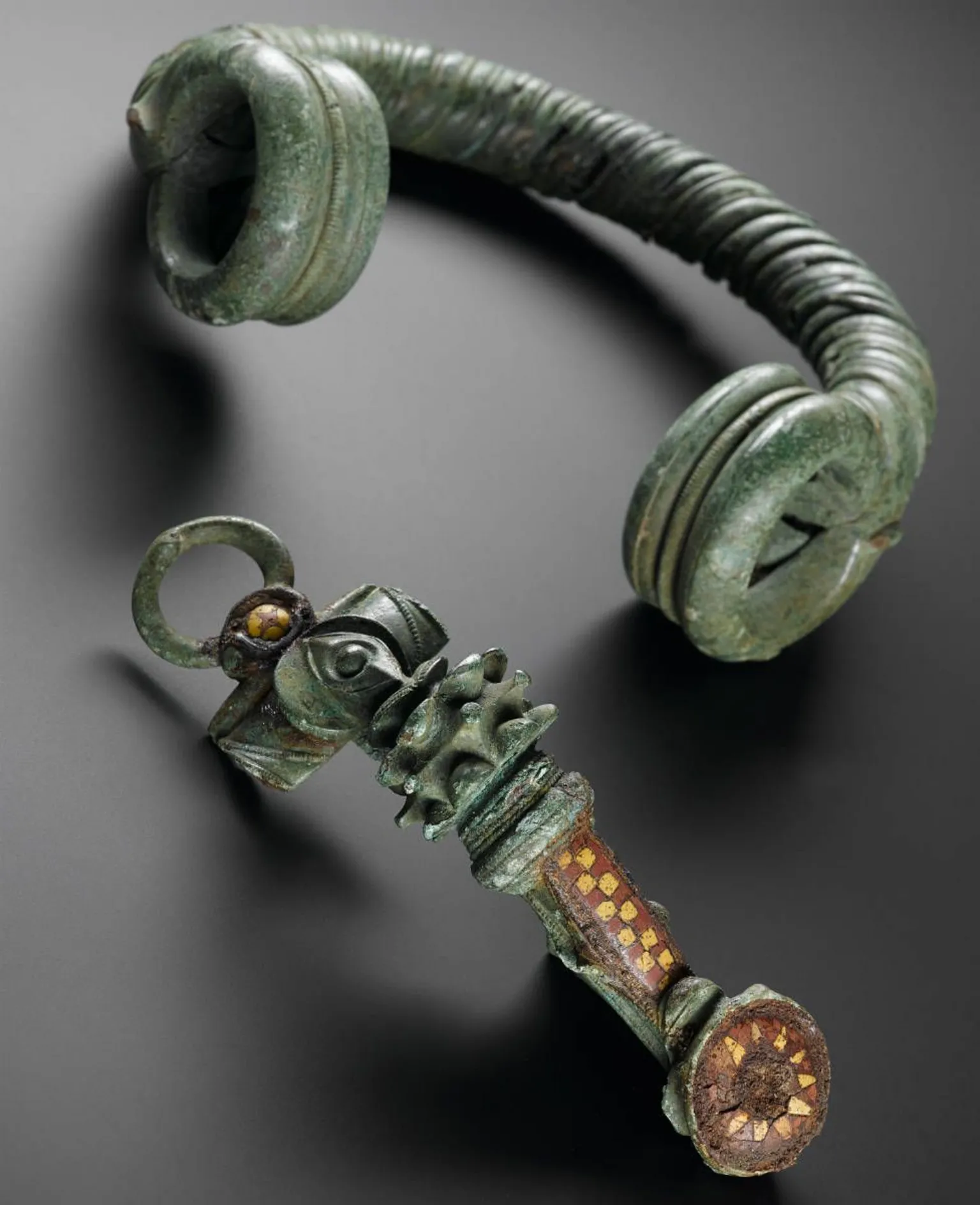
Alongside the pony cap, the exhibition also features an Iron Age armlet and other significant artefacts.
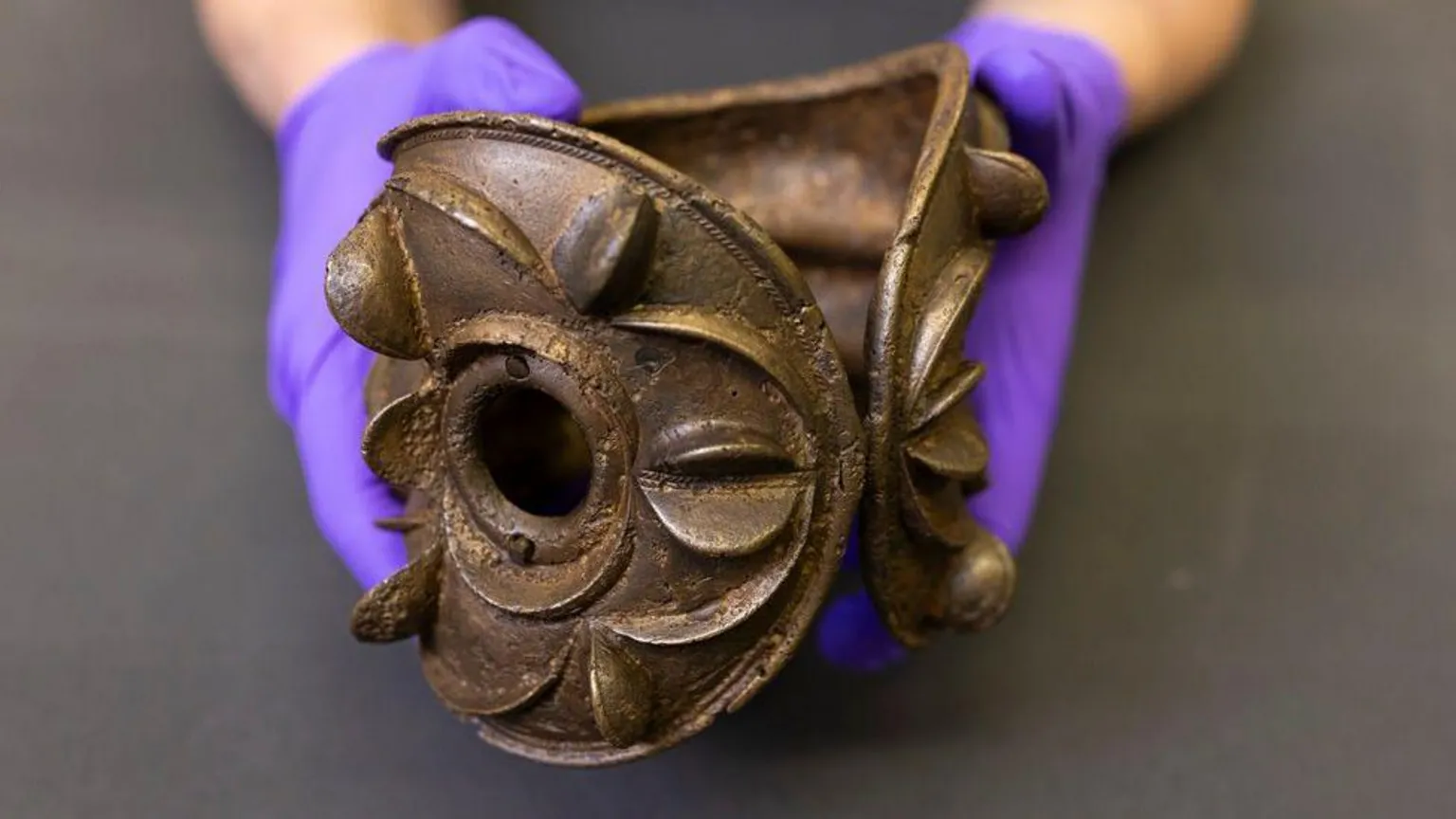
Among the displayed items is also the Roman period brooch from Auldearn, which is part of the diverse collection representing nearly a millennium of history.