

EU's New Digital Border System Begins Full Operation
The European Union's new digital border system, which requires fingerprints and photographs alongside a passport scan, is set to be fully operational from Friday.
This date marks the deadline for the Entry/Exit System (EES) to be active at every Schengen border crossing point across all 29 participating countries.
The system began its gradual introduction in October with the aim of enhancing security and ultimately facilitating smoother travel. However, due to some technical and operational challenges, not every border point will have fully implemented the system by the deadline.
There have been reports of long queues at several European airports, with warnings that delays could worsen during busy holiday periods.
What is EES and Where is it Being Introduced?
The Entry/Exit System (EES) is a digital platform designed to monitor the entry and exit of non-EU citizens—including those from the United Kingdom—within the Schengen Area.
The Schengen Area encompasses 29 European countries, primarily within the EU, where travellers can move across borders without routine border controls.
This includes many popular destinations for UK travellers such as France, Spain, Portugal, Italy, and Greece.
Under the new system, travellers must register their fingerprints and have a photograph taken.
Eventually, EES will replace the current process of border officers stamping passports.
Will I Need to Use EES When I Go on Holiday?
The timing of when travellers will first encounter EES depends on their destination and travel dates. For air travellers, the process occurs upon arrival at European airports.
The phased introduction of EES began on 12 October, with a planned rollout over six months.
However, some border points have experienced queues lasting several hours. Airports have cautioned that delays may increase during forthcoming holiday seasons.
Earlier this year, travellers arriving at Geneva, a popular ski destination, faced significant delays due to the system.
Travel experts have informed the BBC that IT issues have affected the system at certain locations, causing difficulties for travellers and resulting in long queues where the system is not user-friendly.
The European Commission has indicated that suspending EES checks temporarily to alleviate queues will be permitted during busy periods until September.
On Friday, not all European airports will activate the system, with Milan and Lisbon among those not switching it on immediately.
What Do Passengers Have to Do to Use EES?
Upon first use, most non-EU travellers must register biometric data, including fingerprints and a photograph, while having their passport scanned.
Flight passengers will complete registration at their destination airport.
For those crossing the English Channel by ferry from Dover, using the Eurotunnel shuttle to France, or travelling by Eurostar train, registration occurs as they depart the UK.
At these locations, passengers follow instructions at designated kiosks.
The kiosks scan passports, capture fingerprints and photographs.
Children under 12 years old are exempt from providing fingerprints. Staff members are available to assist travellers.

The kiosk screen also presents four questions regarding the trip, such as confirming accommodation details and proof of sufficient funds.
At Eurotunnel, these questions are asked by border officers on a discretionary basis.
The EES registration is valid for three years, with details verified on each subsequent trip during that period.
At Dover, ferry passengers travelling by coach began using the new system in October. Other tourist traffic was scheduled to start on 1 November.
However, car travellers have yet to begin using EES, with no confirmed start date.
Eurotunnel, which operates vehicle shuttles through the Channel Tunnel, is implementing EES in stages.
At Dover port and Eurostar's London St Pancras terminal, the trip questions will not be presented on kiosks during the introductory period, and the system will not be activated on 10 April.
Significant modifications have been made at Dover, including reclaiming land from the sea to create an additional processing area.
Travellers proceed to this new area, located about a mile from the ferry terminal, to complete EES checks.
Because the French border is effectively relocated to a coach processing building in this new area, coaches are sealed after passengers complete their checks before proceeding to board the ferry.
The port's boss says groups of schoolchildren will be able to do some of their registration in advance, so they will only need to present their passports at the border.
Eurostar has installed 49 EES kiosks in three locations around its London St Pancras terminal. Passengers use these kiosks before presenting their tickets at the departures area.
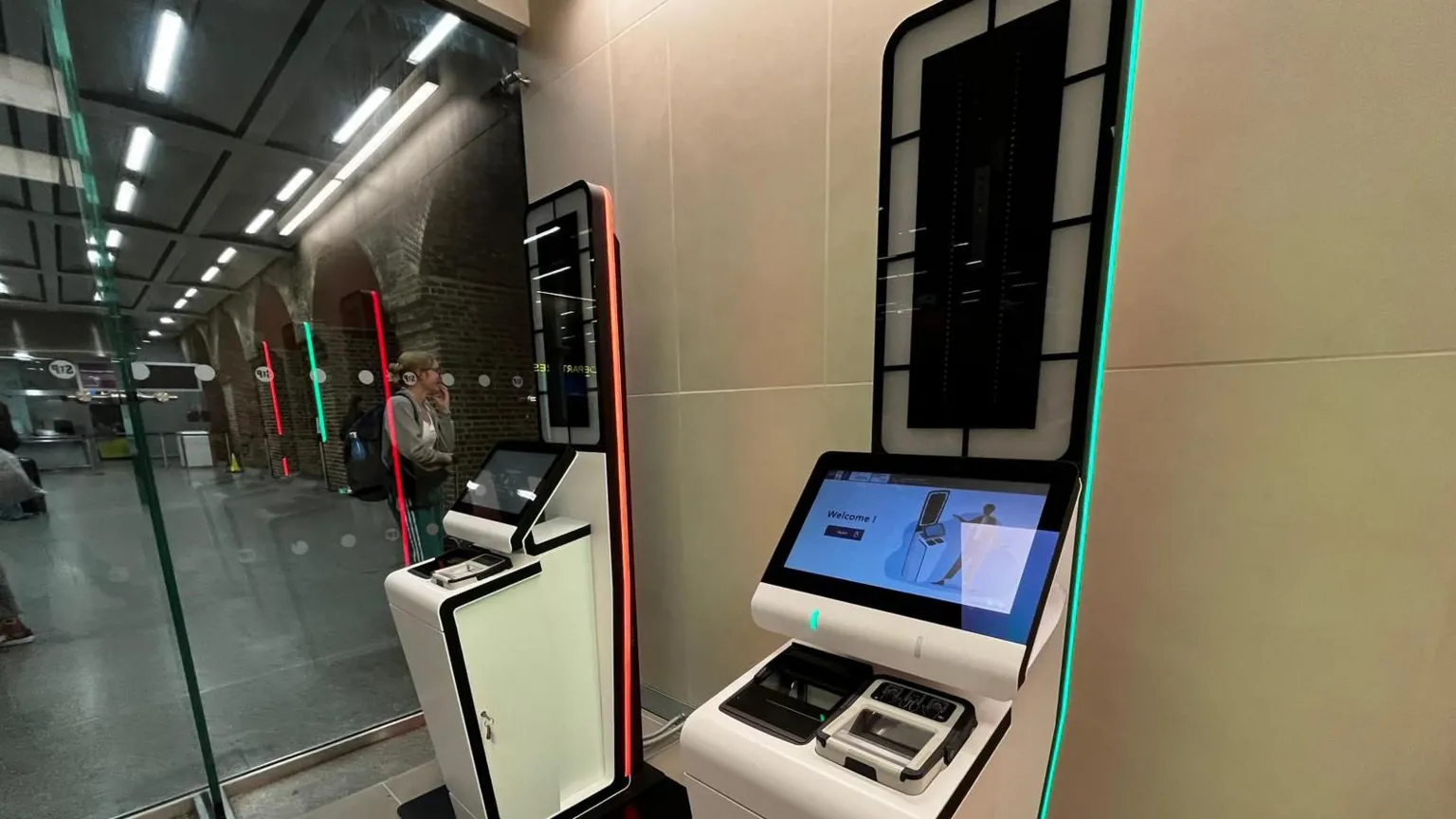
Currently, checks at Eurostar are conducted manually by border officers rather than through the kiosks. Eurostar states it will activate the kiosks "once the operational software and the activation timetable are confirmed and approved by the French Ministry of Interior."
Eurotunnel has installed more than a hundred kiosks on each side of the English Channel.
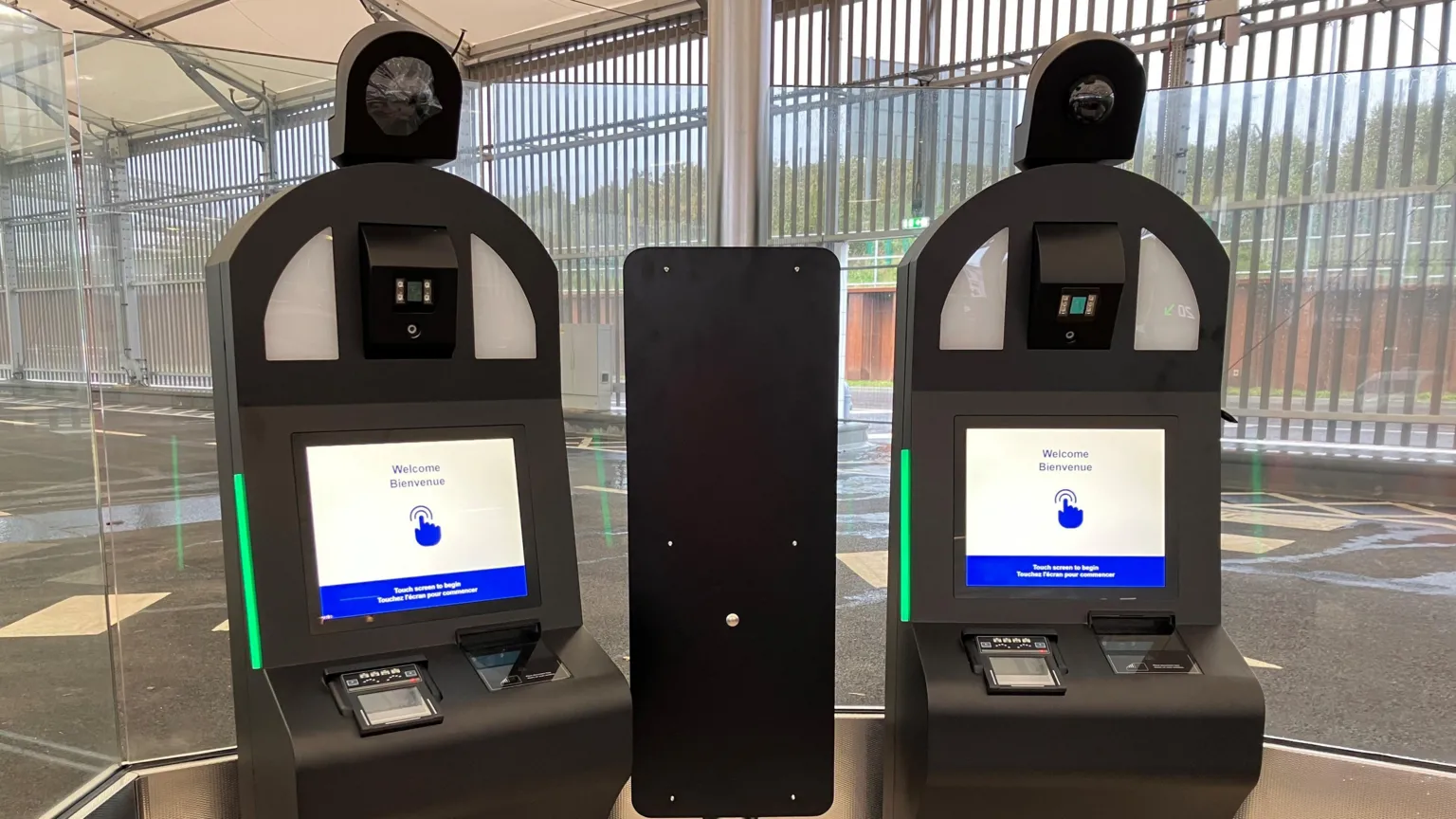
Car travellers are directed to drive up to a kiosk displaying their registration number to provide biometric information. Coach passengers complete the process with a border officer.
A mobile phone application has been developed to allow passengers to complete part of the process before arriving at the border, but it is not widely used at present.
Concerns have been raised that the additional few minutes required for each traveller to complete registration could cause significant queues, particularly at the space-limited Dover port.
However, officials at cross-Channel travel hubs hope that the gradual introduction of EES, rather than a sudden full implementation, will reduce the risk of disruption.
Eurotunnel chief executive Yann Leriche says there will be no "chaos" or queues at the Channel tunnel and that his company is fully prepared.
Similarly, Eurostar hopes its decision to limit EES initially to some business travellers before expanding its use will help prevent queues.
What is ETIAS and When is That Coming?
The EU is also introducing a new visa waiver system linked to passports called the European Travel Information and Authorisation System (ETIAS), which will complement EES.
Citizens of non-EU countries who do not require a visa to enter the EU—including UK nationals—will be able to apply online for travel authorisation prior to their trip.
ETIAS is scheduled to launch at the end of 2026, although the exact date has not been confirmed.
The application fee will be €20 (£17.47) and authorisations will be valid for three years.
Applicants under 18 and over 70 years old will be required to apply but will be exempt from the fee.


