Arrival and First Impressions
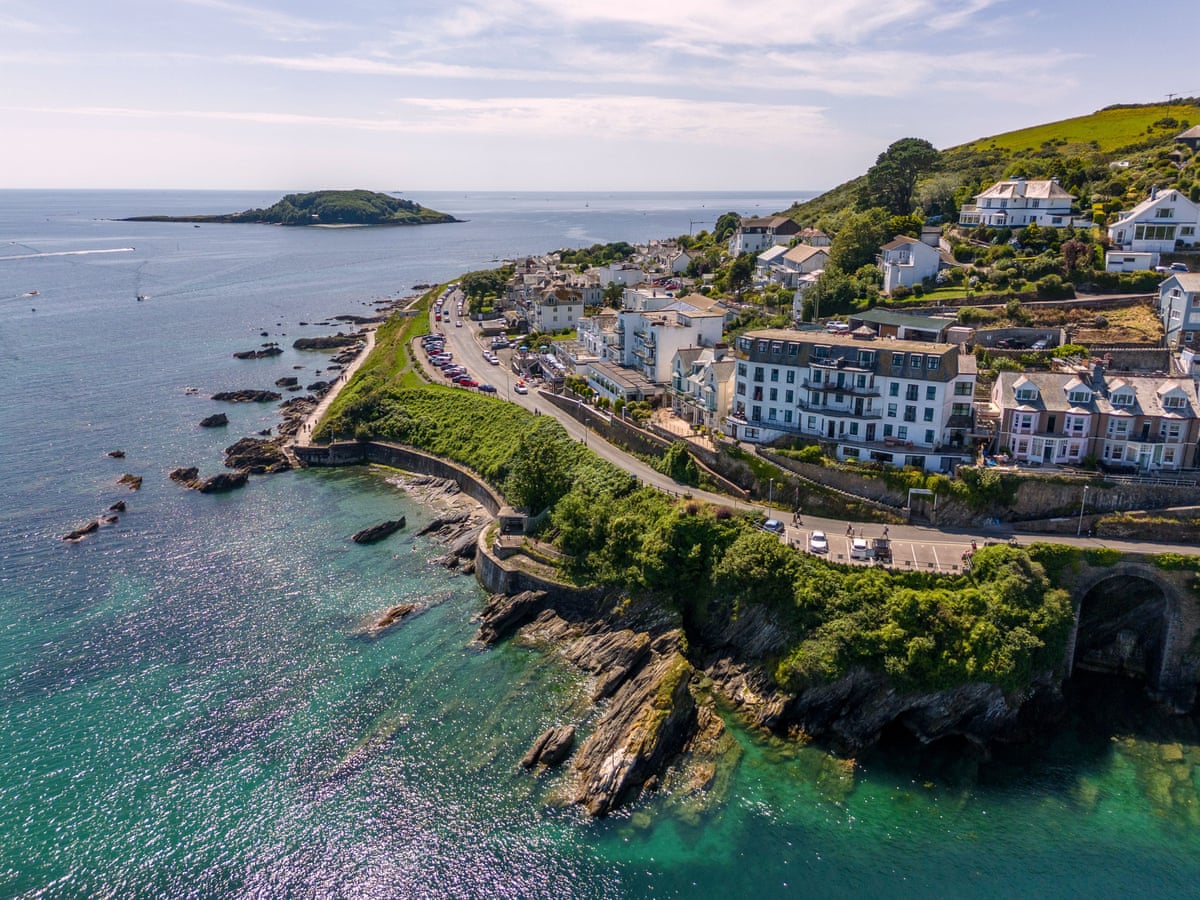
Just after dawn, from a vantage point on Looe Island, Cornwall, I observe two seals on the beach below. They intertwine in the surf, her freckled, creamy belly pressed against his, flippers wrapped around each other, eyes closed in a peaceful bond. The moment feels intimate, as if I am a silent observer hidden behind foliage. Nearby, emerald-eyed cormorants stand guard on the beach, seemingly unbothered by the scene.
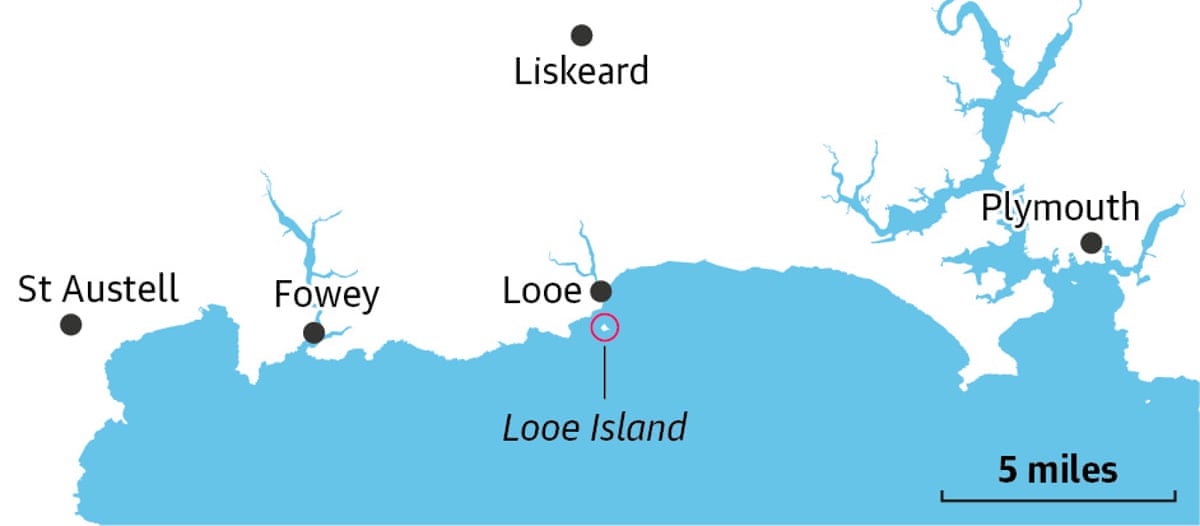
I arrived on Looe Island, also known as St George’s Island, off Cornwall’s south coast, the previous morning. My journey began with the Night Riviera sleeper train from London, followed by an early morning change at Liskeard, and a 15-minute crossing by small fishing boat. The island is managed by the Cornwall Wildlife Trust and is accessible only through organised visits. While most visitors come for day trips, I am staying longer. I brought all necessary food and bedding for my three-night stay, along with the mental burdens of everyday life, which begin to lift as I watch the courting seals in the shallows.
Smuggler’s Cottage and Island History
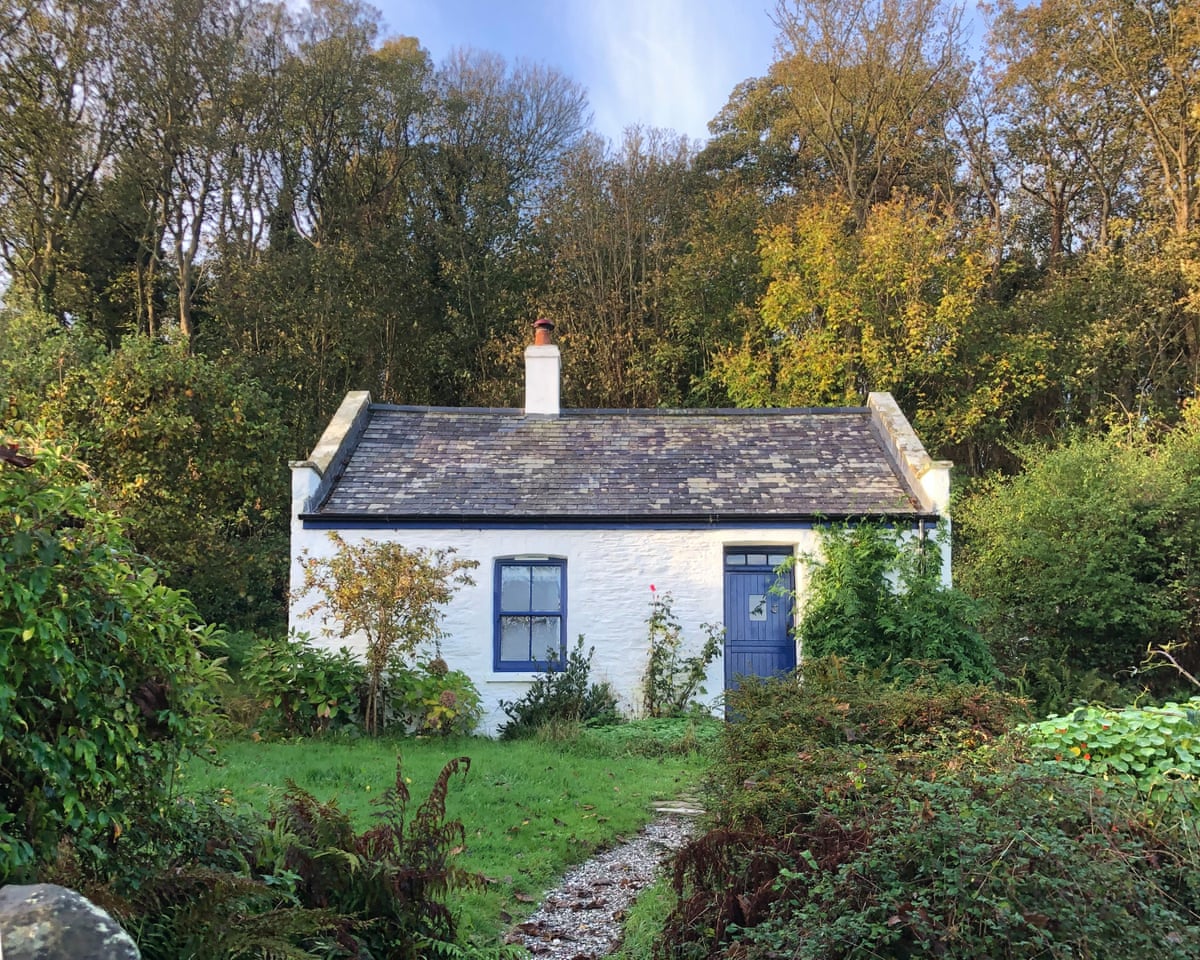
As rain threatens, I return to Smuggler’s Cottage, a charming whitewashed house nestled in a garden of fruit trees and fading flowers. The cottage, accommodating two people, features a bedroom, compact kitchen, bathroom, and a cozy living room with a wood burner. It was once home to a pipe-smoking, fist-fighting smuggler named Black Joan and her brother, Finn. Outside, rain drips steadily from sycamore trees climbing the hillside and clings like frost to spiders’ webs on the windowsills. I settle back into bed with a cup of tea, warmed by the quiet connection of a wildlife encounter in which the animals remain unaware of my presence.
The preservation of such moments was a key motivation for the former owner, Roselyn “Babs” Atkins, who bequeathed Looe Island to the Cornwall Wildlife Trust as a nature reserve. Babs and her sister, Evelyn “Attie” Atkins, were unconventional women for their time. Neither married; instead, they focused on careers and pursued hobbies like mountaineering and rifle shooting. In her mid-50s, Attie fulfilled a long-held dream by purchasing Looe Island with her sister in 1965 for £22,000 and became a daffodil farmer. Babs joined her after retiring.
Wildlife and Conservation
Following Babs’s death, Cornwall Wildlife Trust assumed management of the island in 2004. The charity oversees 9 hectares (22 acres) of woodland, maritime grassland, and rocky shoreline to benefit wildlife. The island hosts one of Cornwall’s largest breeding colonies of great black-backed gulls, impressive birds with wingspans exceeding 1.5 metres. Marine life includes species such as the graceful compass jellyfish, visible in the rock pools.
Visitors can stay not only in the cottage but also in a bell tent for two, overlooking Trelawny Island to the southeast, where waves crash against rocks and seals rest, noses pointed skyward, kissed by the surf. Additional income is generated from landing fees charged to day trippers, who arrive several times daily when weather permits. The island also features a small museum and gift shop, where wardens Claire and Jon, who reside on the island year-round, sell homemade chutney, chillies from their vegetable garden, and books on island life authored by Evelyn Atkins.
Solitude and Exploration
Today, rough seas prevent day trippers, leaving me with the island to myself. I spend time reading in a meadow, an activity rarely afforded at home, and explore winding paths ascending steeply to the summit, 47 metres above sea level.

A self-guided trail, available free from the bookshop, offers further exploration. One stop is Babs’s meadow, where she is buried overlooking her cherished island. The entire route can be walked in about an hour, but there is no need to hurry. The trail passes Island House, the former home of Roselyn and Evelyn, follows the coastline with views of reefs surrounding the island, and returns through bird-filled woodland.
Swimming and Wildlife Interaction
In the afternoon, I swim at the island’s main beach, where black-backed gulls roost between fishing trips. Following Claire’s advice, I stay close to the tree line and avoid looking directly at the birds to prevent disturbance. The gull colony largely ignores me. The sea is cold, and the surf threatens to overwhelm, but I spot silver-striped mackerel swimming nearby and enjoy the thrill of swimming in a secluded cove. Afterward, wrapped in layers to dry, I sit among boulders, warming my hands around a cup of hot chocolate from my Thermos as the sun sets. I gaze across the water, my mind clearer than it has been in weeks, as gulls take flight and glide along the coast.
Seal Conservation and Visitor Impact
Later that evening, observing the two seals with Claire and Jon, she explains their efforts to encourage visitors to respect coastal wildlife and minimize disturbance.
“When the seals are resting, they are laying down layers of fat from their meals, which helps the adults survive the winter and enriches the milk females give to their pups. Each time they are woken by a boat, even if it’s only for a few minutes, they use up a little bit of energy and the effect accumulates.”
Claire emphasizes that disturbance can be a matter of life and death for each seal but acknowledges the need to balance protection with opportunities for people to engage with wildlife to foster empathy and support. Staying on or visiting a nature reserve allows people to experience wildlife on its own terms.
“The island forces them to slow down, to notice the small things,” Jon adds. “People put their phones away and spend the afternoon watching a spider building its web.”
Reflection and Connection
After only a day watching the seals, I already feel a kinship with them. These animals resemble humans so closely that they were once mistaken for mermaids. Claire and Jon hope such priceless moments of connection will remain with guests and inspire humility in how we coexist with other creatures.
I have come to understand, as Babs and Attie did, that the lordly gulls and the affectionate seals are the true owners of the island. Nonetheless, I am grateful for the chance to share their home, even briefly, and for the peace and reconnection with the natural world it has provided.
Practical Information
The trip was provided by the Cornwall Wildlife Trust. Smuggler’s Cottage is available for rent from spring through October at £450 for a three-night stay for two. The Trust runs day trips around high tide during daylight hours and fair weather, costing £12 for adults and £7 for children aged 10 and under, plus a landing fee of £8 for adults and £3 for children.