

Assessing Zverev’s Progress After His First Grand Slam Title
Alexander Zverev’s long-awaited maiden Grand Slam title was secured in Paris, capitalizing on his rival’s physical struggles in the heat. However, questions remain whether this victory marked a turning point in his career or was merely an isolated success.
On the opening day of Wimbledon, there was a brief impression that Jannik Sinner was still recovering from his collapse at Roland Garros. While any defeat in Paris would have been significant given his dominance on clay earlier in the season, the nature of his loss was particularly painful.
Sinner, it must be emphasized, had been leading Juan Manuel Cerundolo—an otherwise unremarkable opponent—by two sets to love and 5-1 in the third set before physically breaking down. Despite Sinner’s attempts to highlight his overall achievements during the clay court season, this defeat was deeply distressing.
By the time the 24-year-old Italian was narrowly defeated in a third-set tie-break by a resurgent Miomir Kecmanovic in the first round of his title defense at Wimbledon, falling two sets to one, concerns were mounting. These worries were intensified by Sinner’s record of losing eight of his previous nine five-set matches, an underwhelming statistic for a player of his talent. This time, however, he maintained composure, corrected his errant forehand, and found a path to victory. Since then, he has not dropped a set.
Sinner had not encountered a seeded player on his route to the semi-finals, but his performance on Friday dispelled any doubts about his form. He overwhelmed the seven-time champion Novak Djokovic, maintaining exceptional serving during critical points, dominating rallies, and denying the Serb any opportunity to mount a comeback.
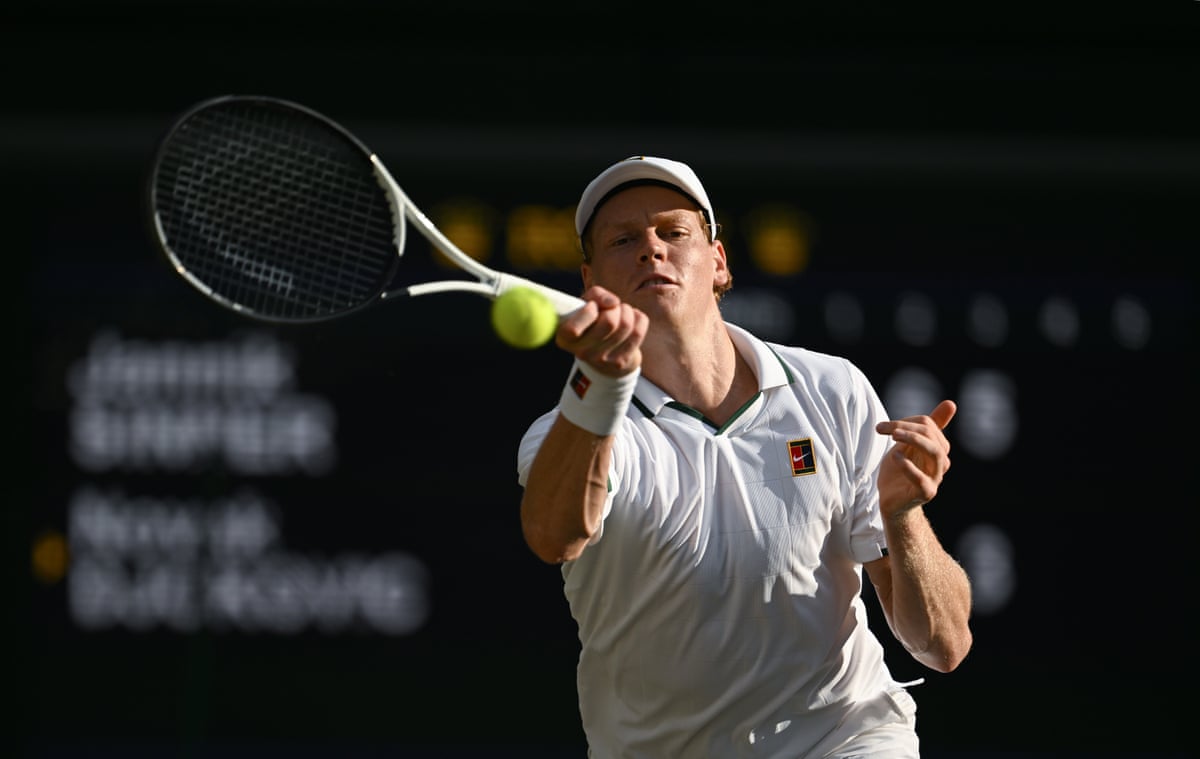
This victory confirmed that Sinner had returned to his expected level as he pursued a second consecutive title. With Carlos Alcaraz still absent, Sinner remains arguably the best player globally and continues to demonstrate that status on court.

Historical Context of the Sinner-Zverev Rivalry
Looking ahead to the final, recent encounters between Zverev and Sinner provide insight into likely dynamics. At the 2023 US Open, Zverev secured a grueling five-set fourth-round win, marking his fourth consecutive victory over Sinner after losing their initial meeting. Since then, Sinner has won nine matches consecutively. Due to Zverev’s consistent performance against the broader field, they have faced each other frequently, including four times this season, with Zverev often struggling.
Sinner’s streak of consecutive sets won against Zverev stands at 14, featuring some notably one-sided matches. In Paris last November, Zverev was defeated 6-0, 6-1. In their most recent meeting at the Madrid Open final in April, Zverev appeared devoid of confidence and was defeated 6-1, 6-2 by a near-flawless Sinner.
Sinner rebounded quickly from his unexpected Paris defeat, but his inability to consolidate his clay-court dominance has had broader implications. Alongside early exits by Djokovic and other top-ranked players, Zverev’s steady consistency ultimately led to his first Grand Slam title at Roland Garros.
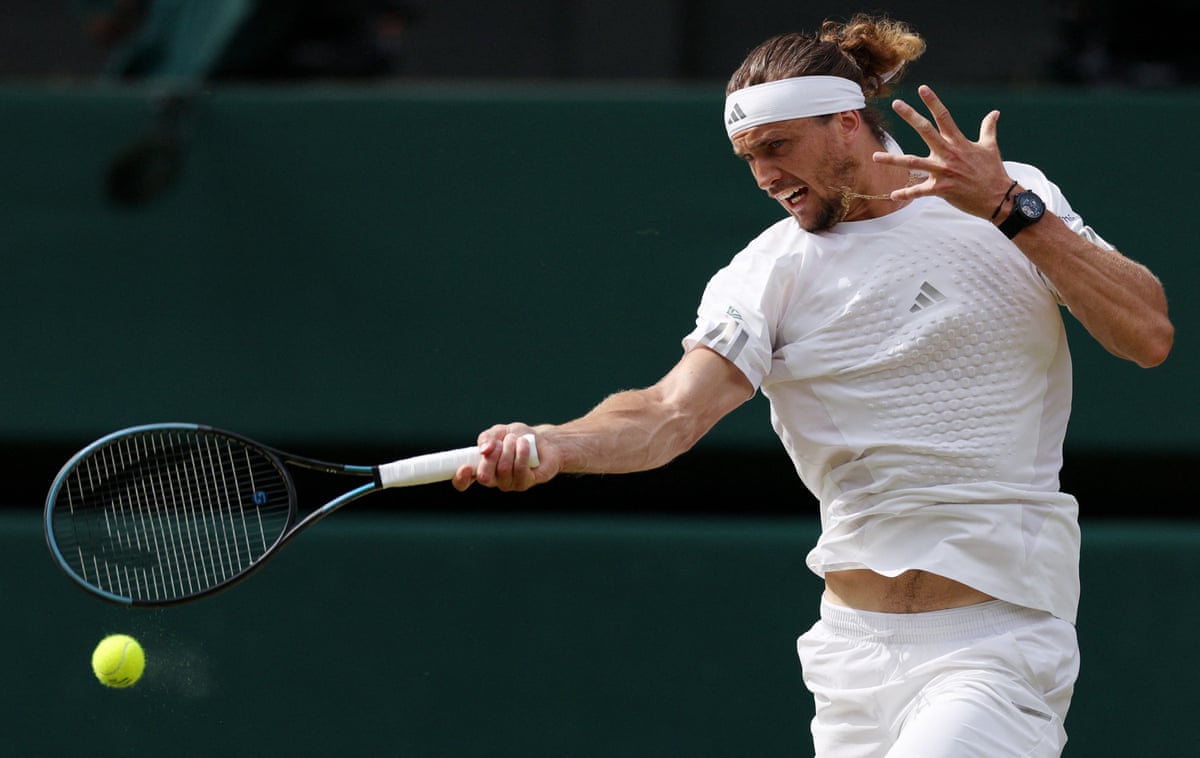
Although not the most commanding major title victory—Zverev’s only opponent ranked inside the top 25 was No. 14 Flavio Cobolli—the final was tense, reflecting the pressure on both competitors.
Will Zverev’s Victory Signal a New Era?
Given recent events, the most intriguing question is whether Zverev’s first Grand Slam triumph represents a genuine shift in his mental approach during major tournaments. Will this success enable him to play more freely in critical moments, attacking his forehand, approaching the net assertively, and playing to win rather than succumbing to pressure? Or does his Paris victory remain an isolated moment, with lingering doubts about his mental and technical ability against a player of Sinner’s calibre?
Reaching the Wimbledon final, thereby completing his set of four major finals, is a positive development. Previously, Zverev had never advanced beyond the fourth round at Wimbledon, a surface considered his weakest. This year, he has managed his matches efficiently, overcoming challenging opponents such as Jiri Lehecka and Taylor Fritz.
Nevertheless, the gap between Sinner and other competitors remains significant, and this disparity is most evident in Sinner’s dominant record against Zverev. The onus remains on Zverev to alter this dynamic.


