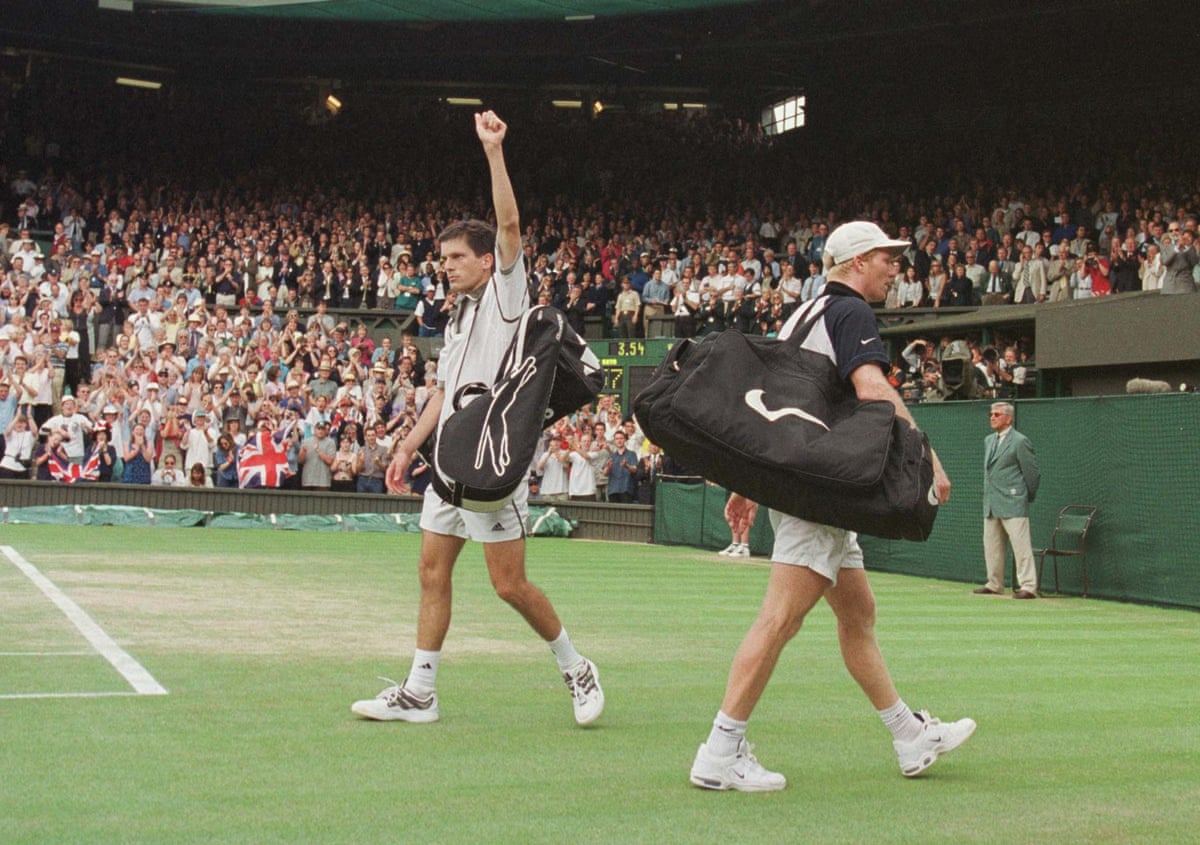
Henman Reflects on Tennis and Early Career Struggles
Former world No 4 Tim Henman, who reached six grand slam semi-finals including four at Wimbledon and won an Olympic silver medal, shared his thoughts on the current state of tennis and its potential for improvement. Despite criticisms from some quarters about his grit, Henman’s career was marked by resilience and determination.
We met at the Queen’s Club, a venue whose elegance contrasts with the modest beginnings Henman experienced living in budget accommodations in Earl’s Court during the early stages of his career. At that time, financial constraints meant that up to four young players sometimes shared a single room.
I somehow convinced my parents that I should leave school at 16 to play full-time tennis,Henman recalled.I was still very small so my results weren’t particularly good. We were based in a far corner at Queen’s with the two indoor courts. It was such a basic facility, but it was brilliant.
Henman smiled when asked about the B&B lifestyle.
Amazing. So good. Funnily enough I bumped into Andrew Richardson just before I walked in to see you.
Emma Raducanu’s coach, Andrew Richardson, helped her reach the final at the Queen’s Club recently and had previously guided her during her remarkable US Open run in 2021. Although Raducanu briefly parted ways with Richardson after that victory, she rehired him this summer.
Henman confirmed his close relationship with Richardson, noting they first met at age 11 and even shared a room in Earl’s Court. Richardson was also Henman’s best man at his wedding.
Absolutely. We first met when we were 11 and played against each other. Andrew was best man at my wedding.
Henman’s Unique Perspective on Raducanu and Richardson
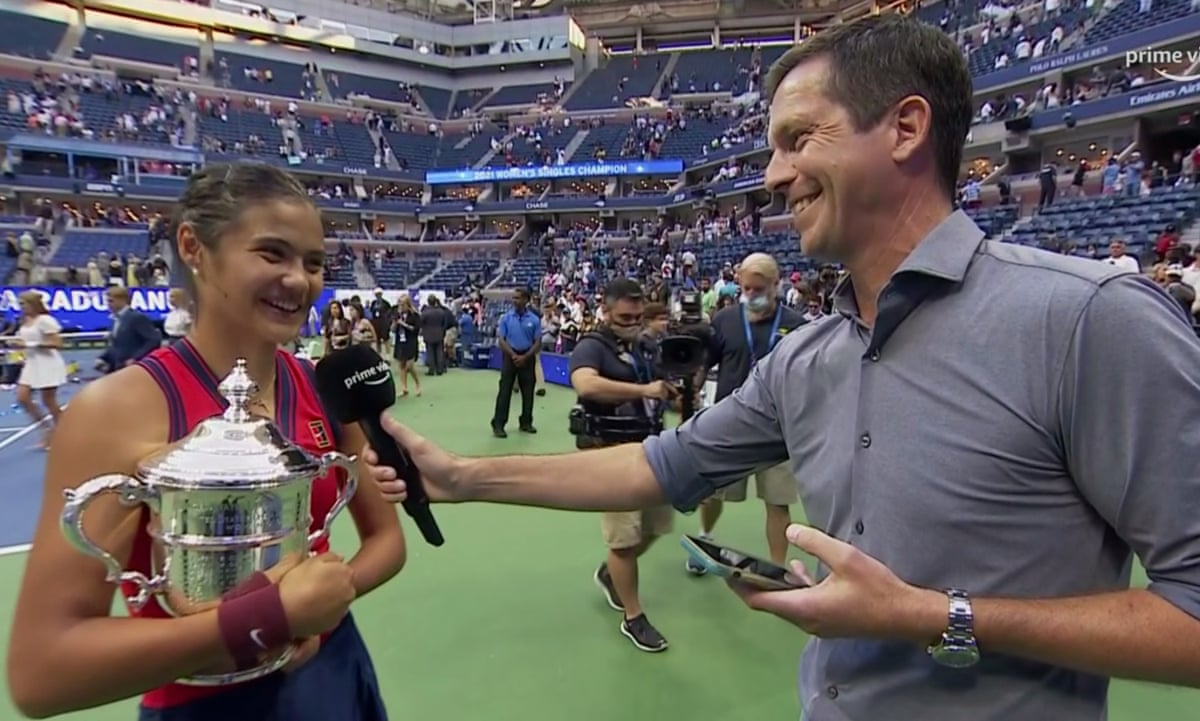
Henman was closely involved during Raducanu’s US Open triumph, offering encouragement courtside while working as a television pundit. When she won, the first person she acknowledged was Henman, who responded with delight. This gives him a unique insight into her relationship with Richardson.
Regarding Raducanu’s decision to part ways with Richardson shortly after her US Open win, Henman expressed surprise but remains hopeful about their renewed partnership.
I was surprised she chose not to work with him. She’s worked with a lot of coaches since then and now I really hope that her decision to get back with Andrew works for both their sakes.
He’s one of my best friends and I’ve also been around Emma. So it would be good if results improve.
Raducanu and Richardson have made progress, with Raducanu reaching the Queen’s Club final. Her opponent, who won the title, praised Raducanu’s resurgence but credited her own coach, David Felgate, for her success. Felgate was one of three coaches Henman worked with during his career.
Emma’s had eight or nine coaches, but it’s her prerogative. I looked for consistency, continuity and building the relationship – and that’s why I had three coaches in 16 years.
Although Raducanu has already won a grand slam title, Henman notes she still has a long way to go to match the breadth of his achievements. His own career was forged through fighting for his place on tour, which built resilience and toughness.
Henman was asked whether Raducanu’s unexpected US Open victory may have hindered her development. He acknowledged the unprecedented nature of her achievement but emphasized the challenges it brought.
It was so unexpected because no one had ever qualified and made the final of a slam, let alone qualified and won it. So she didn’t really have a foundation to build from. She’d just done her A-levels and played some grass-court tournaments and then her ranking went up to No 20 in the world.
All of a sudden she was playing top-level events and she wasn’t ready, physically and mentally. You can’t drop down to build match practice and resilience but would you rather it had not happened? Absolutely not. It’s one of the most incredible achievements in sport.
Physical and Mental Challenges Ahead for Raducanu
Henman expressed caution about Raducanu winning another grand slam, noting the difficulty of such an accomplishment and emphasizing the importance of the process to build physical resilience and consistency.
It would be very hard. Not many people win slams so you could say, if you’ve done it once, you can do it again. But it’s all about the process. She’s got to become physically more resilient to build up her schedule, her match count, her weight of shot, her speed of movement and durability.
Regarding Richardson’s suitability as coach to develop these qualities, Henman affirmed his capabilities and longstanding relationship with Raducanu.
Of course. He was a good player and he understands the game well. He’s got a good history with Emma as they’ve known each other since she was in her early teens.
Jack Draper’s Injury and Prospects
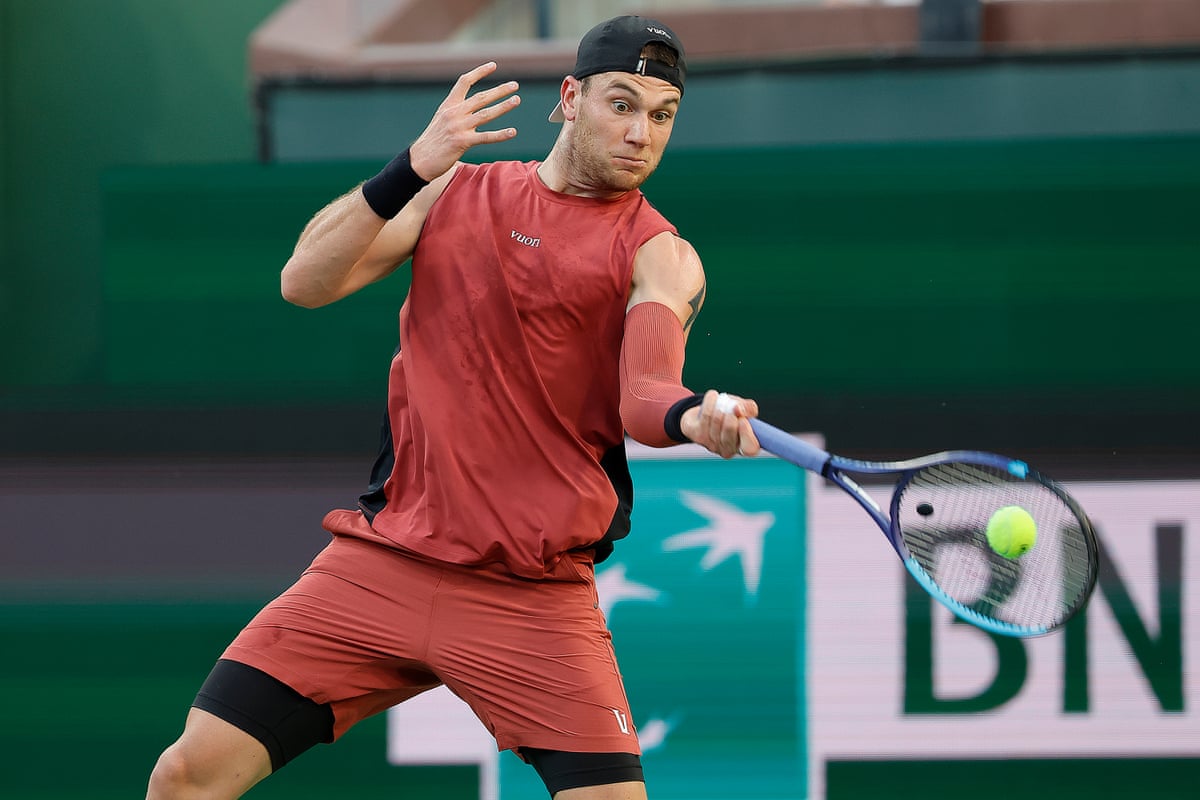
Henman also discussed Jack Draper, the most talented British male player currently on tour, who has missed much of the past year due to injury. Draper reached No 44 in the world 15 months ago and was considered a potential challenger to top players like Jannik Sinner and Carlos Alcaraz.
I don’t know. He’s pulled out of Queen’s [this week] but this time last year he was in that conversation as to who might challenge Jannik Sinner and Carlos Alcaraz. He’s had such a rotten time because he was playing great tennis.
It’s very challenging whether it’s this bone bruising or his knee. He’s just got to try and stay patient because, if you’re not healthy, you can’t compete.

Concerns Over Tennis Calendar and Player Injuries
Henman expressed concerns about the demanding tennis calendar, which has contributed to injuries among leading players such as Alcaraz and Sinner. Alcaraz missed the French Open and Wimbledon due to injury, while Sinner suffered a surprising early exit at the French Open after a strong start.
The schedule needs looking at because less is more and I would definitely streamline it. The Masters 1000 events should be eight or nine days and then you need some periods where there is no tennis at the very highest level. It’s good for the players and fans and builds expectation for the next event.
I’m not a fan of the 12-day Masters 1000 events. Physically and psychologically that is tiring and, if anything, we should be trying to shorten the season.
Henman acknowledged the financial pressures in modern sport but emphasized the need for cooperation among tennis’s governing bodies, which currently include seven different organizations such as the ATP, WTA, ITF, and the four grand slams. He referenced recent legal action initiated by the Professional Tennis Players Association against these bodies over prize money, ranking systems, and player promotion.
It’s difficult, but that’s where the sport needs to come together. When you look at the governance of tennis there are seven different bodies – the ATP, WTA, ITF and the four grand slams. And right now we have this.
We really need to communicate, and that has made it very difficult with the lawyers.
Henman’s Role in Prize Money Discussions and Wimbledon Board
Henman has recently been involved in discussions between leading players and grand slam tournaments regarding prize money. As a Wimbledon board member, he is respected by players and noted a recent breakthrough with a 20% increase in Wimbledon prize money, which players accepted.
The communication needs to be better and conversations are not going to stop. It’s a huge strength of our sport that we have combined [men’s and women’s] events and look at how the grand slams have led the way in equal prize money and the opportunity that they’ve given to lower-ranked players. In the women’s game, the Wimbledon prize money for qualifying this year will be more than some of the [WTA] Masters 1000 events.
Henman’s Enthusiasm for the Laver Cup
Henman is particularly enthusiastic about his reappointment as vice-captain of Team Europe for the Laver Cup at the O2 in London in September. He believes the event, which began in 2017, has the potential to become as significant in tennis as the Ryder Cup is in golf.
I absolutely love it. Until I first experienced the Laver Cup in person I’d thought it was an exhibition event. But when I was at the 2022 Laver Cup, when Roger Federer played his final match before retirement at the O2, I was blown away by the intensity and passion of both teams.
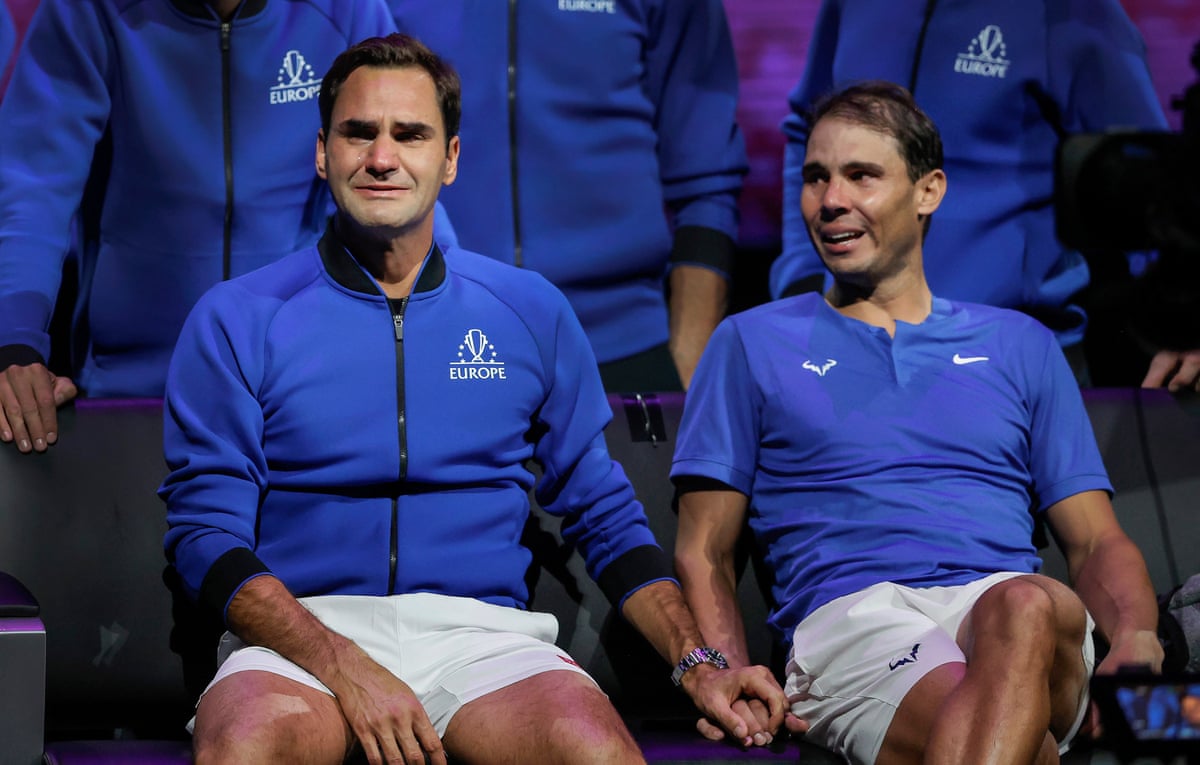
The players are individuals and rivals and here they are coming together for the greater good of Europe or the rest of the world. The way the event was delivered was incredible and so when I was asked last year if I’d like to be vice-captain I was blindsided. But I felt it was an absolute privilege and I could not have enjoyed it more in San Francisco – .
Team Europe has won five of the eight Laver Cups. Alcaraz and Alexander Zverev, the new French Open champion, have committed to play at the O2. Henman noted the disappointment of the previous loss but highlighted Alcaraz’s enthusiasm to return.
We were bitterly disappointed when we lost last time but it was then that Alcaraz signed up. He said: ‘I’m coming back.’ If the players love the event they have that intensity to win.
Regarding Alcaraz’s fitness for September, Henman expressed uncertainty due to the seriousness of his injury, which has caused him to withdraw from multiple tournaments.
I have no idea. It’s obviously a serious injury, because he pulled out of Madrid, Rome, Paris, Queen’s and Wimbledon. So, fingers crossed.
Negotiations are ongoing to encourage Sinner to make his Laver Cup debut. Henman mentioned a WhatsApp group used for ongoing dialogue about team composition.
We have a WhatsApp group so we’re always in dialogue, looking at how the team could shape up.
Henman’s Early Career and Legacy
Reflecting on his early career, Henman recalled leaving B&B life in Earl’s Court at age 18 after earning his first ranking points in Morocco and central Africa. His ranking was 780 at the end of that year, a milestone that marked his entry onto the professional ladder.
I got my first ranking points in Morocco and central Africa. I had seven points and my ranking was 780 at the end of the year. That was such a defining moment, because I was on the ladder. I wanted to be 700. I wanted to be 500. I wanted to be 300.
Henman smiled when asked if he ever imagined becoming the world’s fourth-best player with a lasting influence on tennis.
No chance. If you’d said to me then: ‘Sign this document and you can be top 100 for the next 10 years, and play the grand slams,’ I would have bitten both arms off. It’s what I always wanted to do.
The Laver Cup will take place at the O2 from 25-27 September. For more information, visit the official website.
Image Credits