
Williams Falls to Joint in Three-Set Wimbledon Opener
Serena Williams was defeated 3-6, 7-6 (6), 6-3 on Centre Court in her first-round Wimbledon singles return.
Despite a strong rally in the second set, Williams was unable to close out the match against the younger opponent.
Williams Shows Fighting Spirit Despite Defeat
Serena Williams approached the baseline during match point, fully aware that losing the next point would not be a tragedy. It had been four years since her last professional singles match, yet she remained competitive against a skilled young player and fought hard for every point.
Williams has always held herself to high standards, and old habits proved resilient. Serving at 5-6 in the second set tie-break after dropping the first set to Maya Joint, Williams unleashed one of the sport’s most formidable weapons: after an excellent first serve allowed her to hit an easy forehand winner to save match point, she followed with a 122 mph service winner down the middle, propelling her into a final set.
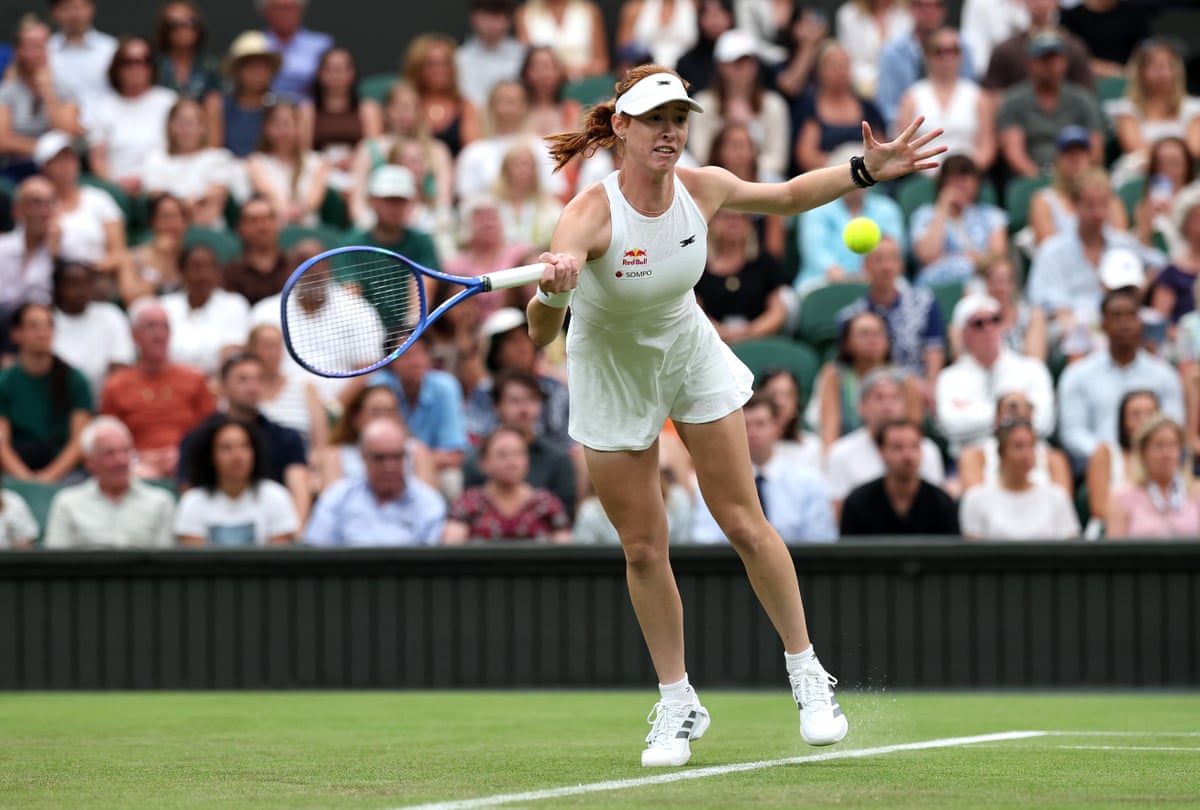
On a remarkable evening under the Centre Court roof, Williams demonstrated the fighting spirit that has defined her legendary career. However, her return to professional tennis ended in a challenging defeat as the 23-time Grand Slam singles champion was outlasted by the Australian player Maya Joint, who is 24 years her junior, losing 3-6, 7-6(6), 6-3 in the first round.
“I didn’t get much sleep last night, I was up to 2am thinking about it,” Joint said. “Walking out, I forgot the warm-up, I don’t know what happened. My legs weren’t moving.
“I got a pretty good start in the match. She has such an aura, she is such a legend. So many huge names have played on this court. I have been dreaming of this moment since I was a little kid, so this is pretty crazy.”
Williams Receives Warm Ovation on Return
As Williams reentered Centre Court after four years, the audience rose in unison to welcome back its queen. A prolonged chant of “let’s go Serena,” just as the initial cheers subsided, sparked an even greater wave of applause.
Despite her many successes, victories, and historic achievements on these grounds, Williams has not always enjoyed full crowd support during her nearly three-decade career. On this occasion, however, 15,000 spectators vocally encouraged her.
Williams’ Serve and Ball Striking Remain Impressive
There is no shame in this loss. Williams’ serve remains a work of art, a unique shot regardless of time away from the sport. She also displayed glimpses of her exceptional ball striking despite four years of inactivity and competed fiercely until the end. Nevertheless, Williams was outplayed from the baseline and physically faded in the final set.
Williams’ Return Marked by Determination and Realism
Williams is a competitor unlike any other in tennis history, a player who refuses to accept anything less than victory. Her decision to return to singles competition at Wimbledon is particularly notable.
At 44 years old, after four years of retirement and as the second-oldest woman to play a singles match at Wimbledon in the Open Era, Williams entered the tournament without sky-high expectations despite her legendary confidence.
Given her time away, age, and lack of match preparation, Williams herself could not predict how her game would perform under competitive pressure. Nevertheless, she boldly reentered the arena to find out.
Early Signs of Williams’ Strengths
Early in the match, Williams demonstrated that her two most important shots remained intact. Her serve was dominant from the outset. She cruised through her opening service game to love and then delivered a 121 mph ace down the T to hold at 3-3. She also returned with depth and consistency throughout the first set.
Movement and Baseline Challenges
However, Williams’ movement and footwork around the ball were limited, leaving her vulnerable in extended baseline rallies. When Joint took the ball early and pulled Williams off the middle of the court, Williams often failed to recover. She was also tentative from the baseline, with her error count rising sharply whenever she attempted to shorten points and add pace to her groundstrokes. This resulted in a 3-6, 1-3 deficit after Joint won five consecutive games.
Williams’ Resilience in the Second Set
Williams fought desperately, and as her competitive instincts emerged, she gradually found her range. Her cleanest and most destructive ball striking came while trailing in the second set. After battling into a second set tie-break, Williams faced match point at 5-6 but responded with exceptional serving to force a final set.
Final Set and Fatigue
Williams broke serve first in the third set to take the lead and appeared poised to complete a remarkable comeback, moving ahead 2-1. However, after more than two hours of high-level competition, fatigue began to affect her performance. Ultimately, her 20-year-old opponent recovered to close out what was the most memorable night of her young career with a victory.


