
Women's Night Sessions Return at French Open
Naomi Osaka and Aryna Sabalenka ended a streak of 32 consecutive men's French Open night-session matches by competing in the first women's night match since 2023.
For the first time in three years, Roland Garros organisers selected a women's match for the primetime night-session on Court Philippe Chatrier. After years of reluctance and various excuses, the tournament chose the fourth-round encounter between Belarusian top seed Aryna Sabalenka and Japan's Naomi Osaka.
Under the lights on Monday, Sabalenka and Osaka delivered a high-quality contest that highlighted the strength and star power of the WTA Tour.
Sabalenka eventually took control to win 7-5, 6-3 in one hour and 27 minutes, possibly leaving some spectators eager for more.
"I hope this is the beginning and we open the door to [more] women's night sessions," said 28-year-old Sabalenka.
Osaka, also 28, added: "I'm honoured the tournament chose us to play in this slot and I hope going forward they continue to do so."
Nearly 15,000 fans filled Court Philippe Chatrier to near capacity, with few appearing disappointed by the entertainment value.
In addition to the high level of play, many enjoyed the personalities of two players who bring significant charisma to the sport.
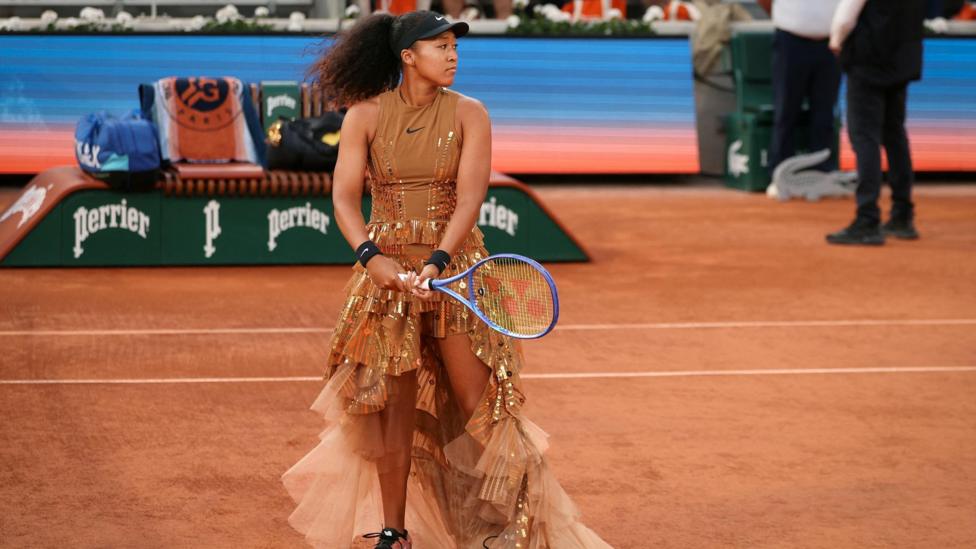
Osaka, seeded 16th, appeared in a sparkly Eiffel Tower-inspired haute couture dress that would not be out of place at Paris Fashion Week, while Sabalenka performed the moonwalk during her on-court victory speech, both moments warmly received by the crowd.
"I think the atmosphere and attention this match brought is going to show [organisers] that they should consider putting at least some women's matches at night," said Sabalenka.
Playing Styles and Match Dynamics
Both players demonstrated a preference for aggressive, first-strike tennis, hitting powerful shots from the baseline in a fast-paced and high-level contest.
Sabalenka's greater power and increased shot variety ultimately made the difference.
For an engaging set and a half, the match was closely contested until Osaka's energy waned, allowing Sabalenka to secure the victory.
"For me I thought it was really cool - she's really good for tennis and I hope I'm OK for tennis too. It was really fun to play," said Osaka.
Historical Context of Night Sessions
Prior to this match, all 32 primetime night sessions at Roland Garros since their introduction in 2021 had featured men's matches exclusively. Sabalenka versus Osaka marked only the fifth women's match in 61 night-time sessions.
Osaka had previously expressed that the night slot should be reserved for "popcorn" matches, and this encounter certainly met that expectation.
The match featured the reigning world number one against a former world number one, and two four-time Grand Slam champions facing off.
Osaka, known for her fashion-forward court appearances, is a superstar aiming to transcend the sport, much like Sabalenka is establishing herself.
Given these factors, it was difficult for French Open organisers to justify overlooking this match for the night session.
Organisers' Perspective and Challenges
Tournament director Amelie Mauresmo, a former women's world number one herself, had often cited the possibility of short two-set matches as a reason for frequently excluding women's matches from night sessions.
"The match-ups are always interesting for both men and women, but there are multiple factors for us to make the choice," Mauresmo said earlier on Monday.
"As you know, the potential length of the matches is something that we are also looking at."
On selecting Sabalenka against Osaka, she added: "It was obvious that it should be a night match tonight."
There was speculation that Mauresmo might have chosen differently had men's world number one Jannik Sinner still been in the tournament. Sinner was scheduled to play on the same day, but his absence left the men's matches lacking star power.
If Sabalenka versus Osaka had not been chosen for the night session, it raised the question of which women's match could ever be selected.
Expectations and Pressure
The match carried a sense of expectation. A poor performance could have been used to criticize the women's game, a situation some argue was created by the French Open's prior reluctance to showcase its female stars.
Whether it was fair to place such a burden on Sabalenka and Osaka to represent the women's game was a point of discussion.
"I don't really care. There are so many different things to put pressure on myself - that was the last thing on my mind," said Osaka.
"Shout out to the tournament for trusting us - I hope it was entertaining for people."
- Meet the new Rafa planning to conquer Roland Garros
- Love of tennis behind second coming of Berrettini
- 'Nobody knows me' - qualifier Chwalinska into last eight
- French Open Daily: Sabalenka lights up Parisian night
- Live scores, results and order of play
- Get tennis news sent straight to your phone


