

Czech Duo to Contest Historic Wimbledon Final
Karolina Muchova, with one major final experience, faces her younger compatriot Linda Noskova in a historic all-Czech women’s singles final at Wimbledon. This marks the first time two Czech players have met in the final of this prestigious tournament, highlighting the country’s continued excellence on grass courts.
The final on Saturday continues a tradition of Czech success at Wimbledon, a surface where the nation’s players have often excelled. Martina Navratilova, widely regarded as one of the greatest female tennis players ever, initiated this legacy by winning her first of nine Wimbledon titles in 1978. Although she was a US citizen by the time she played Hana Mandlikova in the 1986 final, her Czech roots remain a significant part of this history.
Following Navratilova, Jana Novotna claimed the Wimbledon title in 1998, Petra Kvitova won twice in 2011 and 2014, Marketa Vondrousova triumphed in 2023, and Barbora Krejcikova secured the championship in 2024. The upcoming winner will become the third Czech Wimbledon champion in four years and the sixth in the Open Era, underscoring the country’s remarkable production of grass-court talent.
Experience and Youth in the Final
Muchova is competing in her second Grand Slam final, having previously lost to Iga Swiatek, while 21-year-old Noskova, ranked one spot higher at No. 9 and eight years her junior, is making her Grand Slam final debut. Both players secured grass-court titles in the lead-up to Wimbledon, demonstrating their readiness for the tournament.
Muchova’s experience gives her an advantage, and her playing style appears well-suited to grass courts, despite an unusual Wimbledon record. She reached the quarter-finals in her first two appearances but was eliminated in the first round in each of the following four years. Factors such as injuries, confidence issues, and exceptional performances by opponents contributed to these early exits. Nevertheless, Muchova possesses a strong serve, excellent athleticism, power, and a versatile game including an effective slice and variety.

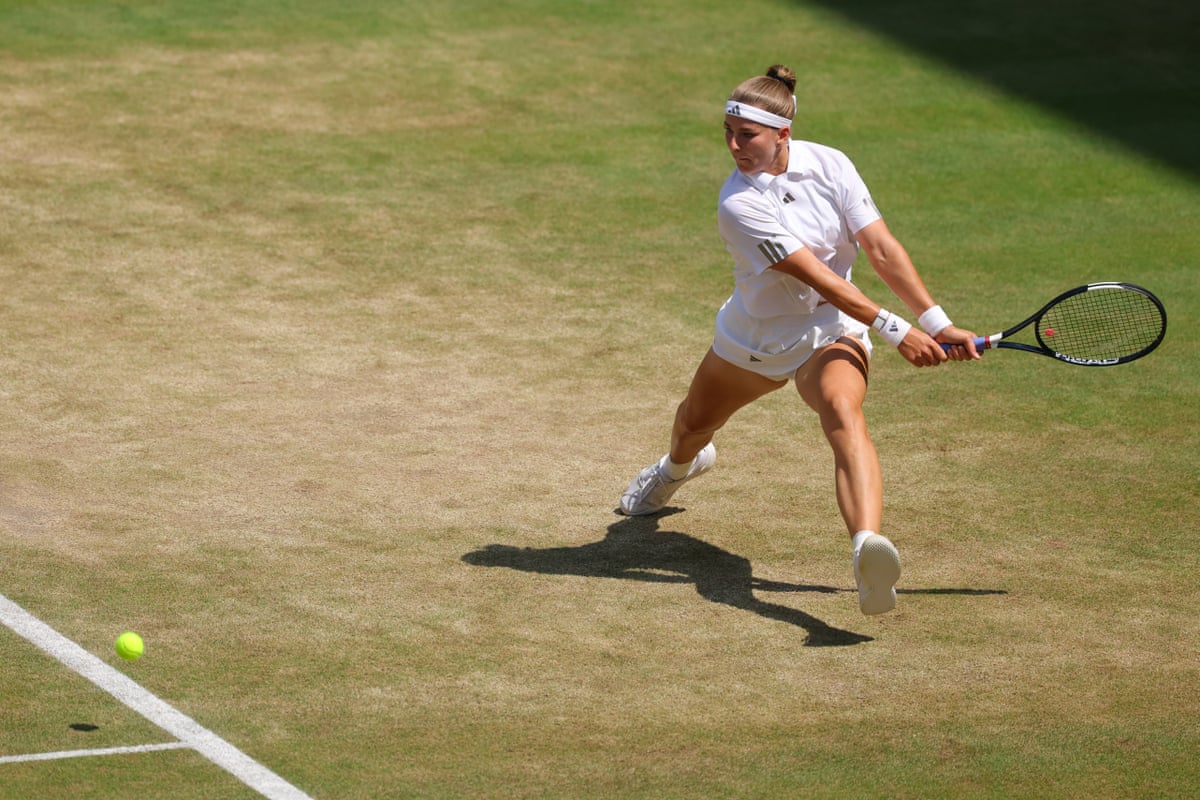
Her diverse skill set can sometimes complicate decision-making, but this year she has integrated her abilities effectively, earning comparisons to Roger Federer. Former world No. 1 Tracy Austin commented on Muchova’s progress, telling :
“She’s great to watch. I think there’s been tremendous growth this year. She seems to be keeping the injuries at bay, because that’s been her biggest issue. Then winning two of her three titles this year, her biggest title in Doha, first grass-court title, there seems to be tremendous growth in putting together the pieces of this very talented game.
“It’s a beautiful game to watch, but also a lot of times when you have that many choices there’s more to figure out, there is a lot of decision-making.”
Austin also highlighted the influence of Sven Groeneveld, a Dutch coach who joined Muchova’s team at the start of 2026. Groeneveld, formerly Maria Sharapova’s coach, brings extensive experience. Austin noted:
“Sven’s such a veteran. Maybe he’s helping her to make the thinking very clear.”
Preparation and Friendship Ahead of the Final
Prior to the semi-finals, neither Muchova nor Noskova had played on Centre Court. However, they were able to practice there before their semi-final matches, which likely helped alleviate nerves. Muchova saved a match point to defeat Coco Gauff, while Noskova ended Marta Kostyuk’s run. The two players are well-acquainted, having competed together in doubles at the 2024 Paris Olympics.
Noskova’s Fearless Approach and Czech Tennis Culture
Saturday’s final represents a significant milestone for both players. At 21, Noskova carries less pressure and exhibits a fearless style. She possesses a powerful serve, agile movement, and an inclination to advance to the net, traits common among Czech women players.
Noskova commented on the Czech approach to tennis and grass courts:
“We are very creative, I would say, so grass allows us to kind of use any side of tennis, if it’s serve and volley back in the old days, if it’s slices and volleys in this new era.”
“We have so many tennis schools in Czechia, even though we’re such a small country. We have so many great coaches that have been working with worldwide greatest players. I really don’t know [why they have produced so many champions]. If I knew, I guess all the other countries would have been doing the same thing.”


