

Ellie-Rose Griffiths' Journey and Reflections on Tennis Parenting
By the age of nine, Ellie-Rose Griffiths had left school to train full-time, marking the point when tennis transitioned from a pastime to her central focus. As a former top-ranked junior player, she competed alongside prominent British players such as Katie Boulter, Emma Raducanu, and Harriet Dart. However, she ceased playing competitively at 19 due to burnout and a loss of enjoyment.
Reflecting on her experience, the 27-year-old emphasizes not only the sport itself but also the pressures surrounding it, particularly highlighting the role of parents in managing these challenges.
"You see parents shouting at children all the time in tennis," Griffiths tells . "There's a lack of understanding on how they should behave... on how they could help their child to blossom into the athlete that they should become."
Chris Johnson, head coach at Sutton Coldfield Tennis Club with 36 years of experience, corroborates this perspective, noting incidents where parental behaviour has escalated to the point of requiring police intervention.
"We've had situations here before where unfortunately we've had to call the police because the parents' behaviour is getting that far out of control," says Johnson. "They won't listen, they think they can get away with anything, they don't respect the referees, it can get a bit ugly."
Both Griffiths and Johnson agree that such behaviour is symptomatic of the environment tennis creates, which can provoke parents to act inappropriately.
The Intensity of Tennis for Parents
Parents face numerous demands including arranging transportation, funding coaching, and navigating a complex player development pathway. Some also manage private tutoring if their child has left mainstream education to focus on tennis.
"You do get on a bit of a hamster wheel", says John from Derbyshire, whose 11-year-old son Harrison is a promising player. "It's 12 months of the year, indoor courts and outdoor courts."
Children may begin playing tennis in modified forms from as young as four years old. The Lawn Tennis Association (LTA) supports promising juniors from age seven through its performance pathway, guiding them toward potential Grand Slam success. Competitions are organized by age groups starting at eight and under, with ratings and rankings serving as a means to gain recognition.
Johnson states that the seriousness begins with the first competition.
"The minute they start playing their first competition," according to Johnson. "A lot of adults can't cope with the pressures of playing an individual sport and then they're expecting young children to be able to do so."
Steve Whelan, a coach with nearly 30 years of experience in St Albans, agrees that the system places excessive emphasis on winning at a young age.
"It just creates this race to the bottom because parents are chasing ratings and rankings," he says. He advises parents: "These are not tennis players. They are kids who play tennis and there's a big difference."
In response, the LTA conducted a comprehensive review of its rating and ranking system in 2018 to reduce pressure on young children. Currently, players cannot be nationally ranked until under-11s, with younger children competing based on recent form ratings rather than rankings.
Regarding parental conduct, the LTA acknowledges that a minority of parents sometimes fail to meet expected behavioural standards. To address this, it plans to launch a Fair Play initiative aimed at promoting positive parental behaviour and supporting coaches.

Financial and Emotional Pressures on Parents
Beyond emotional stress, parents often face significant financial burdens.
"It just gets more and more... lessons... travel... flights... tournament fees," one parent explains. "If you want to play four hours a day with a coach... that's £1,000 a week... £4,000 a month... that's more than people's salaries," she says.
The LTA provides support through world-class coaching and facilities at Regional Performance Development Centres and offers grants to junior players facing financial barriers via its foundation.
Griffiths notes that financial investment can influence parental behaviour.
"The financial support comes from the winning and the losing," she says. "If my child wins, I might get some more funding; if my child loses, we might not - so we don't want them to lose."
"They are almost expecting a return on their investment, and it shouldn't be like that."
"A 10-year-old isn't expected to do a job, but it does become that," Griffiths adds.

Todd Ley's Experience and Perspective
Todd Ley, once ranked as the world’s best 12-year-old junior player, was signed by IMG at 12 and trained at the Nick Bollettieri academy in Florida, where notable players such as the Williams sisters, Andre Agassi, and Maria Sharapova trained. Ley competed against junior players like Andy Murray and Juan Martin Del Potro.
Tennis became all-consuming for Ley, shifting from enjoyment to employment, leading him to quit at 17.
"Realistically, it was tennis from, you know, breakfast to bedtime," Ley says. "Very quickly, the child isn't looked at as a person. They are a commodity and a stock."
He believes early success creates incentives that push families, coaches, and systems to escalate demands prematurely.
"If you have very good results early then you're going to get a better ride and you're going to get better management companies, sponsors," he explains. "Very early it becomes a contest about who can do more. People forget completely that they're dealing with children."
Parental Influence: Perspectives from Emma Raducanu and Kyle Edmund
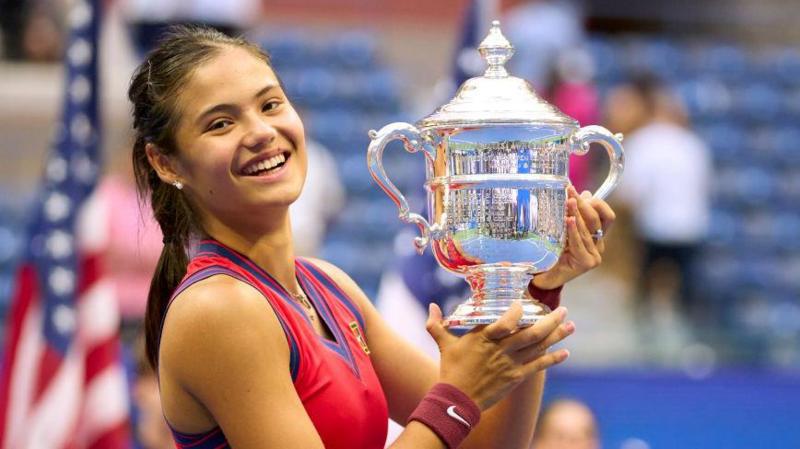
Not all players view pushy parents negatively. Emma Raducanu has described her parents as "so pushy" during her early years.
In a 2024 interview with The Times, she said: "I've seen some great people who I was playing with in the juniors who had way more lenient parents, who were like, 'It's OK if you lost', and those players don't play tennis any more, so I don't blame my parents for it."
Kyle Edmund, former British number one, recalls that while his parents were not pushy, they encouraged improvements in attitude and work ethic.
He said he once told his dad he wanted to quit and his dad just said, "OK, let's just stop then." At that point Edmund realised he actually loved the game and wanted to work hard to succeed.
"There's definitely times where you see almost like the parent wants it more, and that's when I think it becomes toxic," he told . "It's got to come from the son or daughter to really want to do it. And I think the best way is when the parents provide an amazing support system to be there for them and encourage them to do better and want to have ambition."
Gradual Shift in Parental Approach
For many, the transition from casual enjoyment to serious competition happens gradually.
Rob, observing his son during group training, reflects: "Your child goes from going along on a Saturday morning to a fun session and before you know it everything's got very serious at a very young age. You started playing something because of the joy of playing it and that should be what it's all about. But within the system it can be easy to forget that."
Ramesh, another parent, regrets placing too much emphasis on results with his older children and now advises his youngest son to "forget about the winning or losing."
Support Systems for Parents
Griffiths does not criticize her own parents, acknowledging her mother’s vital role as a single parent raising three children.
"My mum would admit she wasn't perfect," Griffiths says. "But there was no support there in place for her to know how to be the best tennis parent. They're ultimately the second most important person in this journey."
Liya Jacobs, a doctor and life coach with two sons who play tennis, notes that most parents aim to do the right thing but lack guidance.
"I'm a doctor, I'm a life coach, and I think I'm quite emotionally intelligent, but even I was finding myself, on occasion, slipping into unhelpful behaviours. It's not that we've got bad parents out there. Parents don't have a framework to help them deal with the challenges of sports."
Alongside Griffiths and Johnson, Jacobs developed an online course called Winning Parents to help parents support their children effectively before, during, and after matches.
"One is over-helping," she explains. "So what I see a lot of parents do is over-coaching from the sidelines or interfering during matches. Another pattern is that people can get overly critical of their child. Kids often describe dreading the car ride home after a poor performance, after poor results. Parents don't mean to create these environments but it can easily happen under pressure."
The LTA offers various resources to educate parents about each stage of the player pathway, including the Parent Support Programme developed by academic experts. This programme addresses parental roles at competitions, communication strategies, and managing emotional demands.
Conclusion: The Impact of Parental Support
Despite the challenges, Griffiths maintains a love for tennis, recognizing the skills it has provided beyond the sport.
"I want parents to see that tennis is such an incredible avenue to develop your child's character if you do it in a supportive way," she says. "It can damage your child's character if you do it in the wrong way."


