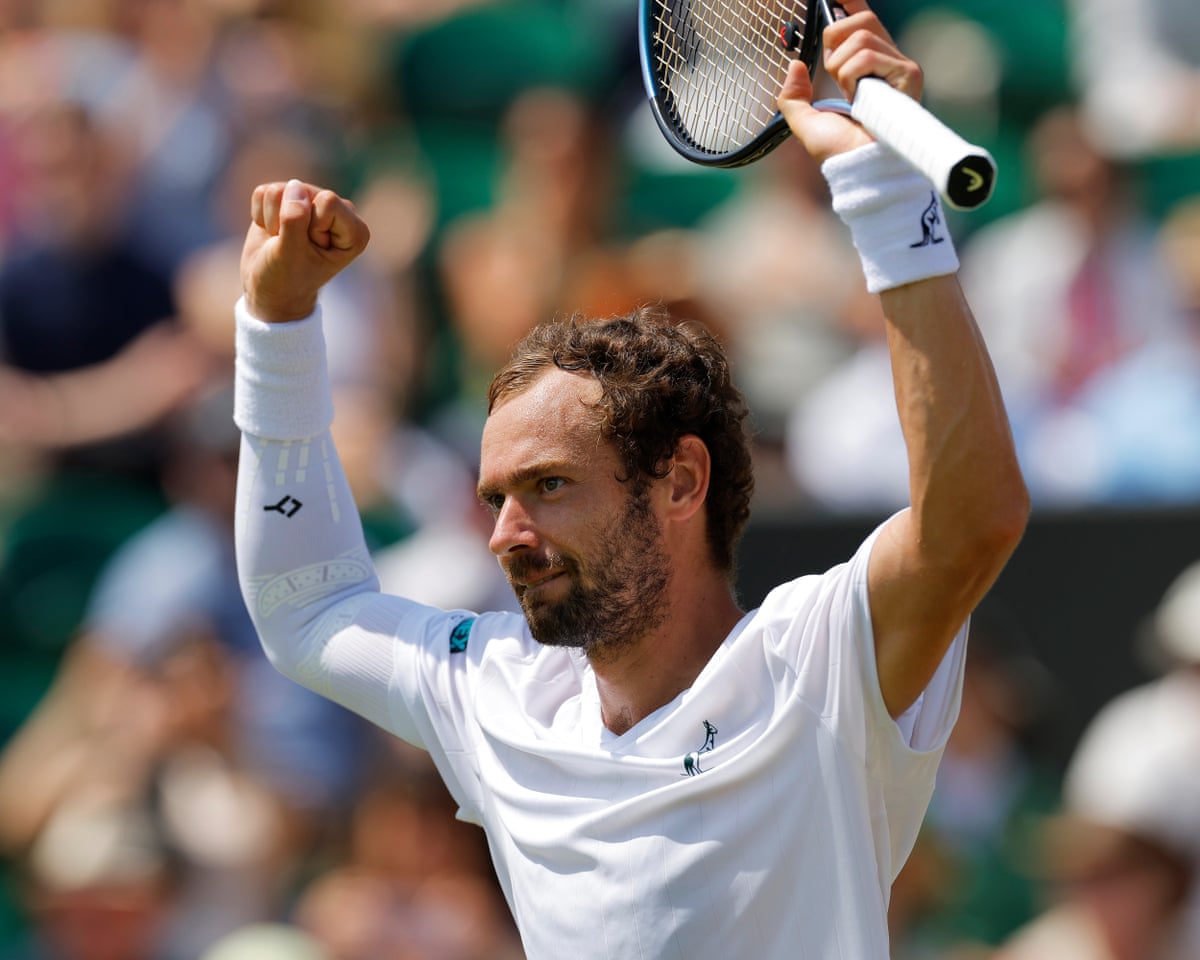
Fonseca Faces Defeat Amidst Unwavering Support
The first chants of “FON! SE! CA!” began shortly before noon, as Joao Fonseca found himself in need of every ounce of encouragement. For the preceding half hour, the Brazilian No 24 seed had been overwhelmed on court. Roman Safiullin, ranked world No 132 and a quarter-finalist at Wimbledon in 2023, played aggressively close to the baseline, taking the ball early and using precise drop shots to unsettle Fonseca. Safiullin was leading 5-3 and serving for the first set, having already faced and saved three set points. At this critical juncture, the vocal support for Fonseca intensified.
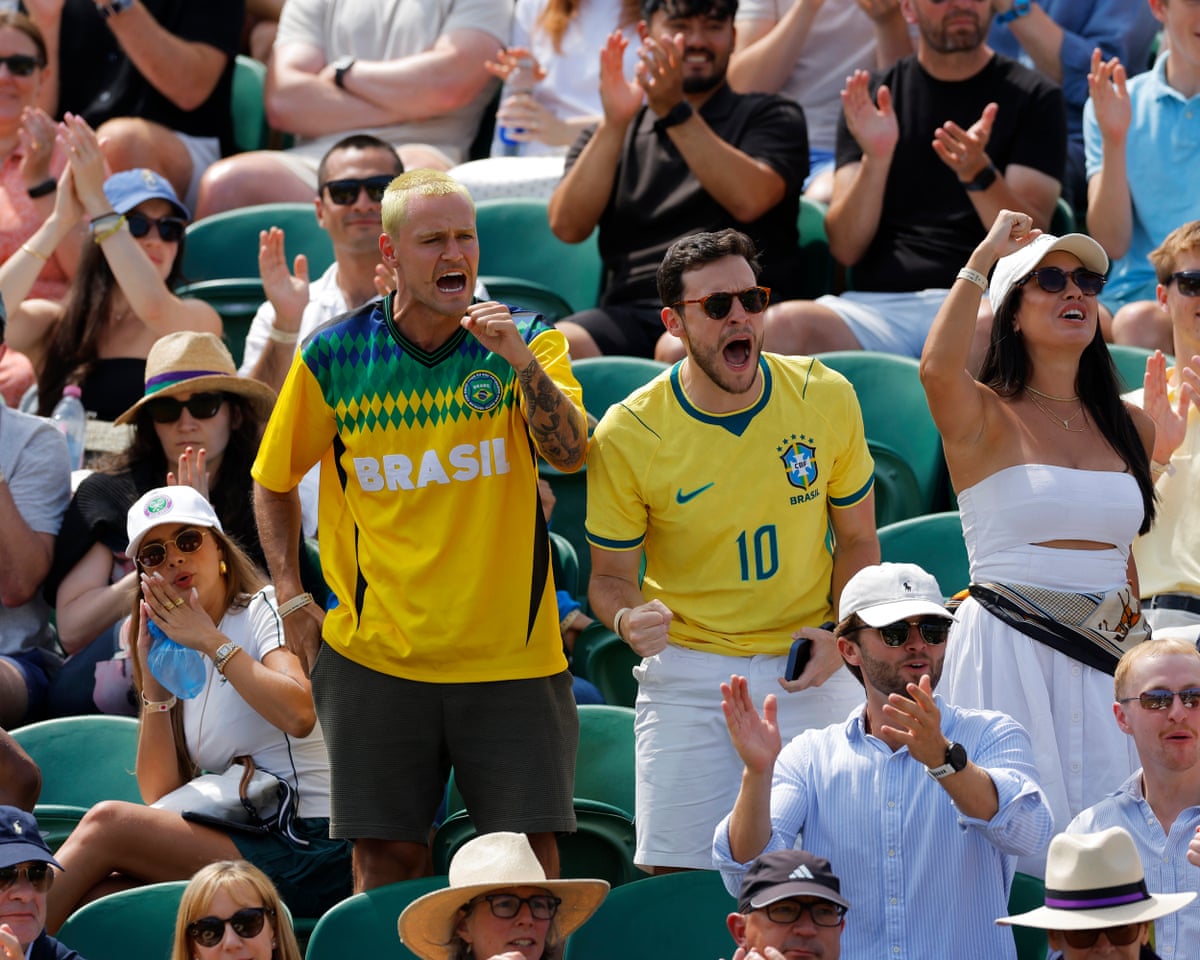
Wherever Fonseca competes, a distinctive noise accompanies him. Since early 2024, when the Rio de Janeiro native reached the quarter-finals of his home tournament at just 17 years old, a fervent following has developed around him. This group, consisting of Brazilians and Brazilian expatriates, fills tennis venues worldwide with an atmosphere reminiscent of football terraces. This phenomenon is known as "fonsequismo," and it has been evident from Melbourne to Miami, with no court immune to its presence.
“Brazilians are fun-loving people,”explained a man named Rogerio, wearing a yellow shirt.
“We like to make people smile.”Rogerio and his family traveled all the way from Fortaleza, located in the northeast of Brazil, to watch Fonseca compete on Wimbledon’s grass courts. However, they were unable to secure tickets for the matches.
“We couldn’t get court tickets,”he said,
“so we just stood outside and listened.”
Fonseca’s Growing Fandom and Its Impact
The expansion of fonsequismo beyond typical tennis fandom was notably apparent last year in Miami, a city with approximately 400,000 Brazilian expatriates. Thousands of fans clad in yellow shirts packed the stands, chanting during points and vocally supporting Fonseca while barracking his opponents, despite repeated requests from the chair umpire to maintain silence. When Alex de Minaur eliminated Fonseca in the third round, the Brazilian player’s social media was inundated with threats and abusive messages.
As Fonseca’s considerable talent has propelled him up the tennis rankings, his fanbase has grown in Brazil, the world’s fifth most populous nation. In recent years, Brazil has experienced a shortage of sporting heroes. The men’s football team has not won the World Cup since 2002, and no Brazilian driver has won a Formula One race since 2009.
In men’s tennis, no Brazilian has seriously challenged the top ranks since Gustavo Kuerten held the world No 1 position a generation ago. Fonseca has demonstrated the potential to reach such heights, notably with a comeback from two sets down in May. However, at 19 years old, he remains in the process of developing his skills, particularly on grass, a surface less familiar to him.
Match Dynamics and Fan Influence
On No 2 Court, Safiullin was two sets ahead and delivering one of the best performances of his career. The fast pace and compact nature of the match forced Fonseca into hurried shots, disrupted his footwork, and interfered with the powerful backswing that generates much of his strength. The crowd was overwhelmingly supportive, passionately urging him on, and Fonseca was acutely aware of their presence.
This situation raises the question of whether Fonseca’s vociferous fanbase is beneficial or detrimental. There have been occasions when their enthusiasm has proved distracting. Following a tense loss at the Rome Masters in May, Fonseca took the unusual step of requesting his supporters to moderate their behavior.
“Too many interruptions,”he said.
“I love the crowd, but there has to be a small limit.”
Tennis fandom often exhibits a deeply devotional character, which is understandable in an individual sport where young athletes can achieve extraordinary fame while still in their teens. Players who carry the hopes of an entire nation face intense pressure. For example, Alex Eala from the Philippines is among the most popular players globally despite never advancing beyond the second round of a major tournament. Andy Roddick has described such fandom as “silos of borderline obsession,” referring to the parasocial attachments that elevate young athletes to megastar status before they are fully prepared or deserving.
Match Outcome and Post-Match Moments
Safiullin secured victory in straight sets, 6-3, 6-3, 6-3. After the match, he delivered an emotional speech, reflecting on multiple injury challenges that nearly ended his career. Meanwhile, outside the court, the atmosphere remained vibrant. A minimal security presence accompanied Fonseca as he made his way back to the locker rooms, pursued by a crowd of fans seeking autographs.
One family managed to breach the security cordon. Filmed by their parents, the children approached Fonseca, offering a pen and a flag for him to sign. Fonseca complied, signing the items. The family celebrated enthusiastically, gathered their memorabilia, and exited the grounds. The time was shortly after 1:30 pm.