

Access-All-Areas Insight into Nadal's Career
This four-part documentary offers unprecedented access to Rafael Nadal, featuring extensive interviews with Nadal himself, his wife, coaches, opponents, and medical team. Despite this comprehensive access, the series does not always deliver deep insight into the man behind the tennis legend.
One memorable scene in the second episode captures the 2007 Wimbledon final walk-on between Nadal and Roger Federer. Federer appears composed and confident, his hair perfectly styled under a headband and clad in a pristine white blazer. Nadal follows, dressed in a vest and loose shorts, his shaggy hair and intense gaze evoking the image of a youthful, primal athlete. This moment encapsulates Nadal’s early appeal: an elemental, extraordinarily athletic figure, blending the qualities of a tennis player, action hero, and acrobat.
In today’s sports world, many legends are reluctant to retire. Lionel Messi (38) and Cristiano Ronaldo (41) are both set to compete in the upcoming football World Cup. England’s cricket great James Anderson, turning 44 this year, continues to compete in the County Championship. Achieving unparalleled excellence demands intense focus, but unlike creative fields such as music or writing, athletic careers have a definitive expiration. When that endpoint arrives, athletes face a daunting void. Advances in medicine may extend careers, but stepping away remains a profound challenge.
A Meditation on Motivation and Longevity
Beyond chronicling Nadal’s journey from his childhood in Mallorca to his peak achievements, the series implicitly explores what motivates an athlete of his caliber to persevere. The level of access is exceptional: Nadal speaks candidly, as do his wife Maria, his coaches, parents, notable rivals, and doctors.
However, proximity to the subject does not guarantee profound understanding. The documentary may be too close to Nadal to provide objective perspective. It details his accomplishments and methods but leaves his driving motivations elusive. Nadal remains a friendly yet somewhat reserved enigma. At one point, he describes his wife as
“a very important support for me.”The phrasing feels somewhat detached. Much about Nadal’s personality remains hidden. Like many elite performers, he appears to be an unusual individual, but this complexity only briefly surfaces amid the documentary’s polished presentation.
Detail Over Deep Insight
Instead of psychological depth, the series offers extensive detail. It thoroughly examines Nadal’s early rivalry with Federer and meticulously traces the transition of dominance to Novak Djokovic, who became Nadal’s principal adversary in later years. The documentary also delves into Nadal’s persistent injury struggles, featuring scenes of massages, scans, X-rays, and his pained expressions following medical setbacks. Nadal wryly comments,
“I’m the most perforated player in the history of our sport.”His game relied on endurance, forcing opponents to play one more shot than they wanted. Watching the series demands comparable dedication from viewers.
Despite these challenges, the documentary’s highlights make it worthwhile. It includes charming footage of Nadal’s early years as a prodigy competing in youth tournaments in Mallorca and his breakthrough performance in the 2004 Davis Cup, where, ranked in the mid-hundreds globally, he defeated world No. 2 Andy Roddick to his visible delight. Viewers also see tender moments with his young son, affectionately called “Rafalet.” However, the narrative tone is heavy, lacking levity or laughter. It oscillates between moments of soaring joy and profound despair, presenting a limited emotional range. This may reflect the intense emotional demands of sporting excellence, but it leaves little room for Nadal at ease or for glimpses of vulnerability.
Sport as Endless Content in the Streaming Era
This series exemplifies modern sport’s transformation into continuous content. Sports are ideal for streaming platforms, with teams and superstars attracting devoted followers eager for fresh narratives. The ongoing competition provides an inexhaustible source of stories. For this model to succeed, the stakes must feel absolute. The documentary’s solemn tone underscores this imperative: the sport must matter completely or risk seeming trivial.
The series is a deep dive suited more for dedicated fans than casual viewers. For true Nadal enthusiasts, it is a treasure trove. In episode four, Nadal privately informs his family of his decision to retire, instructing them to
“Tell absolutely no one.”Viewers witness this intimate moment, enhancing the parasocial connection that such documentaries cultivate.
Perhaps the series offers a form of solace for aging athletes facing retirement. Confronted by the inevitable end of their careers, they can find a kind of immortality through documentary storytelling. The message may be that, even as the final whistle blows, the story continues in a new form.
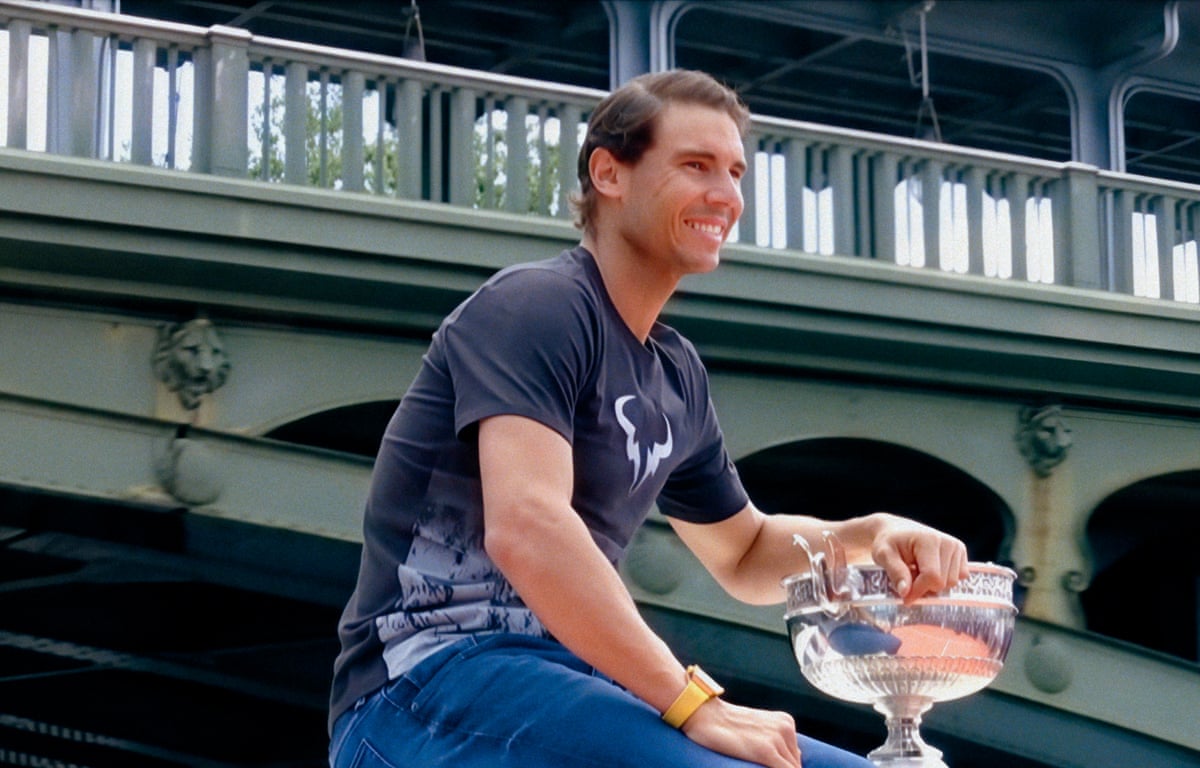
Glory days … Nadal in Paris in 2017, after winning his 10th French Open. Photograph: Netflix Inc/PA


