

Andreeva’s Rise Linked to Playful Bond with Coach Conchita Martínez
Mirra Andreeva’s ascent to triumph at Roland Garros is deeply connected to her lighthearted relationship with her coach, Conchita Martínez.
During Martínez’s recounting of Andreeva’s journey to her first grand-slam title, their conversation was unexpectedly interrupted by Andreeva herself. Accompanied by her team, tournament officials, and a gloved staff member carrying the Coupe Suzanne-Lenglen, Andreeva entered the main interview room with an intent to inject some mischief.
She asked,
“What is the best thing about working with Mirra Andreeva?”Martínez replied that she most enjoys playing Uno against Andreeva and always winning. In response, the 19-year-old raised her eyebrows and moved toward the exit, smiling and saying,
“That’s it? Have fun.”As Andreeva left, Martínez wondered aloud if she had just been fired.
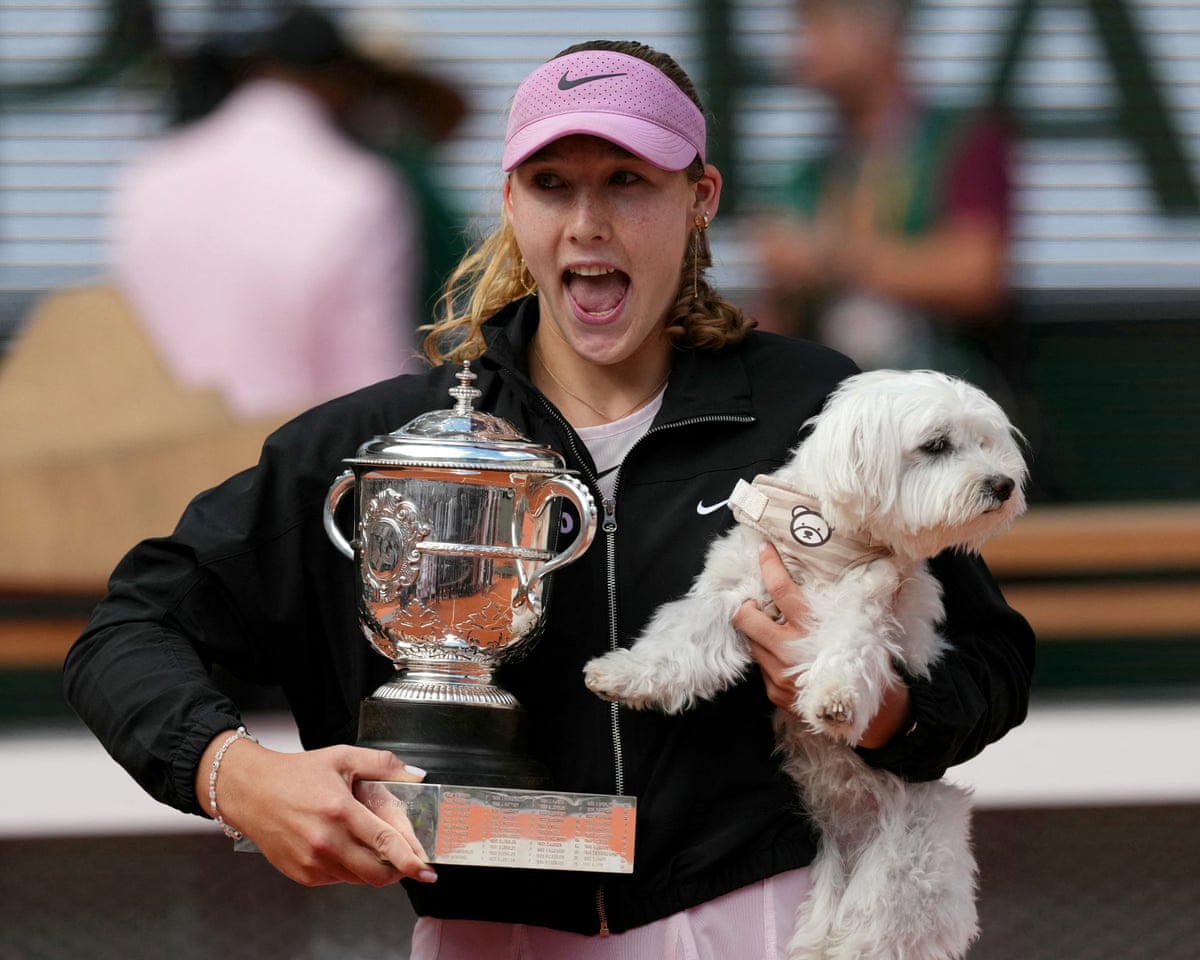
This playful exchange between player and coach reveals more about their dynamic than formal interview answers. From the beginning of their partnership in 2024, their rapport has been a key element of Andreeva’s rise. They have consistently displayed comfort around each other, frequently engaging in public banter.
The lighthearted atmosphere appears essential to Andreeva. While her determination has propelled her to remarkable success at a young age, it has also been a vulnerability. She has often struggled to maintain composure under pressure, with emotions sometimes overwhelming her during matches.

Before Andreeva entered the room, Martínez acknowledged that despite their strong relationship, they have faced challenging days on the practice court.
“Her attitude is difficult,”said Martínez.
“You tell her something and maybe she’s not open to listening and stuff like that. That is a little bit difficult, because when she works hard and when she listens and she does everything, she has no limits.”
Martínez is highly qualified to guide one of the most talented teenagers in recent decades. Coincidentally, after Andreeva defeated Maja Chwalinska in straight sets, she received her trophy on Court Philippe-Chatrier from Mary Pierce, who Martínez lost to in the 2000 Roland Garros final. Andreeva remarked,
“She always knows what to say at the right time. She knows what I’m going through. She can also feel when I’m nervous, even when I don’t know that I’m nervous.”
Female Coaches’ Growing Importance at French Open
Amid the drama of this year’s French Open, the tournament has highlighted the significance of female coaches. Despite their scarcity on the tour, female coaches demonstrate a unique ability to connect with players, traveling with them globally and spending extensive hours together daily, fostering understanding in ways male coaches may not.
Andreeva ended Marta Kostyuk’s 17-match winning streak with a commanding straight-sets victory. Kostyuk was the tournament’s second-best performer based on level of play and opponents defeated, including Iga Swiatek, the Polish four-time champion and third seed, and Elina Svitolina, the seventh seed and fellow Ukrainian.
Kostyuk’s progress has also been guided by a female coach, Sandra Zaniewska. Similar to Andreeva and Martínez, Kostyuk and Zaniewska share a strong, playful rapport that underpins their success. Kostyuk described their initial trial week three years ago, which demonstrated the strength of their partnership.
“That practice week, I was crying on the practice every single day. She [Zaniewska] didn’t say one word about it, when all the coaches that I worked with before would flip after second practice, and they wouldn’t let me do anything,”said the 23-year-old.
“They would tell me that I have to change, that this is not how it’s going to work. They would really just flip.
I was very surprised with how composed and calm she was when I had this storm happening in my head. She let me be who I am. I was feeling very, very comfortable. I think it was probably the first time in my life that I felt comfortable with a coach. Like, truly as a human, you know? Not as a tennis player. So this is the reason I think why we kept working.”


