

Mercedes are on top
The pre-season favourites endeavored to downplay their anticipated advantage ahead of the Australian Grand Prix, but their dominance was unmistakable. A commanding one-two finish by Mercedes, with a margin exceeding a second, was followed by a similarly confident performance.
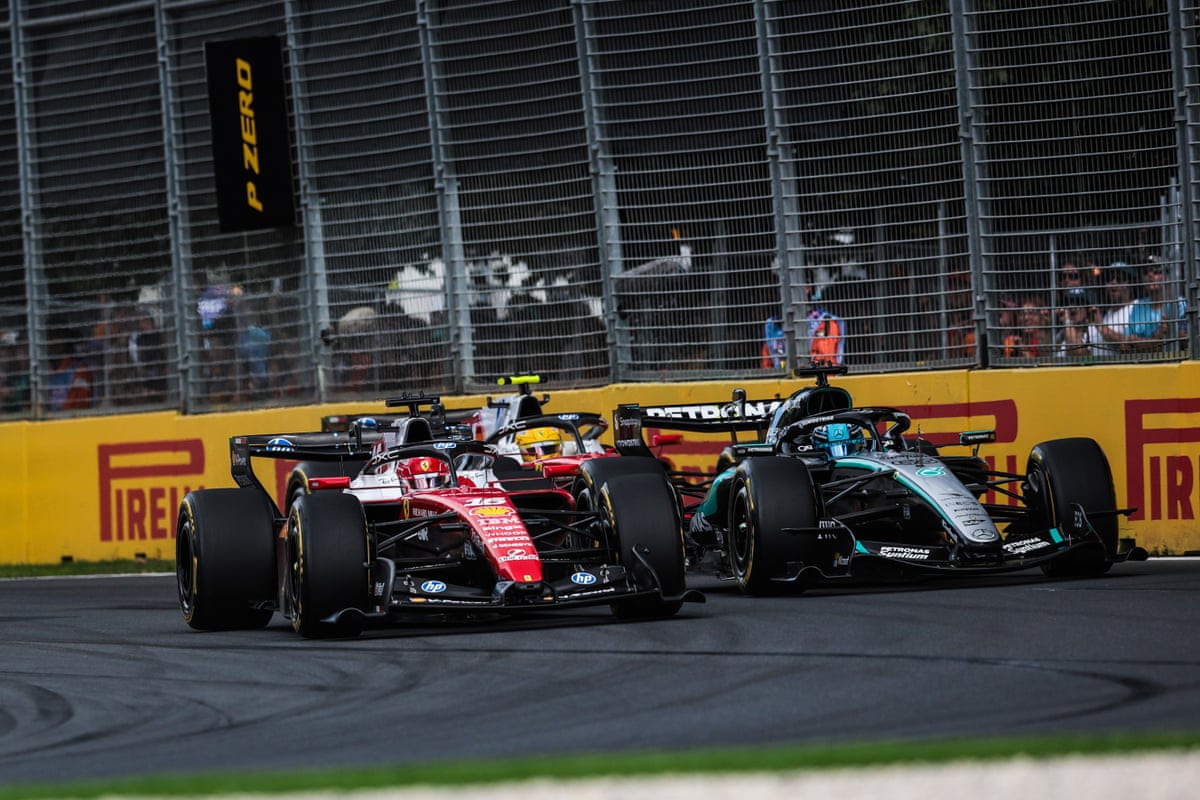
George Russell initially contended with Ferrari’s Charles Leclerc in the early stages, but once he emerged from that battle and could focus on what engineers termed the “optimal” lap—aligned with the new regulations on power deployment and energy recharging—he gained a 0.3 to 0.4-second advantage over Ferrari. At that point, the Mercedes car pulled away decisively.
During the final third of the race, Russell and teammate Valtteri Bottas were not competing directly against each other and eased their pace, maintaining a 15-second gap to Leclerc. This suggested they had additional performance in reserve. They appeared mindful that extending their lead significantly might reignite discussions regarding their claimed engine compression ratio advantage. Mercedes is poised to be a formidable contender throughout the season.
Ferrari’s opening credits
Lewis Hamilton and Charles Leclerc exhibited rapid starts, consistent with their testing performances, and early in the season this may represent their strongest opportunity to challenge Mercedes. However, a costly delay in responding to a virtual safety car compromised their race. Despite this, Ferrari demonstrated strong pace.
While Mercedes holds a clear advantage, Ferrari anticipates a rigorous development battle as teams refine their cars’ performance. Ferrari stands alone as the second-fastest team, allowing them to focus on closing the gap to Mercedes without the distraction of defending against McLaren or Red Bull. Leclerc and Hamilton, who finished third and fourth respectively in Melbourne, have substantial grounds for optimism.
New era compared to video games
The new regulations, particularly the energy management requirements, have sparked considerable debate. Lando Norris criticized the changes, stating that the cars “suck” and were the worst he had driven, while cautioning about the challenges ahead. Max Verstappen also expressed strong disapproval of the energy management techniques, including the lift-and-coast throttle procedures, which were visibly apparent and detracted from the racing spectacle.
Post-race, criticism focused on the artificial nature of overtaking maneuvers, which were often facilitated by boost or overtake modes. These moves depleted energy reserves to the extent that drivers were frequently overtaken again immediately afterward.

“This is like the mushroom in Mario Kart,” said Leclerc, reflecting a sentiment shared by multiple drivers who compared the racing to video games.
Formula 1 highlighted that there were 120 overtakes compared to 45 last year, but the consensus was that these moves, essentially push-to-pass followed by a struggle to recharge energy, lacked meaningful impact.
Drivers from Mercedes and Ferrari were more measured in their comments, though it was evident they benefit from having the two fastest cars. There is agreement that the situation warrants further discussion and scrutiny during the opening rounds. As Mercedes team principal Toto Wolff noted, the ultimate measure is fan enjoyment.
“Stefano [Domenicali, F1’s CEO] would say that the single metric that matters to him is whether the fans like it,” Wolff stated.
Lindblad makes striking debut
Arvid Lindblad, the sole rookie this season, defied expectations by making an assertive debut. The 18-year-old British driver secured an impressive ninth place in qualifying for Racing Bulls. At the race start, he made an excellent launch and, during a frenetic opening phase, advanced as high as third position.
When Max Verstappen approached, Lindblad resisted yielding, compelling the four-time world champion to contest the position vigorously before Lindblad ultimately secured eighth place and earned four points. He finished just behind Oliver Bearman, who performed admirably in his second season, indicating that Haas has strong potential to compete at the forefront of the midfield.
Long haul in store for Aston Martin
The Aston Martin team endured a challenging and publicly visible struggle at the start of the season in Albert Park. While it was known that the team faced difficulties, the full extent became apparent in Melbourne. On Thursday, Adrian Newey acknowledged that their Honda engine suffered from a severe vibration issue that significantly affected the drivers, an unusual admission from a team principal on the eve of the first race.
The team exhausted their allocation of replacement engines, leaving only two units available. Lance Stroll was unable to participate in qualifying, and mechanics worked until 4 a.m. on race day to resolve ongoing problems. During the race, it was evident that Aston Martin’s efforts amounted to extended testing rather than competitive performance. Fernando Alonso completed two stints interspersed with pit inspections before retiring the car. Stroll completed laps but spent a prolonged period in the pits and was not classified after finishing 15 laps behind Russell.
Aston Martin faces a significant challenge. Beyond the vibration issue, the engine is both unreliable and underpowered. Without a fully operational engine, the team cannot properly evaluate their car’s capabilities or plan development. No immediate solution is expected, evoking memories of Honda’s difficult return with McLaren in 2015. Aston Martin is likely aware that Honda required four years to reach the front of the grid and an additional two years to secure a championship title.


