

Introduction
"Simply the greatest event that humanity, that mankind, has ever seen".
These are the words of FIFA president Gianni Infantino as he praised the upcoming World Cup hosted across the United States, Mexico, and Canada this summer. Known for his enthusiastic promotion of football's premier event, Infantino has described this first pan-continental tournament as the most inclusive, welcoming, and unifying to date.
However, many observers would attribute different superlatives to this event: the most politicised, the most expensive, potentially the hottest, or the most polluting World Cup ever. It is certainly the most lucrative for FIFA.
Regardless of perspective, it is clear that beyond the on-field spectacle, this expanded World Cup is poised to be one of the most contentious in history. Issues ranging from ticket costs, geopolitical tensions, immigration policies, security concerns, extreme weather, sustainability challenges, and the involvement of US President Donald Trump have generated both excitement and apprehension.
What are the main issues? How did the tournament reach this point? And what is at stake?
Mexico City: A Microcosm of Challenges
As the football world turns its attention to Mexico City ahead of Thursday's opening match, the co-host cities offer a vivid snapshot of the complexities surrounding the tournament.
Mexico City, a footballing hotbed, has provided some of the World Cup's most iconic moments. The legendary Estadio Azteca is set to make history as the first venue to host the start of three different World Cups.
While this is an exciting prospect, concerns mirror those in the United States, where approximately 75% of matches will be held. High ticket prices have caused unease, as have security issues in a country that has experienced significant cartel violence this year.
In the capital, World Cup player statues have been toppled by protesters, and teachers demanding higher wages have threatened to disrupt matches if their demands are not met.
In Tijuana, the presence of the Iran national team highlights the complex political tensions intertwined with the sporting event.
USA & Iran: A Host Nation at War with a Participant
No previous World Cup has been hosted by three countries simultaneously, nor featured as many as 48 teams competing in 104 matches. Beyond scale, this tournament is unprecedented in other respects.
For the first time, a host country is at war with a participating nation. Last month, FIFA confirmed that Iran had relocated its base from Arizona to Mexico, a consequence of the military conflict that began in February when the US and Israel attacked Iran, triggering retaliatory strikes across the Middle East. Although a ceasefire was declared in early April, hostilities have continued.
Iran's participation has been marked by uncertainty. President Trump at one point stated it was not "appropriate" for the team to participate "for their own life and safety." His special envoy even suggested replacing Iran with four-time World Cup winners Italy, who failed to qualify.
Iran is now set to compete in its fourth consecutive World Cup, despite accusations that the US denied visas to some team executives and backroom staff. Officials claimed players were instructed to enter and exit the US on the same day as their three group matches there. Iran's embassy in Turkey accused the US of "politically-biased interference in sport."
FIFA reportedly plans to ban the pre-revolutionary Iranian flag from tournament venues, ensuring that Iran's matches, especially the first two in Los Angeles—a city with a large Persian community—will be politically charged.
Cost Controversies Define the Build-Up
World Cup matches are taking place in 16 cities across United States, Mexico and Canada
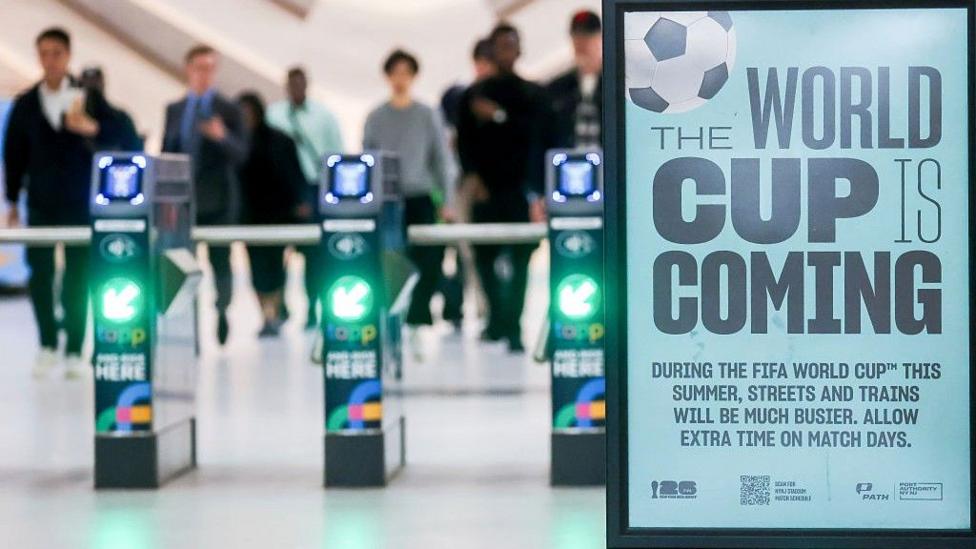
Eight years ago, FIFA awarded the 2026 World Cup to the United States, Mexico, and Canada as part of an effort to recover from the corruption scandal that emerged after controversial votes in 2010 for Russia and Qatar to host the 2018 and 2022 tournaments respectively.
With both Russia and Qatar forced to deny bribery allegations, a North American World Cup appeared less risky, given the existing stadium infrastructure.
Financial considerations were also significant. Fueled by multi-billion-dollar broadcasting and sponsorship deals, the expanded tournament in the world's most commercialized sports market is set to be the most lucrative sporting event ever, with FIFA expected to earn a record $9 billion (£6.74 billion) this year alone.
These revenues will enable FIFA to redistribute $2.7 billion to national football associations over the next four years, supporting global football development and enhancing Infantino's prospects for a third re-election next year.
However, controversy over the methods of generating this revenue has dominated the tournament's build-up.
In 2018, bid organizers stated that final match tickets would cost a maximum of $1,550 (£1,174). Yet when tickets went on sale in December to official supporters' club members, the highest price was $8,680 (£6,581).
Supporters' groups described the pricing as a "monumental betrayal," prompting FIFA to announce a limited number of $60 (£45) tickets. The introduction of 'dynamic pricing'—where ticket prices fluctuate based on demand and timing—sparked backlash, raising fears that many passionate fans could be priced out.
On the official resale platform, fans faced inflated prices, with FIFA taking a 30% fee on each ticket sold.
Last month, New York and New Jersey officials launched an investigation amid allegations that FIFA artificially inflated prices and misled fans regarding ticket sales.
Fifa ordered to explain World Cup ticket pricing
What is happening with World Cup ticket prices?
FIFA has cited the spending power of US consumers and high demand, claiming over five million tickets have been sold and that the event will be sold out.
However, found thousands of tickets for matches involving smaller nations available below face value on both FIFA's resale site and secondary marketplaces. FIFA has also been accused of dumping unsold inventory on SeatGeek.
Other costs have also caused dismay. Train tickets from central New York to MetLife Stadium in New Jersey, normally priced at $12.90 (£9.50), were initially raised to $150 (£111) before being reduced to $98 (£73). The New Jersey governor blamed FIFA for refusing to subsidize transport expenses.
Fan sentiment worsened when FIFA announced a ban on reusable water bottles inside venues due to safety concerns, a late policy change widely believed to be commercially motivated.
With temperatures at 14 of the 16 host venues expected to reach dangerous levels, concerns arose that the ban could jeopardize fan health. Following significant outcry from supporter groups and politicians, FIFA reversed the decision, allowing sealed disposable water bottles.
Fifa risking player safety over heat at World Cup - scientists
Fifa clarifies water bottle stadium rule
Thirty-two years ago, the first US-hosted World Cup helped propel soccer into the mainstream. Now, with a well-established domestic league and US investment in European football, hopes are high for further growth.
"In 1994 the soccer market was very nascent in the US, and today we have thriving professional leagues, and some of the world's great stadiums," US Soccer chief executive JT Batson told . "This summer is an incredible opportunity for us to transform what soccer looks like in America."
Nevertheless, a recent poll indicates that a majority of Americans consider the tournament too expensive and inaccessible for the average fan.

Hotel bookings in nearly every host city are below expectations, suggesting that high costs and the political environment have deterred attendance.
"There will have been a lot of people priced out of it," said Thomas Concannon, leader of the Football Supporters' Association England fan group. Between 12,000 and 15,000 England fans are expected at each of the team's three group matches in Dallas, Boston, and New Jersey.
"It feels like those numbers are a little bit disappointing given the excitement that was building up. We thought there would be more."
A 'Deeply Politicised' Tournament
In 2017, during President Trump's first term, Infantino suggested that the US travel ban on citizens from six majority-Muslim countries was incompatible with FIFA regulations and could jeopardize the country's 2026 hosting rights.
"It's obvious when it comes to FIFA competitions, any team, including the supporters and officials of that team, who qualify for a World Cup need to have access to the country, otherwise there is no World Cup," he warned.
Despite this, Trump's immigration policies during his second term have resulted in four competing nations—Iran, Haiti, Senegal, and Ivory Coast—facing full or partial travel bans, citing security concerns.
BBC analysis of travel data shows that fans from over a quarter of the 48 participating countries face travel bans, stricter restrictions, or high visa rejection rates.
Only last month were visitors from Algeria, Senegal, Ivory Coast, Cape Verde, and Tunisia exempted from paying deposits up to $15,000 (£11,000) required for US visas.
At the weekend, the International Sports Press Association criticized the "long-standing and unacceptable problem" of visa denials for accredited journalists.
On Monday, FIFA announced that Omar Artan, who would have been the first Somali referee at the World Cup finals, was removed from the officials list after being denied US entry. No reason was provided by immigration authorities. Somalia is among the countries subject to Trump's travel bans.
"This is a tournament where players, fans, and officials are not walking in free of risk, if they can get in at all," said Craig Foster, former captain of Australia's Socceroos and a human rights advocate.
"For a sport that has trumpeted its commitment to its own human rights policy for a decade now, that is nothing short of disgraceful.
"This should obliterate the idea, that has still been somewhat prevalent in the world, of a separation between politics and sport. Unlike any other sporting tournament I can recall in modern times, this is a deeply politicised World Cup."
Gianni Infantino [right] first visited the Oval Office in 2018 during President Trump's first term in office and last year awarded him a 'Fifa Peace Prize'
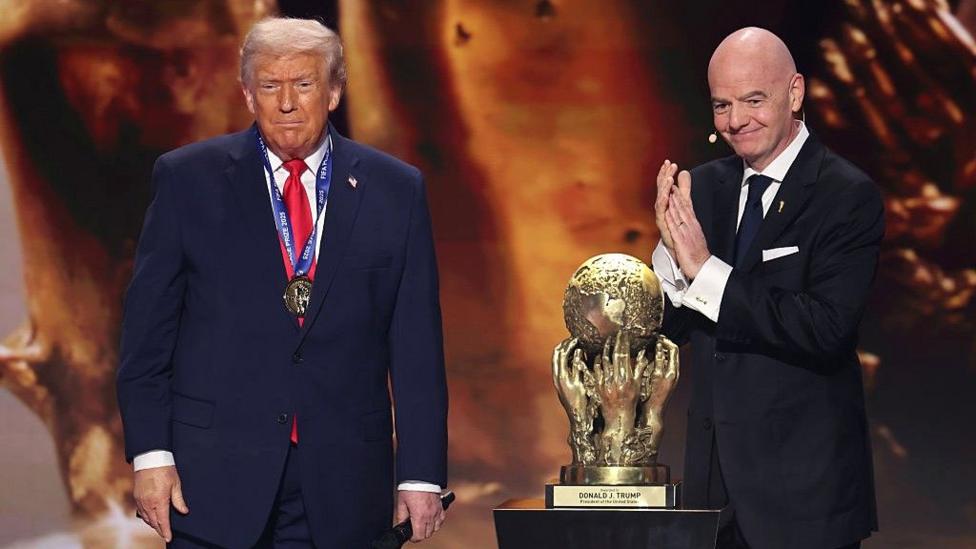
Since assuming office in 2016, Infantino has cultivated relationships with leaders of host countries. His controversial awarding of a FIFA Peace Prize to Trump at the World Cup draw last year underscored his close ties with the US president.
Since then, the US has taken military action in Venezuela, Nigeria, and Iran, with Trump hinting at possible operations in Greenland, Mexico, and Colombia—all World Cup participants.
Tensions among the three co-hosts persist over trade, immigration, and drug trafficking. Last week, Trump referred to Canada as "the 51st state," though hopes remain that the tournament could foster diplomatic opportunities.
The US is also marking the 250th anniversary of its independence, with Trump expected to play a prominent role during the tournament, as he did at the Club World Cup final last year and the World Cup draw in December.
Following accusations that Russia and Qatar used previous World Cups to improve their international reputations, Human Rights Watch has labeled this event a "bonanza of 'sportswashing'." Amnesty International warns it risks becoming "a stage for repression," citing "abusive, discriminatory and deadly immigration enforcement and mass detention in the USA," and highlighting "significant risks" to attendees.
Much scrutiny has focused on the US Immigration and Customs Enforcement (ICE), which is part of the tournament's security apparatus. Earlier this year, ICE agents fatally shot two American citizens during an immigration crackdown in Minneapolis.
In response, the White House World Cup Task Force has pledged to deliver "the safest, and most welcoming sporting event in history," emphasizing America's hospitality, security commitment, and spirit of excellence.
'Unprecedented' Pressure on Local Law Enforcement
Weeks ago, White House officials emphasized the necessity of reopening the Department of Homeland Security (DHS), responsible for much of the tournament's security, following a partial shutdown triggered by a funding dispute in Congress. The shutdown ended officially, but challenges remain.
"This entire country's police force is leaning in," Andrew Giuliani, head of the White House World Cup Task Force, told ESPN last week.
"It is an unbelievable problem set when I think about what local law enforcement is going to have to do over this 40-day stretch. It is unprecedented. We're going to do everything in our power to make sure that nothing goes wrong."
Giuliani noted that planning had been hindered by the shutdown, stating, "we are still plugging a few of those holes."
Authorities also face concerns about an Ebola outbreak centered in the Democratic Republic of Congo, whose team will play matches in Houston, Atlanta, and Guadalajara.
A US State Department spokesperson confirmed coordination efforts to protect citizens, including millions of visitors, fans, athletes, and tourists expected during the FIFA World Cup.
'Most Climate-Damaging' Tournament in History
Six games at the Club World Cup were delayed last year because of extreme weather
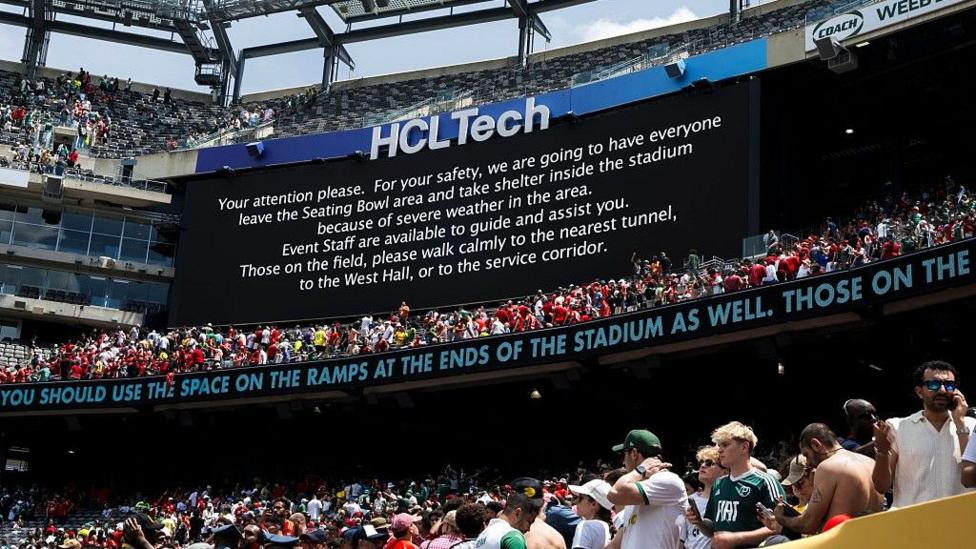
FIFA has committed to reducing its carbon emissions by 50% by 2030 and achieving net-zero emissions by 2040. Utilizing existing stadiums for all matches supports these goals, but the tournament's expansion increases environmental impact, with aviation accounting for 80-90% of its carbon footprint.
Environmentalists argue this will be the most climate-damaging World Cup ever, with heavy reliance on air travel generating over nine million tonnes of carbon dioxide equivalent—nearly double the average of the past four tournaments.
The original bid book from the three host nations estimated 3.6 million tonnes of CO2e, expressing hopes to "establish new standards for environmental sustainability in sport."
Recently, leading scientists warned FIFA that current heat safety protocols are "inadequate" and could endanger players.
FIFA states it is "committed to protecting the health and safety of players, referees, fans, volunteers and staff" and that climate-related risks are assessed.
Nevertheless, extreme weather, including electrical storms that cause long delays—as occurred during Saudi Arabia's warm-up match against Puerto Rico in Texas on 6 June—will be closely scrutinized, as will FIFA's role in contributing to climate change.
In May, Infantino expressed enthusiasm about football's economic potential in the US, noting it accounts for only 3% of the sport's global GDP, representing a trillion-dollar growth opportunity for investors.
The coming weeks will determine whether this sporting and commercial phenomenon finally breaks through in America or whether the tournament itself is undermined by the costs and politics surrounding it.
The stage is set for the sport's biggest stars to shine, but the event may also reveal the limits of expansion and inflation the game and its stakeholders are willing to accept.
- World Cup fixtures and group standings
- How to watch the World Cup on the BBC
- Everything you need to know about the World Cup


