Fatal Incident Highlights Risks of Concrete-Based Cricket Pitches
Concrete-based cricket pitches, such as the one on which Nathan Fitzgerald sustained fatal head injuries, are considered by concussion advocates to be "totally unsafe." This tragic event has reignited calls for urgent safety reforms in Australian rules football.
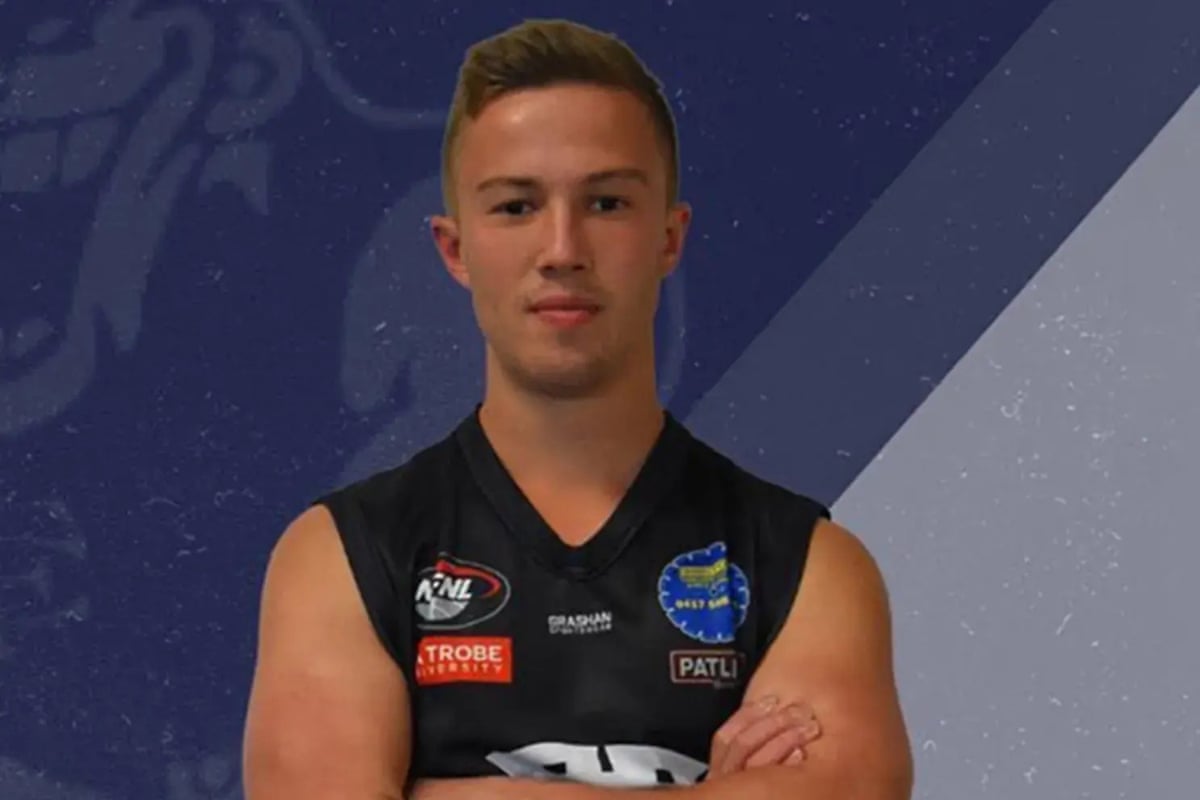
Australia faces a long-standing, deadly risk within its native football code that has persisted for over 120 years, according to sports safety advocates. This issue was brought to the forefront following the death of Nathan Fitzgerald, a 27-year-old school teacher and suburban Aussie rules footballer.
Fitzgerald suffered a catastrophic accident on Saturday during a match, believed to have occurred when he collided heads with another player while tackling an opponent. He then received a second blow to the head as he fell and struck his head a third time on a concrete-based cricket pitch located at the center of the ground.
His death profoundly affected his community, including family, friends, teammates, colleagues, and students. The school where he taught described him as "deeply loved, valued and respected by all of us."
The president of the Epping Football Netball Club, Luke De Vincentis, expressed hope that the shock, confusion, and heartbreak surrounding Fitzgerald’s death would prompt a review of how cricket pitches are covered.
"Because it is a significant risk and I think the weekend has proved what a dire outcome can be from that," he told ABC local radio.
Even at the elite level, Australian Football League (AFL) matches are played on ovals shared with cricket clubs. However, at the grassroots level, many clubs use pitches with a concrete base instead of turf.
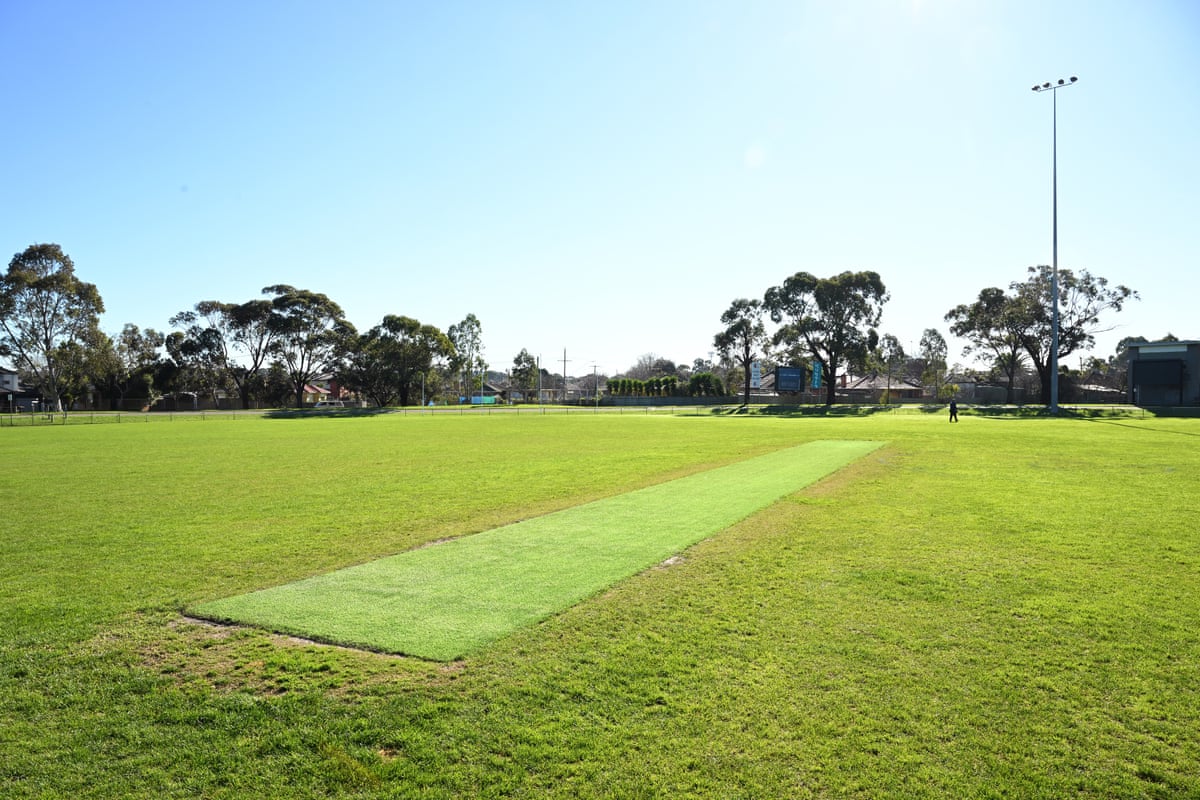
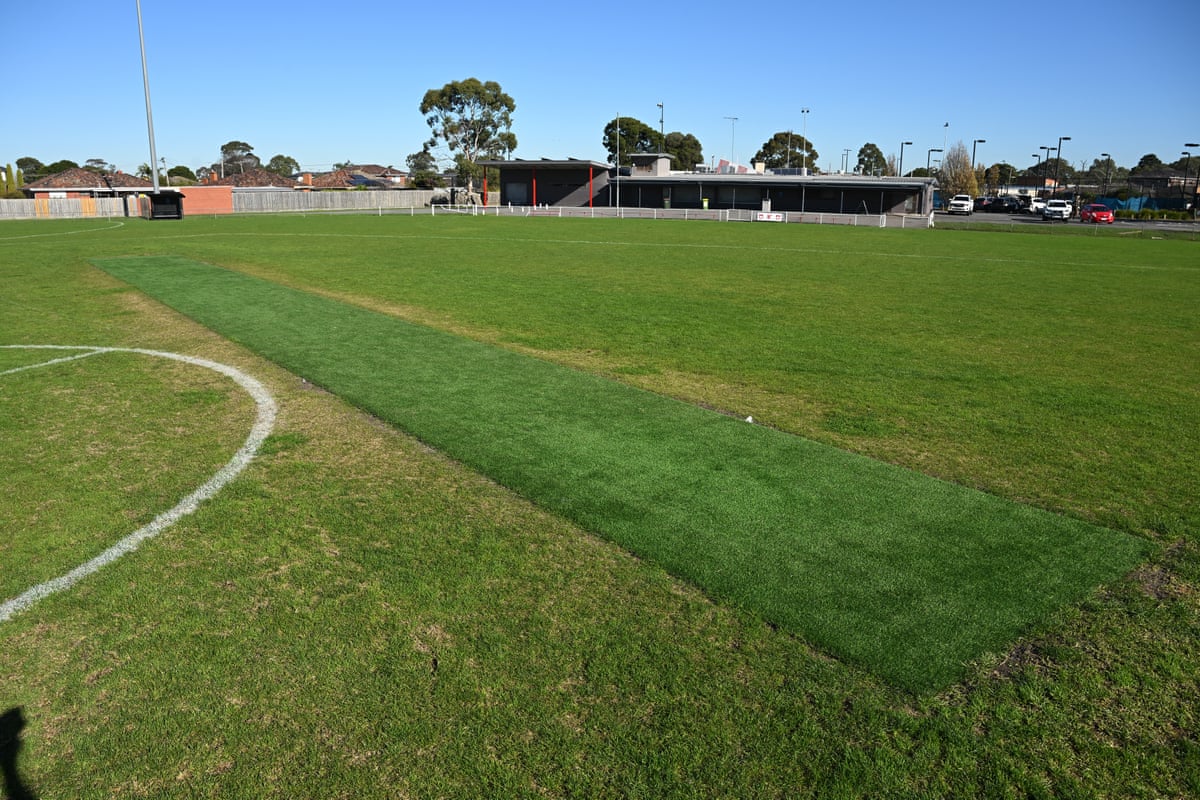
In the City of Whittlesea, the local government area where Fitzgerald’s final match took place, there are 16 multipurpose ovals featuring concrete-based cricket wickets. The concrete pitch on the Lalor oval, where Fitzgerald died, was covered with a multilayered synthetic surface. A council spokesperson stated that this surface was "designed to provide a safe level playing surface" and met AFL and Cricket Australia performance standards.
Expert Opinions on the Risks of Concrete Pitches
Dr Alan Pearce, a neurophysiologist specializing in sports-related concussion research, noted that while accidents in contact sports are inevitable, a coroner’s report would be necessary to determine the exact cause of Fitzgerald’s death and to recommend preventive measures.
"[But] common sense would tell you that this was an accident waiting to happen," Pearce said.
"There is no give in a concrete structure, so there is no absorption for the brain and so it is very similar, unfortunately, to a king hit, say, in the city, where someone is hit and they strike their head on the pavement."
Annitta Siliato, executive director of the Concussion Legacy Foundation Australia, described concrete-based cricket pitches as "totally unsafe" and urged government and the AFL to collaborate to eliminate them.
"Obviously, we can’t have concrete cricket pitches in the middle of grounds, I think that needs to be eliminated," Siliato said.
"Not that that will eliminate the total risk of brain injuries, but it would lessen that risk."
Historical Context of Concrete Pitches in Australian Football
Stephen Townsend, a researcher focused on the history of brain trauma in sport, explained that the risk posed by concrete pitches dates back to the origins of Australian rules football.
The sport, codified by members of the Melbourne Cricket Club in the mid-19th century to keep cricketers active during winter, shared grounds with cricket within a few decades.
This shared use created challenges for clubs, particularly in repairing turf pitches damaged by football boots over winter in time for summer cricket.

"What a lot of suburban and country clubs started doing, because they didn’t necessarily have the resources or the money or the professional groundskeeping staff to turn these pitches around in time, is they started laying concrete pitches," Townsend said.
By the 1930s, the practice was widespread. Notably, Don Bradman, cricket’s greatest player, grew up playing on a concrete-based pitch in Bowral.
However, even during Bradman’s era, the dangers of these pitches were well recognized. Townsend cited a 1904 Euroa Advertiser article reporting footballers’ concerns about the "very dangerous" concrete cricket wicket on their oval.
Townsend identified the first recorded death caused by a concrete pitch as occurring in Western Australia in 1939.
According to the Great Southern Herald, Wyvern Atkins, a "strong, stolidly built" 28-year-old and one of the league’s "best and most popular" footballers, died after striking his head on a concrete cricket pitch covered in sand during a leap over a group of players. He broke his neck and died almost immediately.
More than 80 years later, Australian rules football continues to be played on grounds with concrete-based pitches. Townsend referenced recent sporting tragedies that have led to policy changes, such as the 2014 death of Phillip Hughes in cricket.
Hughes was fatally struck on the neck by a bouncer, prompting Cricket Australia to mandate improved neck protection.
Calls for Reform Following Fitzgerald’s Death
Siliato emphasized that Fitzgerald’s death should catalyze changes to improve sports safety.
"This incident is a highly unfortunate series of events," she said. "But it has highlighted to us that we really need to advocate for safer sports."
She advocated for modifications to junior contact sports and the introduction of compulsory concussion and chronic traumatic encephalopathy (CTE) protocols at the grassroots level.
"We want to continue playing these sports," Siliato said. "But we need to make sure all the safety mechanisms are in place."
Dr Pearce noted that football codes across Australia are at a critical point regarding brain injury awareness, requiring both institutional and cultural changes to enhance safety.
"There is still, culturally, a hesitancy to acknowledge concussion as a brain injury," he said. "We still call it head knocks, which can kind of trivialise the injury. This tragic death over the weekend was not a head knock, it was a severe traumatic brain injury."
Official Responses and Community Tributes
Mayor Lawrie Cox stated that the City of Whittlesea covers its wickets "in accordance with guidelines set out by the AFL and Cricket Australia."
"If this practice is determined to have played a role in the injuries sustained by Nathan Fitzgerald, council would support a review of the guidelines in collaboration with the sporting associations to strengthen player safety," Cox said.
The AFL did not respond to specific questions but its CEO, Andrew Dillon, released a statement emphasizing the community aspect of football during difficult times.
"At times like these, football is about much more than the game itself," Dillon said.
"It is about coming together to support one another, with the team at AFL Victoria working closely with those affected and continuing to provide wellbeing support to Nathan’s family, his club and everyone impacted across the days and weeks ahead."
A federal government spokesperson did not answer specific questions but expressed condolences.
"We are deeply saddened to hear of Nathan Fitzgerald’s death, and our thoughts are with his loved ones at this time," the spokesperson said.
This weekend’s AFL match between the Melbourne Demons and the Richmond Tigers, the team Fitzgerald supported, will observe a minute’s silence in his memory. All 18 AFL clubs, along with community clubs nationwide, will wear black armbands as a tribute.