

Canadian Curling Teams Face Scrutiny Amid Cheating Allegations
A controversy at the Winter Olympics has placed the Canadian curling teams on the defensive and unsettled Canadians, challenging the nation's reputation for sportsmanship and politeness.
Over the weekend, Canadian curler Marc Kennedy reacted with an expletive-laden outburst after Sweden accused him of cheating during a match. He later suggested that his team might be the target of a "premeditated" attack by their rivals.
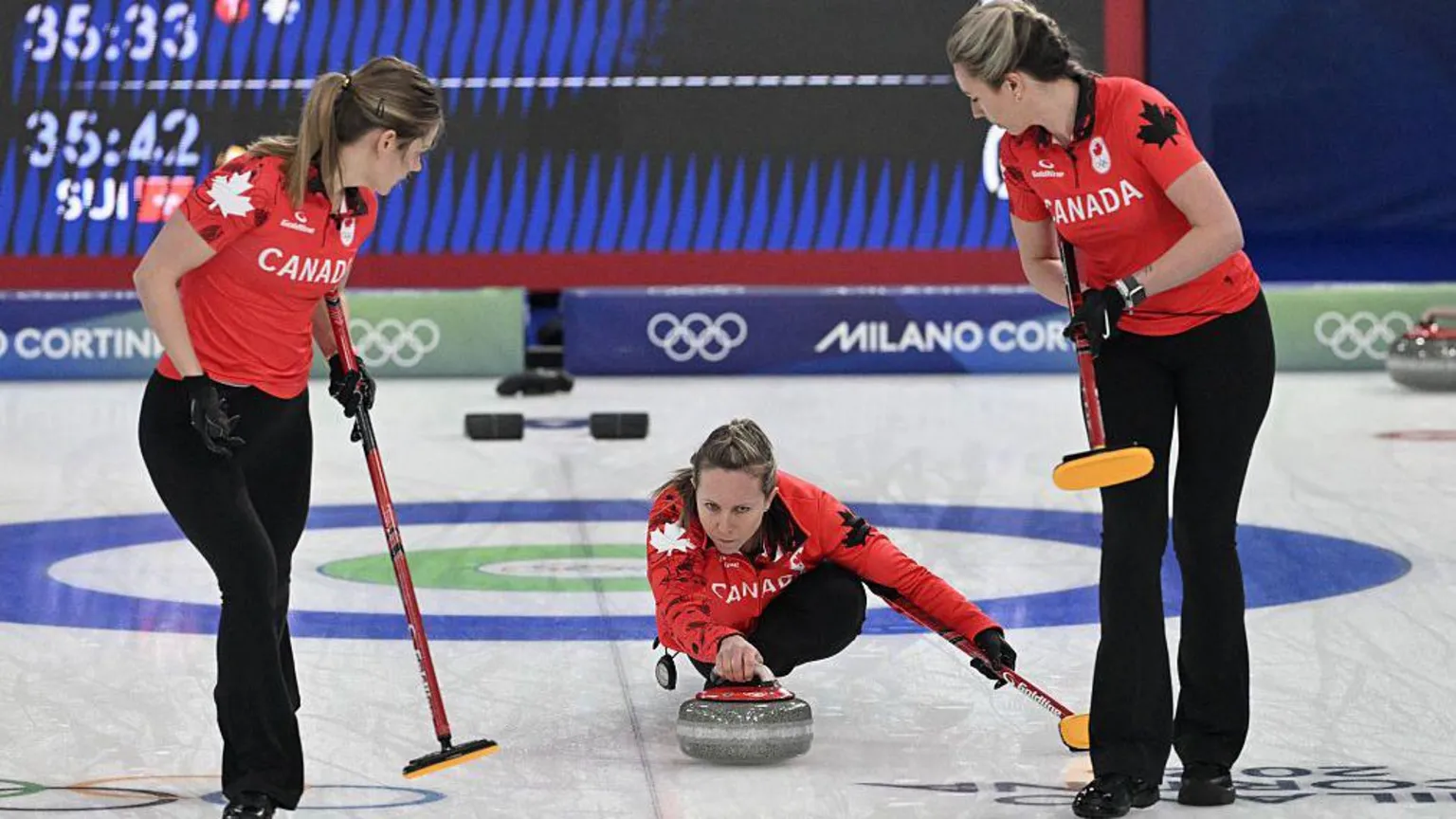
Kennedy was accused of "double-touching"—touching the stone a second time after initially releasing it down the ice. The following day, Canadian women's captain Rachel Homan faced similar accusations of employing the same move.
Both athletes have denied the allegations, but Canada's curling teams, traditionally dominant in the sport, now confront questions regarding their tactics.
While the curlers have expressed their frustration during matches, fans and Canadians have debated whether the teams acted in the true spirit of curling.
In a country renowned for its "niceness," the cheating controversy has been particularly disconcerting. The BBC interviewed tourists and locals in Montreal to gauge their reactions.
"It's a sad day for Canadian sport," said Tim Gray, from Alberta. "Integrity in the sport is important, even if you have to call it on yourself."
"As Canadians, we aren't supposed to do these things," said Samar, from Ontario.
"Without sportsmanship," said Dwayne from British Columbia, "it's not sport any more."
A more nuanced perspective was offered at the Royal Montreal Curling Club.
Ankara Leonard, a curling instructor there, suggested that the publicity might benefit the sport by generating interest.
"Do I think [Kennedy's] finger affects the rock? No I do not. Do I think we have to play within the rules? Yes."
Details of the Controversy
The controversy began on Friday when Swedish player Oskar Eriksson accused Kennedy of double-touching.
During the game, Kennedy and Eriksson engaged in a verbal exchange that included expletives.
Their confrontation quickly went viral after a video surfaced that appeared to show Kennedy pushing the stone with his finger after releasing it.

Kennedy received a verbal warning from World Curling for using foul language but was not formally charged with cheating by the sport's governing body.
The next day, Kennedy commented on the incident:
"I probably could have handled it better. But we're human out there and there's a lot of emotions. I'm not going to apologise for defending my teammates and standing up for myself."
"I've curled my whole life, never once with the intention of getting an advantage through cheating," he added.
An opinion piece in the Canadian news outlet The Globe and Mail reflected some of the frustration felt domestically.
"These Canadian curling teams are not fun bad guys. They come off like the sort of competitors who need so desperately to win that they will do anything - even things that are pointless - in order to get there."
Cathal Kelly, the writer of the piece, continued: "There's an easy way out of this - stop struggling. Stop acting like our curling reputation matters more than our national one. Be the bigger man and woman, even if you don't think you did anything wrong."
A second cheating dispute arose on Saturday when match officials accused the Canadian women's team of the same double-touch violation.
Rachel Homan stated there was a "zero percent chance" that a violation had occurred, as she and her teammates watched the situation with frustration. The Canadians were defeated by Switzerland, 8-7.
On Sunday, Great Britain's men's team was also accused of the same violation.
Both Homan and British men's curler Bobby Lammie had stones removed from play due to alleged violations.
Homan later criticized the officials' decision to remove her stone during the loss to Switzerland, calling it "insane."
Official Response and Broader Implications
These incidents prompted World Curling to clarify the rules regarding double-tapping.
"During forward motion, touching the granite of the stone is not allowed. This will result in the stone being removed from play," the organization stated.
World Curling does not utilize video review for play but deployed two officials to monitor players' stone releases in subsequent games.
In an article for The Curling News, curling columnist and Olympian Tomi Rantamaki cautioned that Canada's dominance in curling carries a responsibility.
"Young players in Finland, Korea, Italy, Sweden - everywhere - often copy what Canadian teams do. They copy the athlete's delivery, the sweeping, the tactics, the communication," Rantamaki wrote. "And they copy the behaviour."


