The evolution of the slower ball in cricket
Franklyn Stephenson’s distinctive chuckle resonates over the phone.
“You know the hardest thing about bowling that ball? I couldn’t stop laughing when I saw how the batsmen were trying to play it! They’d be jabbing here or ducking there, most of them were so clueless!”
Since cricket’s inception, bowlers have confounded batters by varying their pace deceptively. One can imagine early bowlers, clad in flannels and sporting moustaches, delivering a mix of lofty lobs and skiddy, fast-paced balls with a mischievous glint, causing chaos on the southern English wealds and downs.
Moving forward a couple of centuries, Surrey and England bowler Bill Lockwood was reputed to have a slower ball described as
“of almost sinful deceit”around the turn of the 20th century. Wisden’s Almanack recognized Lockwood as
“one of the game’s first great fast bowlers”, yet he could bowl his slower ball without any noticeable change in his action, a critical element in the deception of slower deliveries, as Stephenson confirms.
“You don’t change your action. I’m running in with my big, angry face, my arm swings over at the same speed but the ball comes out of the tip of my fingers, light as a feather, and then it dips, dips, dips.”
Now in his mid-60s and running a successful cricket academy in Barbados, Stephenson, a former Nottinghamshire and Sussex all-rounder, holds a place in cricket history as a modern pioneer of the slower ball. He first developed his “moon ball” during his tenure as an overseas professional for Rawtenstall in the Lancashire League in the 1980s.
After tiring during a long net session, he switched to bowling off-spin but was frustrated when club batsmen began slogging him. This led him to occasionally bowl faster balls with an off-spinner’s action. His “moon ball” emerged as an inversion of this approach.
“I could get it right in the blockhole or get it to turn quite sharply off a length,”Stephenson recalls.
“Often the batters thought I was bowling a beamer at them and would wind up getting into all these awkward positions. They really struggled. I knew I was on to something.”
After refining the delivery in club cricket, Stephenson introduced it to county cricket. In 1988, he took 125 wickets for Nottinghamshire, estimating that
“at least 25”were from his slower ball. The rise of short-form cricket, especially Twenty20, has encouraged bowlers to develop a variety of slower deliveries to counter powerful batsmen, athletic players, smaller boundaries, and frequent sixes worldwide.
Recently, England and franchise cricketer Sam Curran has gained recognition for his use of slower balls. Speaking with Stuart Broad on the For The Love of podcast, Curran explained the rationale behind his variations.
“You have to be creative … I feel that if a batsmen knows I can do something unique it’s a bit like facing a mystery spinner, they’ve got a little bit more doubt.”
Curran can reduce his pace by half, delivering slower balls at around 40mph compared to his average 80mph. When successful, Curran’s moon ball is often clipped and shared on social media. He also acknowledged to Broad,
“Don’t get me wrong, it can get hit.”
Notably, Curran refrained from bowling a slower ball during the final over of England’s tense four-run victory in their opening T20 World Cup match in Mumbai on Sunday. Instead, he bowled a sequence of full deliveries targeting leg stump with the field set accordingly. This strategy helped stem the run flow after Nepal’s middle-order batter Lokesh Bam aggressively struck the ball around the Wankhede stadium.
Choosing when to deploy the slower ball is crucial. Bam hit three sixes off slower balls from Jofra Archer in the 18th over. Jeremy Snape, former England and Leicestershire off-spinner turned sports psychologist, is experienced in both the physical and psychological aspects of bowling slower deliveries.
“I got Virender Sehwag out with mine once in an ODI in 2002. He was caught in the deep, he stomped off and apparently was shouting afterwards: ‘I can’t believe I got out to one of Snape’s lollipops!’
“It’s always a risky ball. It can easily go wrong and then that looks particularly bad in a high-stakes game played by a professional player. ‘Hang on a minute, why’s this elite cricketer bowling like the bloke from down the Dog and Duck CC?’”
Curran’s moon ball has been compared to Snape’s. Interestingly, Snape once shared accommodation with Curran’s father, Kevin, during pre-season tours while both played for Northamptonshire.
“I actually texted Sammy a few months ago to say it looks like his is coming out beautifully.
“Ultimately you’re trying to not only disrupt the clarity of thought and commitment of the batsman, you’re also trying to disrupt their power base and their core strength. T20 cricket is all about prediction for batsmen, they want to be able to predict the rhythm of your footfall and your delivery, ba-dum-ba-dum-ba-dum – smash! If you can upset that, break their patterns and predictions then you can have success, no matter how slow you bowl.”

Stephenson offers a final tribute to the slower ball with which he is synonymous.
“There’s nothing better than outfoxing a batter, particularly when you do it in slow-motion so their humiliation seems to last for ever.”
There is a brief pause on the phone line before his slow, deep laugh returns.

Conan Doyle’s early trendsetter
Sir Arthur Conan Doyle was an admirer of the slower ball, or at least the lob. In October 1928, he authored The Story of Spedegue’s Dropper in The Strand Magazine. Likely inspired by lesser-known “lobsters” such as George Simpson-Hayward and Digby Jephson, who bowled high lobs with abandon before World War I, Conan Doyle’s story centers on Thomas Spedegue.
Afflicted with asthma and palpitations, Spedegue retreats to the New Forest to develop a bowling technique called the dropper—a ball lobbed high then sharply descending onto the stumps. The story predates modern no-ball laws that prohibit balls reaching above waist height, but as Conan Doyle demonstrates, no MCC law should impede a good story.
“I said to myself that Nature had handicapped me with a weak heart, but not with a weak brain and that I might think out some new thing which was within the compass of my strength. Droppers, I call them. Spedegue’s droppers – that’s the name they may have some day.”
Spedegue is discovered by former cricketer Walter Scougall, who, after initial skepticism, is impressed enough to arrange for him to play in a match. Eventually, Spedegue is called up to play for England against the formidable Australians. The story’s conclusion, unsurprisingly, carries Conan Doyle’s signature twist.
Quote of the week
“Having fallen in love with the game in a quite different era from the one we are in now, my goals as an administrator have been firmly rooted in making cricket more equal for women and girls. For it to be as normal for a girl to pick up a cricket bat as a boy. For a young woman to know – not just dream – that she can become a professional cricketer”– Clare Connor announced she is leaving the England and Wales Cricket Board after 18 years during which she has overseen the growth of women’s cricket into a professional sport and helped introduce the first central contracts in the women’s game.
Memory lane
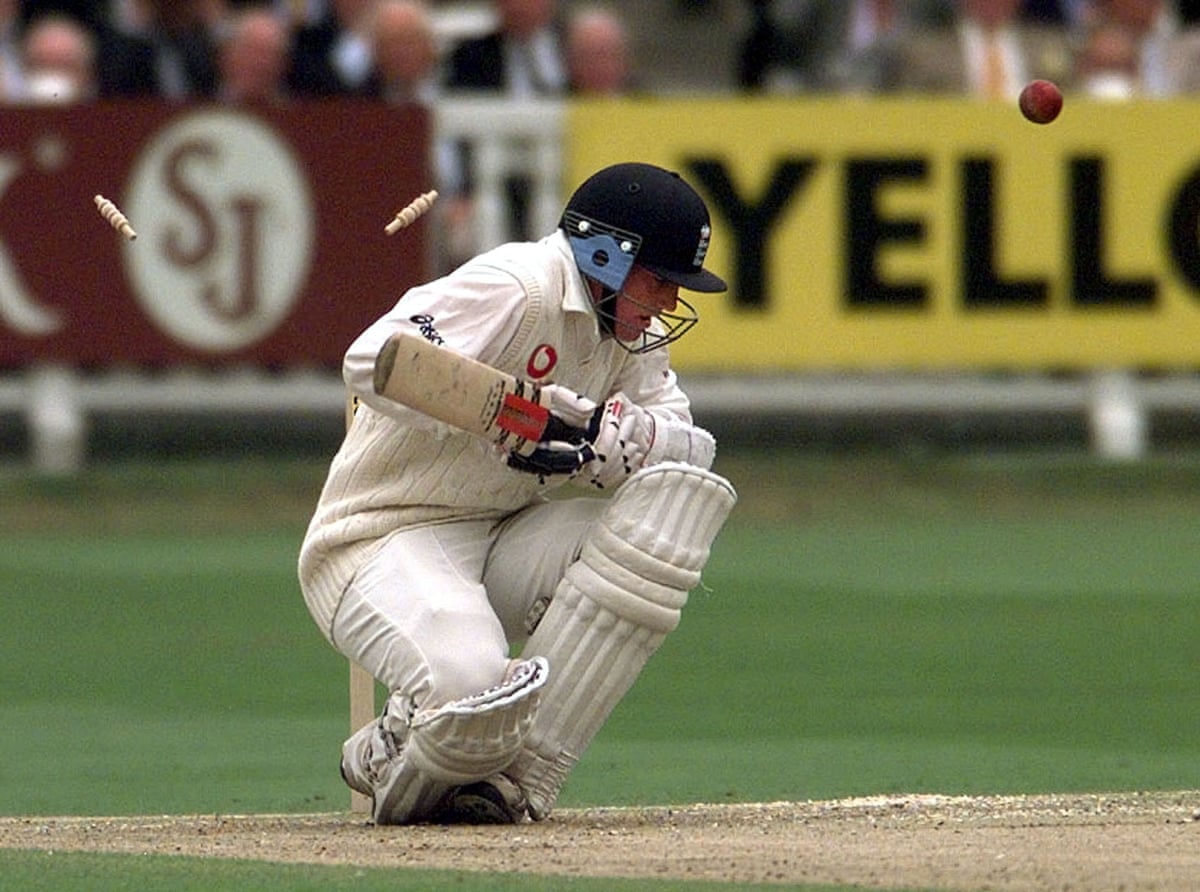
“When Cairns ran up I assumed he hadn’t let go off the ball. Then something in my subconscious thought I needed to protect myself and I ended up looking pretty stupid. The first thing I can remember is the soft thud before it hit the stumps. I was more shocked than anything.”
Chris Read was the victim of one of cricket’s most famous slower balls, delivered by New Zealand’s Chris Cairns during the 1999 Lord’s Test. Cairns had learned the slower ball from none other than Franklyn Stephenson, who had bunked with him at Nottinghamshire when Cairns joined on a youth scholarship in 1988.
“Chris would ask me about the slower ball and I was happy to show him and give him some pointers,”Stephenson recalls. Read, who played 15 Tests for England, is unfortunately most remembered for that one exceptionally slow dismissal.
Still want more?
Pakistan have agreed to play their T20 World Cup match against India after initially being instructed by their government to boycott the fixture.
Simon Burnton explores England’s mastery of the slower ball.
Australia enter the tournament with some intriguing prospects, writes Martin Pegan.
Contact the Spin
Contact via email: james.wallace.freelance@the.com
To to The Spin, simply follow the subscription instructions provided.