
England Defeat South Africa to Reach T20 World Cup Final
England secured a 40-run victory over South Africa at the Oval on Thursday evening, advancing to the T20 World Cup final. The hosts will face Australia at Lord’s in the final, marking their first T20 World Cup final appearance since 2018.
The match began with England struggling early, losing three wickets for 23 runs after being put into bat. However, a record partnership of 133 runs from 90 balls between Nat Sciver-Brunt and Heather Knight shifted momentum in England’s favor. The crowd of 21,000 spectators provided strong support throughout the innings, culminating in a jubilant atmosphere as England took control of the match.
South Africa’s Chase and Key Dismissals
South Africa required 170 runs to win, relying heavily on their captain Laura Wolvaardt to anchor the chase. Wolvaardt started well, appearing in good form during the first five overs. The pivotal moment came in the sixth over when Sophie Ecclestone took a remarkable catch at mid-on to dismiss Wolvaardt.
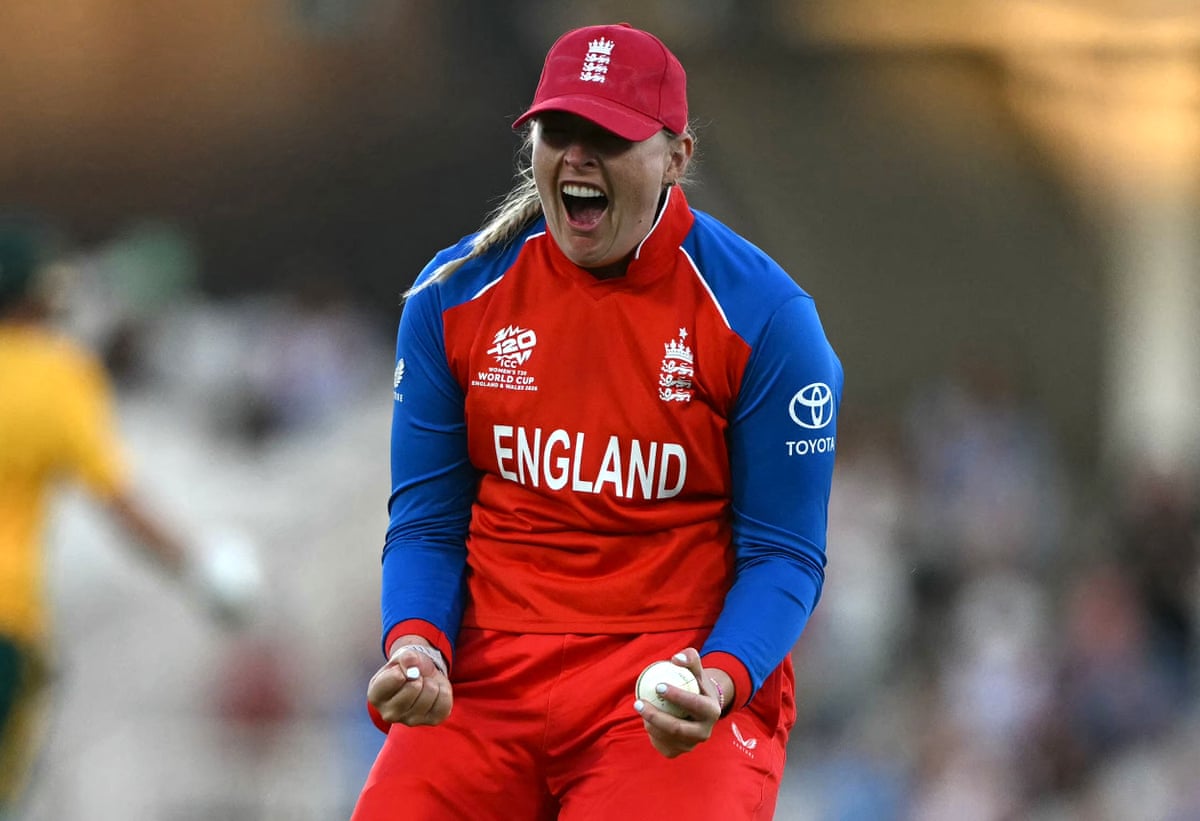
Eight overs later, Ecclestone again made a crucial catch, running backwards at short fine leg to remove Sune Luus. These fielding efforts demonstrated England’s improved athleticism and commitment to fielding excellence, countering previous perceptions of weakness in this area.
Marizanne Kapp, who had played a key role in South Africa’s earlier tournament victory against India, and Tazmin Brits, who scored a resilient 44-ball half-century at the Oval, both fell to similar dismissals. They mistimed catches to Sciver-Brunt at extra cover off the bowling of Charlie Dean. From 95 for five, South Africa’s chase gradually lost momentum as England and their supporters grew increasingly confident.
England’s Preparation and Response to Pressure
This match was a rematch of the February 2023 T20 World Cup semi-final held at Newlands, where England had lost to South Africa. Since then, England have focused on improving their performance under pressure, including attending a two-day leadership bootcamp at Sandhurst in May. Despite a relatively smooth group stage, this semi-final presented a significant test.
England found themselves under pressure at 23 for three, with a home final at Lord’s at stake. The decision to play captain Nat Sciver-Brunt, despite concerns over a weak calf, proved crucial. She displayed skill and composure, finding gaps in the field with ease. Both Sciver-Brunt and Knight hit sixes in the 17th and 18th overs, forcing the umpires to replace the ball due to the heavy impact.
South Africa’s attempts to dismiss Sciver-Brunt early were evident, as they used both their DRS reviews within the first 10 overs unsuccessfully. One review against Shabnim Ismail showed the ball hitting outside leg, and another against Nonkululeko Mlaba confirmed bat contact.
Sciver-Brunt was eventually dismissed at deep midwicket with 10 balls remaining, followed by Knight two balls later, caught by Wolvaardt at cover. The final overs saw Freya Kemp and Dani Gibson add seven runs between them, a modest finish but sufficient for victory.
South Africa’s Bowling and Early Wickets
The new-ball partnership of Marizanne Kapp and Shabnim Ismail, reunited after Ismail’s return from retirement for this World Cup, has been a key strength for South Africa. Their decision to bowl first after Wolvaardt won the toss paid immediate dividends.
Ismail bowled from the Vauxhall End and struck early, with Amy Jones caught at point by Annerie Dercksen. Kapp then dismissed Danni Wyatt-Hodge by bowling her off-stump, restricting the tournament’s leading run-scorer to just 12 additional runs.
Alice Capsey was next to leave after being struck on the back pad by an Ismail delivery. Sciver-Brunt advised Capsey not to review the decision, which was later shown to be incorrect as UltraEdge revealed a faint inside edge.
With wickets falling rapidly, England struggled to score boundaries during the powerplay, managing only two in that period.
South Africa’s Bowling Attack and England’s Recovery
South Africa’s reliance on Ismail was evident, as she was brought out of retirement to fill a crucial role. Kapp was bowled by the seventh over, and Ismail had only one over left to bowl. England’s Sciver-Brunt and Knight capitalized on the less experienced bowlers Ayabonga Khaka, Nonkululeko Mlaba, and Nadine de Klerk, scoring boundaries freely.
Wolvaardt made a final attempt by returning Ismail to bowl the 16th over. Although Knight offered a chance down the ground, the ball safely landed between mid-on and mid-off, and the gamble did not succeed.


