

Unpredictable Conditions Challenge New Zealand Batters
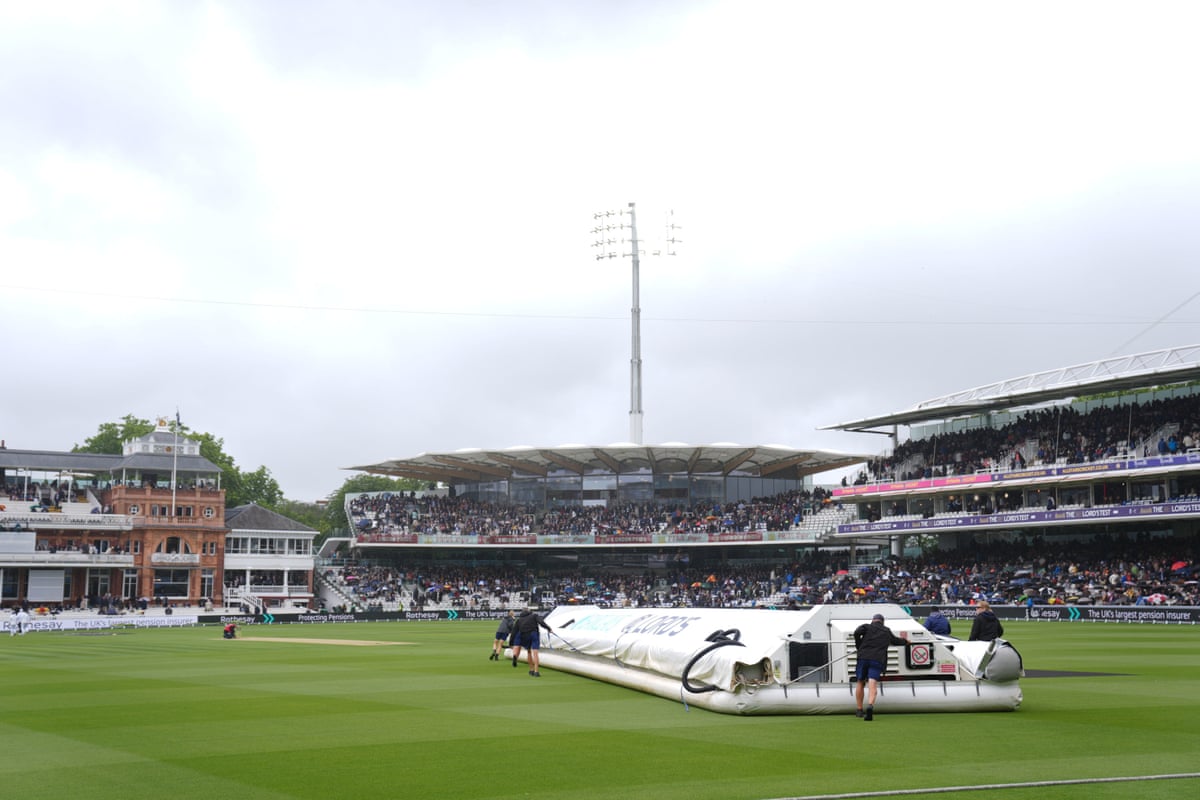
London experienced typical changeable weather, where initial fresh air discouraged venturing outside, prompting a quick return indoors for warmth. A vast expanse of wet grey clouds stretched to the horizon, dampening hopes that New Zealand’s remaining batters could chase the 218 runs needed to win the first Test. Weather forecasts indicated only a brief window of play around midday, limiting ambitions to extend the match into a fourth day when conditions are expected to improve.
As is often the case in cricket, much of the limited sunny hour was consumed by an early lunch break, brought forward by 40 minutes. Inevitably, clouds returned immediately after the players finished their meal.
During 80 minutes of intermittent play, only 58 balls were bowled amid frequent showers, with players repeatedly moving in and out of the pavilion. Despite the challenging conditions, two wickets fell: Rachin Ravindra was clean-bowled, and Daryl Mitchell was dismissed lbw, both by Ollie Robinson. It was a particularly difficult day for batters. While the weather was beyond the control of the Marylebone Cricket Club (MCC), the state of the Test pitch remains a significant concern.
The Pitch’s Variable Bounce Causes Concern
Analysts have identified this pitch as the most unpredictable in England since records began. The issue is not lateral movement but the inconsistent bounce, with deliveries varying dramatically—from balls rising sharply to those skimming ankle height. Jacob Bethell was struck on the head at one end and then bowled by a low ball at the other, exemplifying the erratic nature of the wicket.

It appears MCC has meticulously maintained every part of the 17-acre ground except the 22-yard pitch, which is crucial for quality cricket. Despite extensive efforts, the playing surface has become a source of embarrassment for the club.
Recent Efforts and Ongoing Challenges
This winter, the entire outfield was relaid and is reportedly as soft and yielding as a Sultan’s Tabriz carpet. However, the pitch itself resembles a neglected surface, as if discarded in an alleyway. Last year, the pitch was so slow that slips fielders wore helmets to safely approach the batters, given the scarcity of catching opportunities.
Recently, MCC has employed steam treatment to "purify the soil," a method that has drawn some bemusement. The combination of last week’s heatwave and heavy rainfall has resulted in the "steamed pitch" being the worst to date.
Future Plans for a New Playing Surface
The MCC has devised a plan to replace the current pitch entirely. They are developing drop-in pitches to be cultivated on the Nursery Ground and then transported into the main playing area for international matches. These new pitches are expected to be ready by 2028, a development eagerly anticipated by players and fans alike.
"It sometimes feels as if MCC have perfected every square inch of these 17 acres except the 22-yard-strip in the middle of it, which is, unfortunately, the only bit you really need for a good game."
"Recently, the MCC has taken to treating it with steam in an effort to ‘purify the soil’, which makes it sound as if they’ve been taking greenskeeping advice off Goop."
"They do have a plan, which involves getting rid of it altogether. They are working on drop-in pitches, which they are planning to plant on the Nursery Ground, then transport into the middle of the playing surface for use in international matches. They are supposed to be ready by 2028 and cannot come soon enough."


