

Happy returns for the quicks
By his own admission, Robinson’s return to Test cricket after a two-year absence was a reminder of England’s previous struggles with new-ball bowling during their 4-1 Ashes series defeat last winter. At Lord’s, Robinson demonstrated his skill by making the ball move unpredictably through the air and off the pitch. There was no necessity for him to bowl short, as evidenced by a 77mph bouncer that Daryl Mitchell managed to fend to the boundary. Instead, Robinson’s ability to consistently pitch the ball on a good length proved highly effective. The conditions also suited Kyle Jamieson, the towering fast bowler who returned to Test cricket for the first time since February 2024 after recovering from a back stress fracture. Jamieson’s five-wicket haul was impressive, maintaining his bowling average below 20 across 20 Tests.
Gay’s fine start
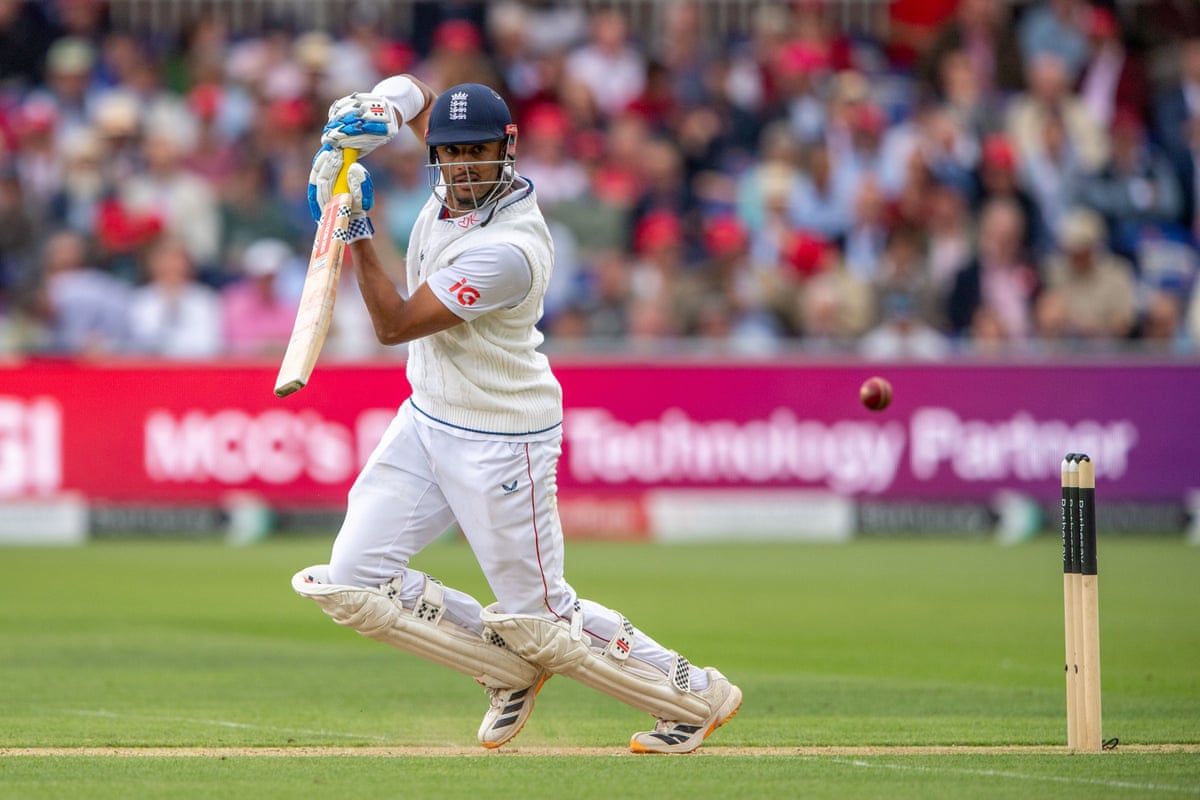
Ben Foakes remains the last England player to score a century on Test debut. While Emilio Gay did not break this streak, his introduction to international cricket was promising. From the outset, Gay capitalised on a full toss from Jamieson on the first ball, allowing him to play an expansive drive. Gay was a strong contender for player of the match, contributing significantly and enduring the longest innings in terms of balls faced. Although he benefited from some fortunate moments, similar to Harry Brook who was dropped twice during his innings of 56, Gay displayed moments of skill, particularly through the cover region. These performances will be remembered regardless of the length of his international career.

Pitch problem
The Test match began under challenging conditions that limited the spectacle. The pitch at Lord’s offered assistance to the fast bowlers, resulting in a contest that was effectively completed within two days. While watching quick bowlers dominate and force batsmen into unorthodox shots can be engaging, the match’s brevity was disappointing given that only three Tests are scheduled in the series. Such a rapid conclusion is acceptable once in a five-Test series but frustrating when opportunities to watch extended play are limited. The match could have been salvaged with a close finish; however, Glenn Phillips, who scored the most runs in the match, was unable to receive sufficient support from his teammates.
New Zealand’s rust
The New Zealand team featured experienced players, including four members of the squad that won the World Test Championship. Daryl Mitchell and Tom Blundell had previously performed well in England in 2022, while Rachin Ravindra and Will O’Rourke are expected to be key players for the future. Despite this pedigree, the team appeared somewhat unfamiliar with the demands of Test cricket due to a lack of recent match practice. The year 2025 was particularly sparse for New Zealand, with only five Tests played against Zimbabwe and the West Indies, resulting in four wins and one draw. Their match against Ireland in May was their first since December. This extended period without high-level competition meant the players were less accustomed to being tested and punished for lapses, which England exploited effectively.
How much did we learn?
The upcoming Test at the Oval is expected to last longer, with pitches there having seen teams surpass 600 runs twice in this year’s County Championship. The series has the potential to be exciting, especially given the well-matched bowling attacks. A close contest seems likely, as Pakistan, who will visit in August, may not be as competitive as New Zealand. England’s victory at Lord’s provided a necessary boost to alleviate post-Ashes pressure. However, the extreme nature of this match limits the insights that can be drawn. For instance, there was no opportunity to observe Shoaib Bashir’s bowling or assess whether his early-season performances for Derbyshire have improved his control. A return to more typical conditions at The Oval next Wednesday would be welcomed.


