

'A devastating blow': NAACP says supreme court ruling is 'a major setback for our nation'
Derrick Johnson, president of the National Association for the Advancement of Colored People (NAACP), the nation’s oldest civil rights organization, described the Supreme Court ruling in Louisiana v Callais as delivering “a devastating blow to what remains of the Voting Rights Act.”
Johnson stated that the ruling grants "a license for corrupt politicians who want to rig the system by silencing entire communities."
The Supreme Court betrayed Black voters, they betrayed America, and they betrayed our democracy.
This ruling is a major setback for our nation and threatens to erode the hard-won victories we’ve fought, bled, and died for. But the people still can fight back. Our democracy is crying for help.
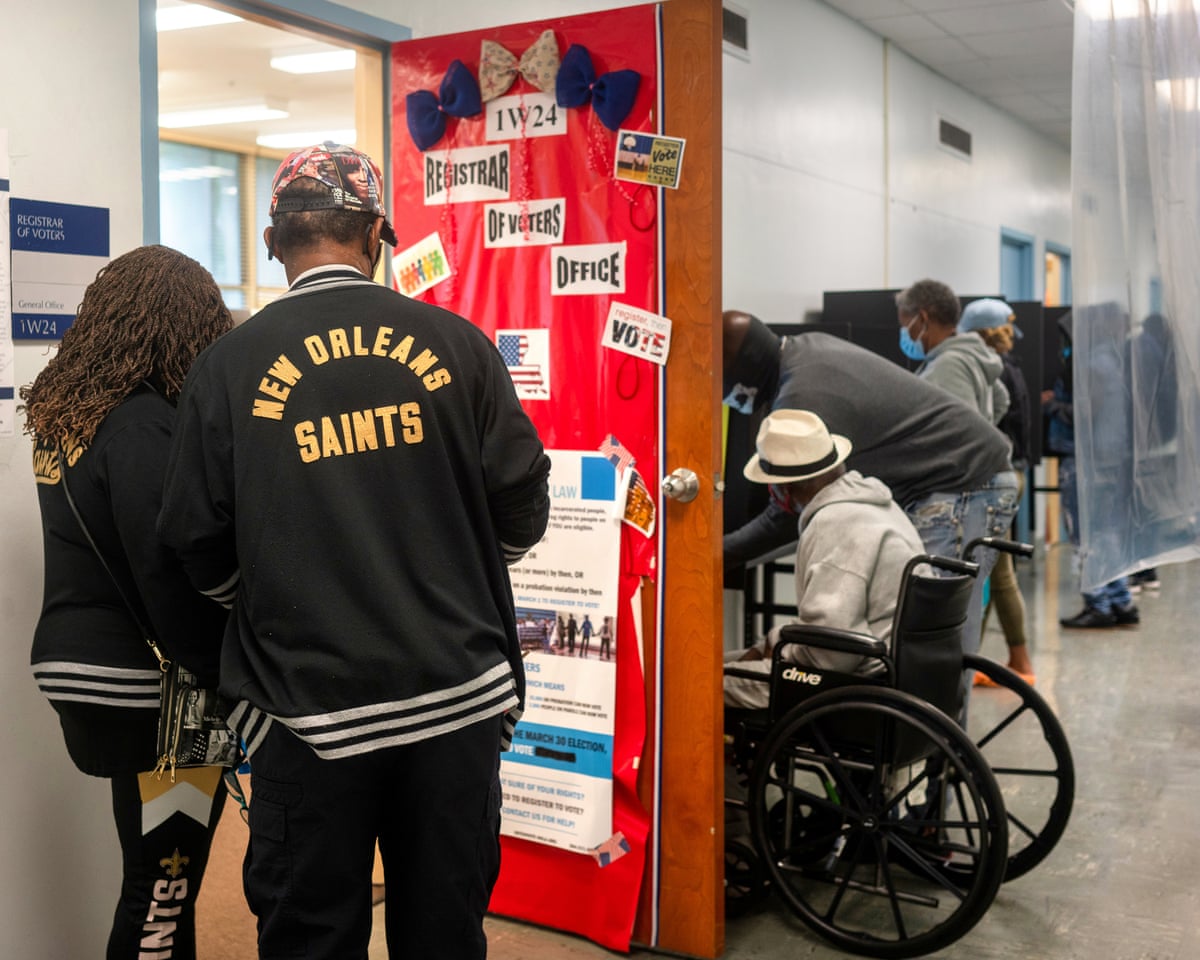
House Armed Services Committee Hearing: Defense Secretary Faces Tough Questions on Iran
During a House Armed Services Committee hearing, Defense Secretary Pete Hegseth engaged in a heated exchange with ranking member Adam Smith regarding the US government's strategy to counter the nuclear threat from Iran.
Smith noted that every president prior to the current administration, including President Trump during his first term, had prevented Iran from acquiring a nuclear weapon without resorting to war.
He questioned why the United States attacked Iran in February if the prior operation had successfully “obliterated” Iran’s nuclear program as claimed by Donald Trump, and whether an imminent threat justified the military action.
When Hegseth reiterated that Iran’s nuclear facilities were “obliterated” underground, Smith responded:
You just said 60 days ago … the nuclear weapon was an imminent threat. Now you’re saying that it was completely obliterated.
Hegseth clarified that while Iran’s nuclear ambitions remain, its nuclear program had been disrupted.
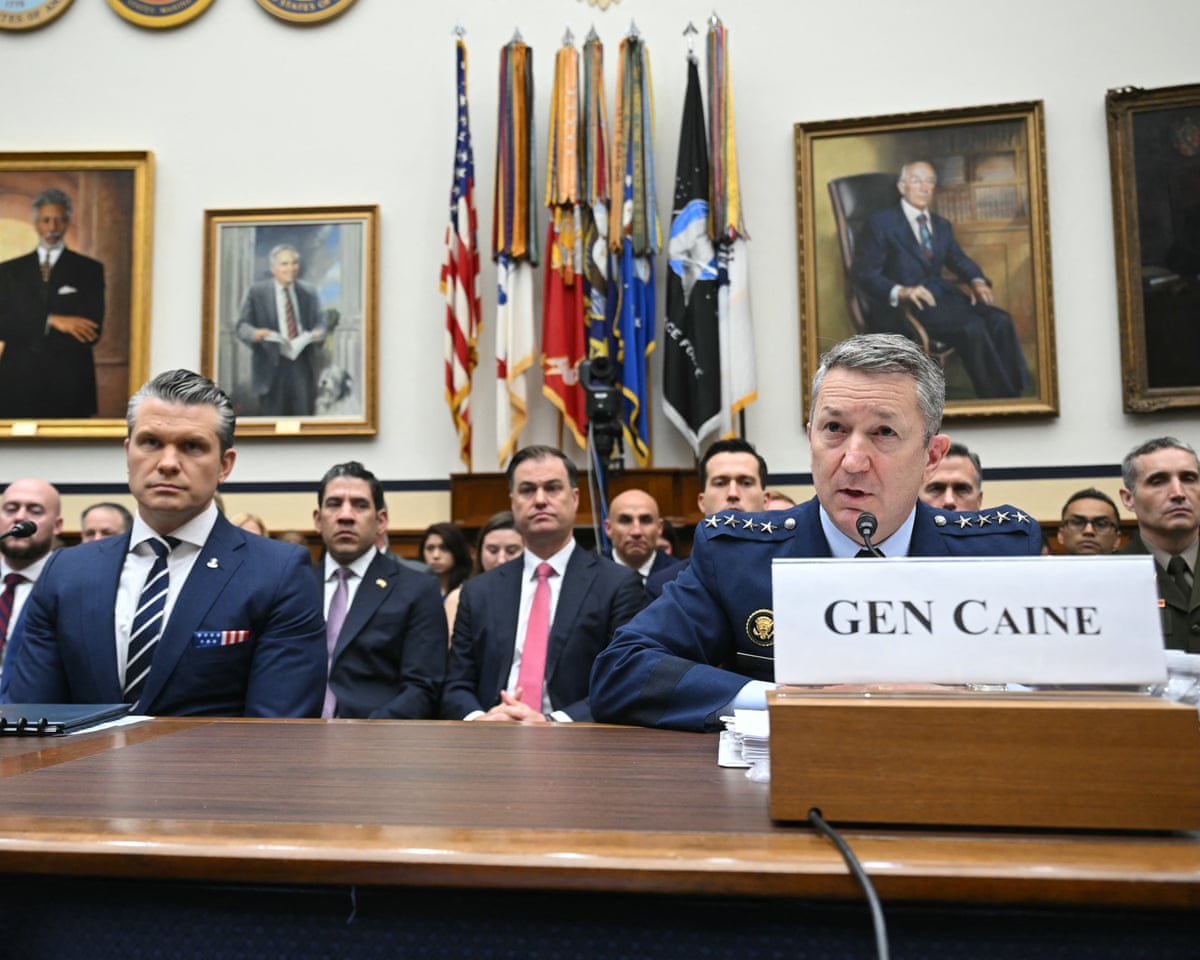
Senator Raphael Warnock and Representative Troy Carter Criticize Supreme Court Decision
US Senator Raphael Warnock of Georgia condemned the decision, stating it “further ravaged” the Voting Rights Act and placed the country “at a crossroads where politicians are picking their voters.”
Today’s Supreme Court decision marks a profound defeat for American democracy and will pave the way for partisan politicians to pick their voters.
Clearly, we are straying further from the core voting principles that helped create the diverse body that people see representing them today. We must restore the Voting Rights Act and ban gerrymandering. Our democracy is on the line.
US Representative Troy Carter, representing a predominately Black congressional district in New Orleans, emphasized the ruling’s impact on Black Louisianians’ ability to have their voices heard.
This ruling is about far more than lines on a map — it’s about whether Black Louisianians will have a meaningful opportunity to make their voices heard.
Without the protections of the Voting Rights Act, there is no evidence to suggest that Black voters in our state will be able to elect candidates of their choice.
This decision will embolden efforts to dismantle majority-Black districts and fracture communities that have finally begun to see themselves reflected in their government. This isn’t just about federal representation. This decision will also impact state and local governments, impacting Black representation in state capitols and city council chambers across the country. It sends a dangerous signal that the progress we have made can be undone under the guise of legal theory.
New Orleans Mayor Helena Moreno Responds to Ruling
Helena Moreno, mayor of New Orleans and a Democrat representing Louisiana’s other predominantly Black congressional district, described the Supreme Court ruling as “a step backward.”
For decades, the Voting Rights Act has served as a critical safeguard to ensure every voice, especially those historically marginalized, has a meaningful opportunity to be heard.
Striking down a district that reflected diversity suppresses voices and weakens our democracy. We should be working to expand representation, not roll it back.
Fair Fight Action Executive Director Lauren Groh-Wargo Critiques Ruling
Lauren Groh-Wargo, executive director of Fair Fight Action, a Georgia-based voting rights group founded by Stacey Abrams, said the Supreme Court’s decision “guts” voting rights protections while “pretending to uphold it.”
She noted that the court rewrote the law to require proof of intentional discrimination, despite Congress having amended the Voting Rights Act in the early 1980s to overturn a prior Supreme Court decision that had imposed the same requirement.
Groh-Wargo highlighted that Chief Justice John Roberts, then a Justice Department attorney, had advocated for requiring intentional discrimination.
It allows states, counties and cities to shield their discriminatory maps by claiming they are advancing their own partisan interests, ignoring that race and party are highly correlated in places across the country, particularly the South.
The ruling could enable Republican-led states to eliminate Black and Latino electoral districts that typically favor Democrats, potentially affecting the balance of power in Congress. Former President Donald Trump has already initiated a nationwide redistricting battle to enhance GOP prospects.
White House Praises Supreme Court Ruling
The White House welcomed the Supreme Court’s decision to effectively dismantle a key provision of the Voting Rights Act that prevented racial discrimination.
White House spokesperson Abigail Jackson stated:
This is a complete and total victory for American voters.
The color of one’s skin should not dictate which congressional district you belong in. We commend the court for putting an end to the unconstitutional abuse of the Voting Rights Act and protecting civil rights.
US War on Iran Costs Estimated at $25 Billion
During the House Armed Services Committee hearing, Defense Department official Jules Hurst provided the first official estimate of the war’s cost, stating that the federal government has spent approximately $25 billion so far.
Hurst explained that most of the expenditure was on munitions, with additional costs for operations, maintenance, and equipment replacement.
Most of that is in munitions, there’s part of that that’s obviously O&M [operations and maintenance] and equipment replacement as well,said Hurst, acting comptroller.
Ranking member Adam Smith expressed relief at receiving this information after prolonged inquiries.
Secretary Hegseth described the president’s $1.5 trillion Pentagon budget request as reflecting the urgency of the moment, calling it an “historic” and “warfighting budget” necessary to return the department to a “wartime footing” after years of underinvestment.
General Dan Caine termed the budget request “a historic downpayment for future security,” citing escalating global risks manifesting on battlefields worldwide that require increased capital investment.
Supreme Court Orders Louisiana to Redraw Congressional Map
The Supreme Court ruled that Louisiana must redraw its congressional map in a landmark 6-3 decision along partisan lines, effectively undermining Section 2 of the Voting Rights Act.
Section 2, the last powerful provision of the 1965 civil rights law, has been used to prevent racial discrimination in voting and ensure minority voters receive fair treatment during redistricting.
Justice Samuel Alito, writing for the majority, stated:
Allowing race to play any part in government decision-making represents a departure from the constitutional rule that applies in almost every other context.
Compliance with section 2 thus could not justify the state’s use of race-based redistricting here. The state’s attempt to satisfy the Middle District’s ruling, although understandable, was an unconstitutional racial gerrymander.
Justice Elena Kagan dissented, asserting the court had effectively demolished the Voting Rights Act.
The case centered on the extent to which lawmakers may consider race when redrawing districts to ensure adequate Black voter representation. The Supreme Court initially heard oral arguments in March, but unusually ordered re-argument last fall, focusing on the constitutionality of Section 2.
The decision follows prolonged disputes over the map boundaries.
Supreme Court Hears Case on Temporary Protected Status for Haitians and Syrians
The US Supreme Court began oral arguments in a case determining whether the administration can revoke Temporary Protected Status (TPS) from hundreds of thousands of Haitians and Syrians residing in the United States.

The hearing, delayed from its scheduled 10 a.m. ET start due to the release of other decisions including the Louisiana redistricting ruling, addresses TPS, which allows individuals to live and work in the US when their home countries are unsafe due to war, political instability, or natural disasters.
Under the Trump administration, efforts have been made to terminate TPS for various countries, risking the removal of hundreds of thousands of protected immigrants.
Last year, the Supreme Court permitted the administration to end TPS for over 300,000 Venezuelans under an emergency docket. The current case challenges attempts to remove TPS protections from Syrians and Haitians.
Should the court side with the administration, it may seek to end TPS for all countries. Nearly 1.3 million people held TPS at the start of the second Trump administration.
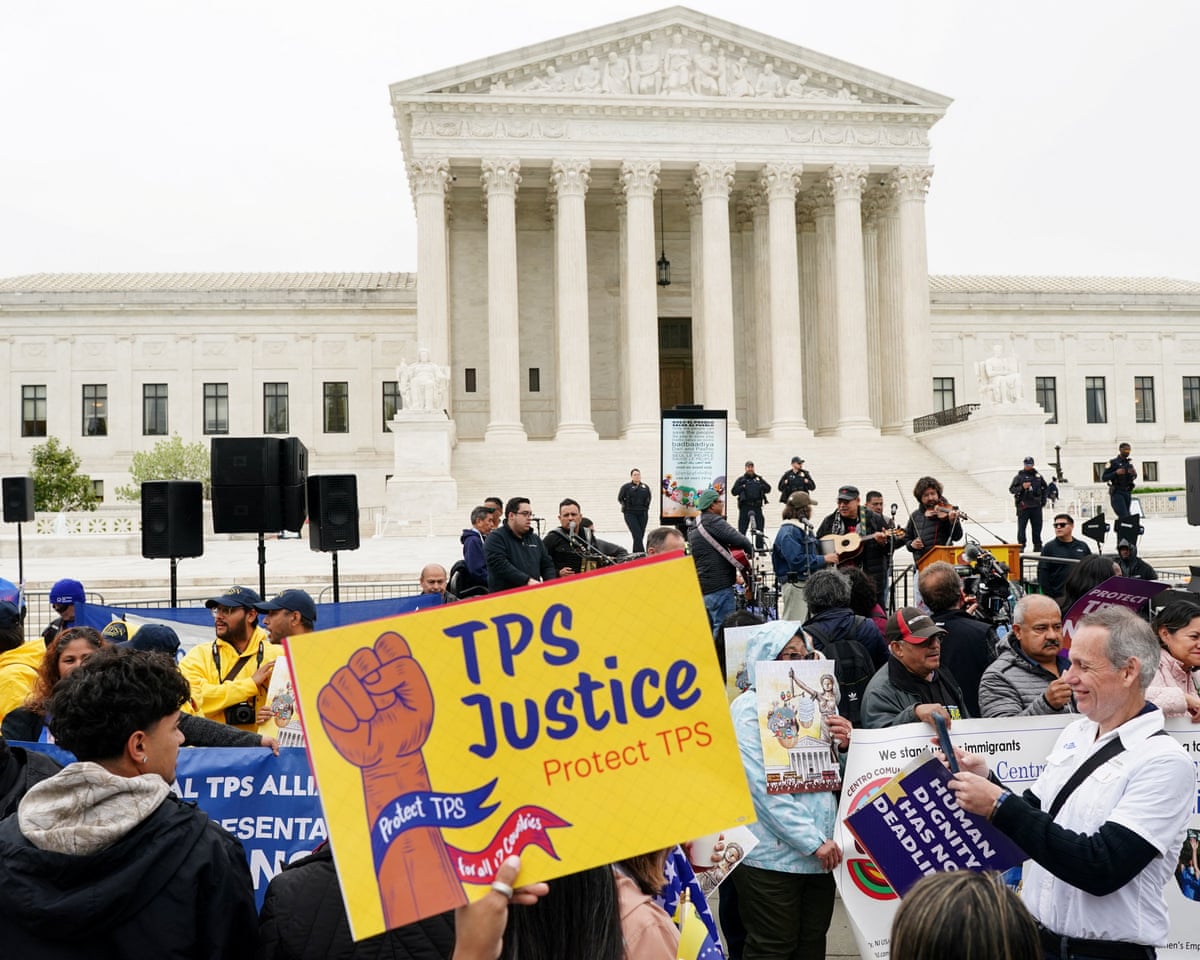
Defense Secretary Pete Hegseth Defends War on Iran
In his opening statement, Pete Hegseth defended the US-Israeli war on Iran:
Iran cannot have a nuclear bomb. We are proud of this undertaking.
He criticized congressional Democrats and some Republicans, calling their rhetoric “reckless, feckless and defeatist.”
Top Democrat Adam Smith Critiques Administration’s Iran Strategy
Ranking member Adam Smith praised the US military but expressed concern about the Pentagon’s budget request amid national debt issues.
He described Hegseth’s prior remarks about the US military strategy being based on realism as “absurd” and the opposite of realism.
Starting wars in the Middle East that get out of control and lead us to have far greater costs with the benefits, is one of the cornerstones of the unrealistic strategy that this administration has criticized over and over and over again. And yet, here we are in a full scale Middle East war, and we’ve seen the costs of that.
Smith highlighted the human toll, including thousands of civilian deaths, 13 US service members killed, involvement of other countries, rising gas prices, and fertilizer costs.
He questioned the US’s endgame in Iran, noting that despite the war, Iran’s nuclear program remains intact, along with its ballistic missile capabilities and ability to blockade the Strait of Hormuz.
One of the big questions that we need to get answered today is, where is this going? What is the plan to achieve our objectives? We’ve seen the cost, and the cost is very, very high. All we keep hearing on the objectives is we keep seeing all of the targets that we have struck …
We’re in this to fundamentally change Iran. And as we sit here today, Iran’s nuclear program is exactly what it was before this war started. They have not lost their capacity to inflict pain. They still have a ballistic missile program. They’re still able to blockade the strait of Hormuz and have the ships that are capable of doing that. What is the plan to get that to change? And most disturbingly, the president keeps telling us that it’s over.
Smith also criticized the administration’s harsh stance on NATO for not joining the war, noting NATO’s past support invoking Article 5 after 9/11.
There’s nothing realistic about starting a war in the Middle East, going it alone and pushing aside all diplomacy.
He concluded by addressing the US strike that killed at least 175 people, mostly children:
There is absolutely no question at this point what happened. We made a mistake and that happens in war. We identified this target based on earlier charts. And yet two months after it happened, we refuse to say anything about it, giving the world the impression that we just don’t care.
Hegseth Faces Lawmakers’ Questions for First Time Since Iran War Began
Defense Secretary Pete Hegseth appeared before the House Armed Services Committee, marking his first opportunity to publicly answer lawmakers’ questions since the US and Israel launched war on Iran over two months ago.
Alongside General Dan Caine, chairman of the Joint Chiefs of Staff, Hegseth had previously only held press conferences and had not testified before Congress. Both are scheduled to appear before the Senate Armed Services Committee the following day.
The hearing, formally a routine review of the Pentagon’s budget request—which includes a record $1.5 trillion defense spending proposal prepared before the war—occurred amid growing scrutiny over the department’s spending pace.
Hegseth was expected to face questions regarding civilian casualties in the Iran war, including the strike that killed at least 175 people, the US’s strategic rationale, the effectiveness of the bombing campaign, preparedness for Iranian retaliation, the Strait of Hormuz crisis, and recent firings of senior defense officials.
Pete Hegseth’s got a lot to answer to from this disastrous war,said Democratic Representative Jason Crow.
How much is this costing? What’s the end game?
Pennsylvania Democrat Chris Deluzio noted that Hegseth has been “dodging congressional questions about the Iran war since day one.”
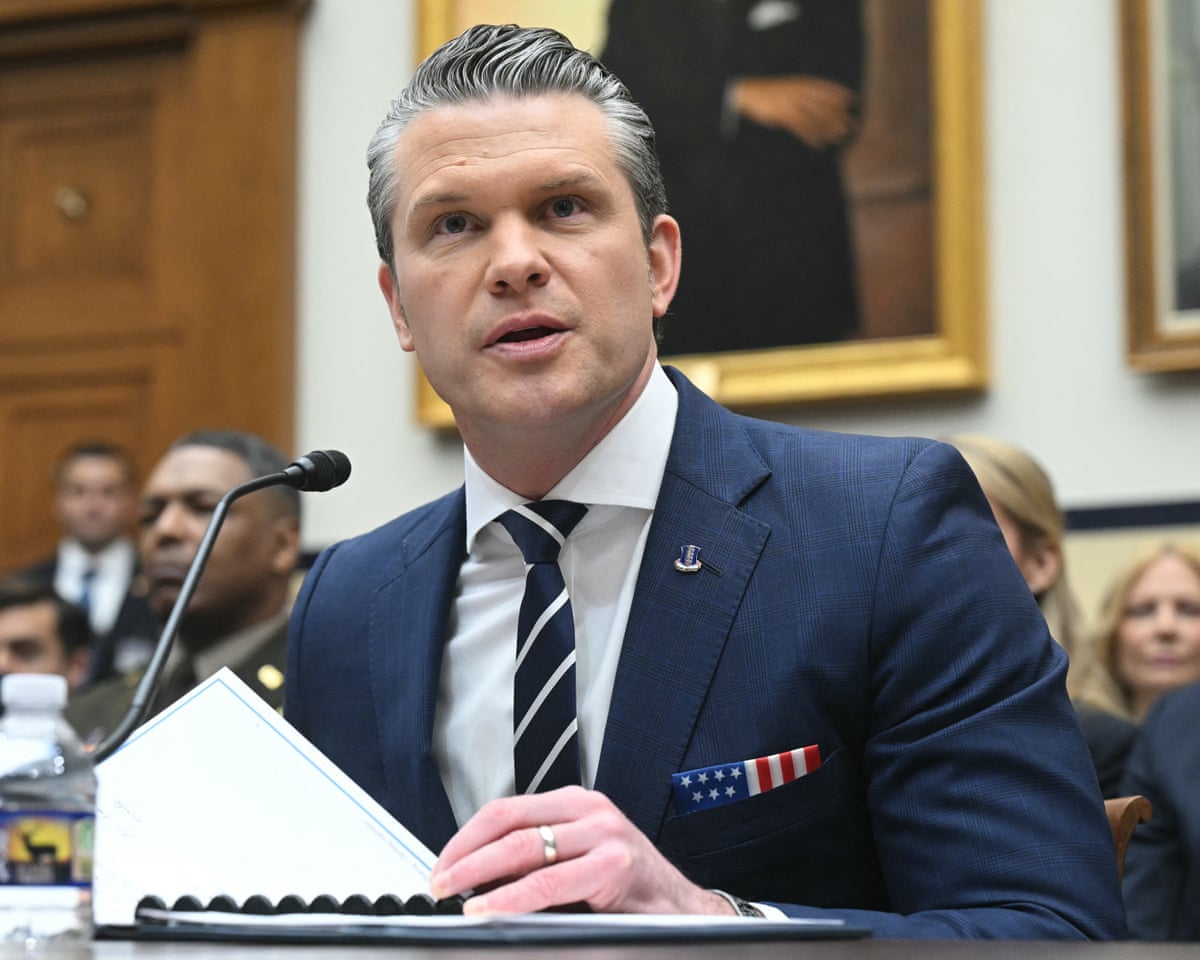
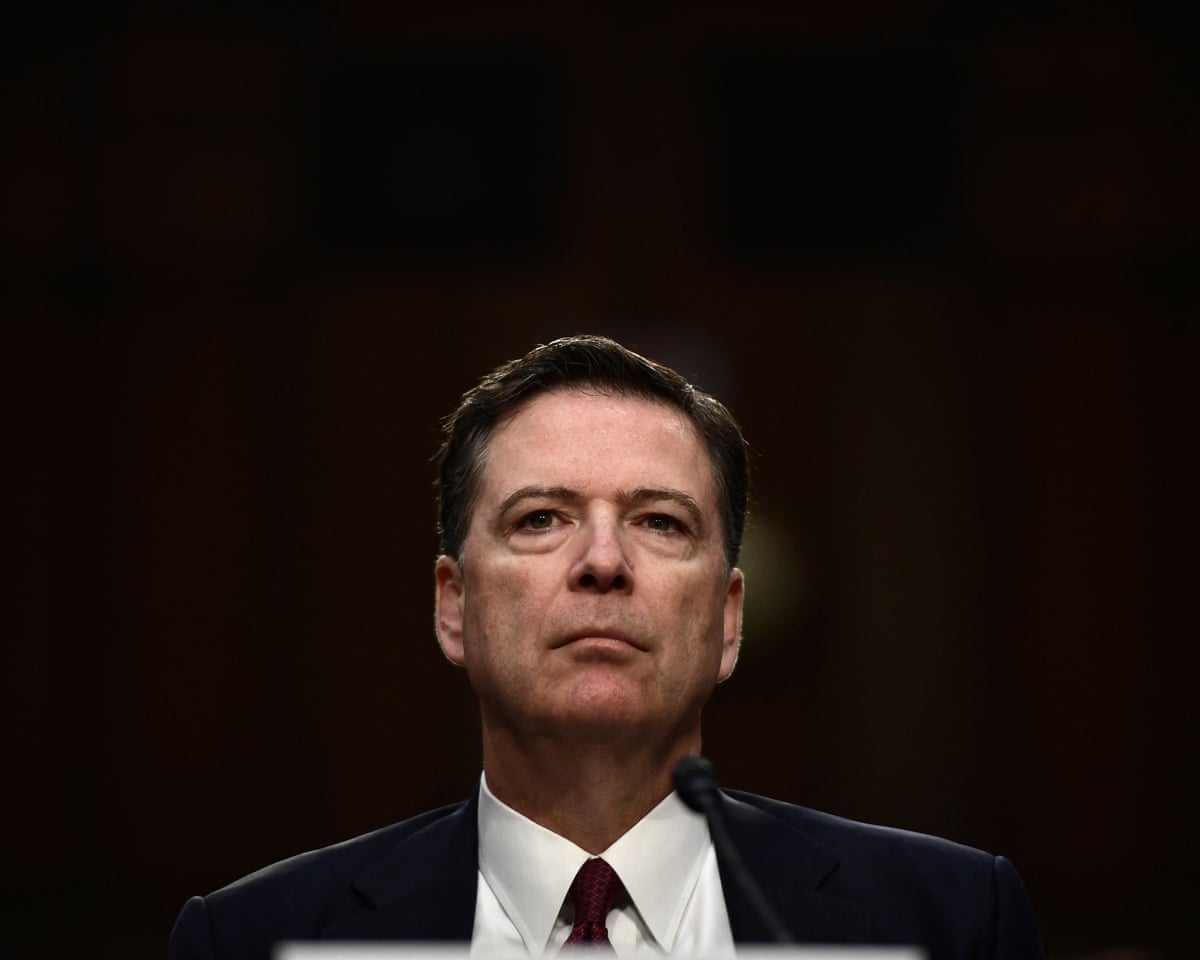
Former FBI Director James Comey Expected to Self-Surrender
Former FBI Director James Comey is anticipated to self-surrender to law enforcement at federal court in the Eastern District of Virginia, according to a federal official familiar with the matter.
This follows the US Department of Justice’s recent indictment, perceived as part of ongoing legal actions against former President Donald Trump’s political opponents.
Comey faces charges related to a photograph he posted on Instagram last year while on vacation, depicting seashells arranged to spell “86 47.” The post was interpreted as a threat to Trump, the 47th president, since “86” can imply getting rid of something. Comey captioned the image: “Cool shell formation on my beach walk.”
He later deleted the post and apologized, stating he was unaware of the numbers’ violent connotations and opposing violence of any kind.
The indictment, approved by a grand jury in the Eastern District of North Carolina where the photo was taken, includes charges of making a threat against the president and transmitting a threat via social media across state lines.
The indictment asserts that a reasonable person would interpret the seashell numbers as a serious expression of intent to harm the President of the United States.
Comey released a video statement:
Well, they’re back. This time, about a picture of seashells on a North Carolina beach a year ago. And this won’t be the end of it, but nothing has changed with me. I am still innocent. I am still not afraid. And I still believe in the independent federal judiciary. So, let’s go.
It’s really important that all of us remember – this is not who we are as a country, this is not how the Department of Justice is supposed to be, and the good news is we get closer every day to restoring those values. Keep the faith.
The Justice Department had previously indicted Comey last year on charges of lying to Congress, but that case was dismissed by a judge in the Eastern District of Virginia.
Donald Trump Instructs Aides to Prepare for Prolonged Blockade of Iran
According to US officials cited by the Wall Street Journal, former President Donald Trump has directed aides to prepare for an extended blockade of Iranian ports.
Trump reportedly prefers the blockade over other options to increase pressure on Iran amid stalled peace talks and Tehran’s continued closure of the critical Strait of Hormuz.
The report indicates Trump views alternatives such as renewed bombing campaigns or withdrawing from the conflict as riskier than maintaining the blockade.
The US military has been blocking ships from entering or leaving Iranian ports ...


