

Artemis Moon Rocket Returns to Launch Pad
NASA's massive Moon rocket has been moved back to its launch pad for a second time in preparation for a mission aiming to send astronauts around the Moon, an endeavor not attempted in over 50 years.
The 98-meter-tall Space Launch System (SLS) and Orion spacecraft completed a four-mile journey from their assembly building to Pad 39B at the Kennedy Space Center in Florida.
This relocation follows a helium system issue that caused NASA to halt a launch attempt in March and return the vehicle indoors for repairs.
Engineers have since resolved the problem and anticipate that a series of final tests at the pad will verify the rocket's readiness for an early-April launch window.
Just after nightfall, the SLS emerged from the Vehicle Assembly Building (VAB) — one of the largest buildings globally — and began its slow crawl toward the Atlantic coast.
Standing taller than Big Ben's clock tower at nearly 100 meters, the rocket and its launch platform weigh approximately 5,000 tonnes. They were transported by Crawler-Transporter-2, a low-slung, tank-like vehicle on caterpillar tracks built by NASA in 1965 to move Saturn V Moon rockets to the pad.
Its maximum speed is about 1 mph (1.6 km/h), and it moves even more slowly on bends and up the gentle ramp to the launch pad, making the four-mile journey last up to 12 hours.
The slow pace is deliberate: akin to carrying a precious Ming vase, the gentle motion minimizes stresses on the multi-billion-dollar rocket and launch tower. This speed also allows flight teams to detect and halt any unwanted movement of what effectively functions as a mobile skyscraper.

Preparations and Testing at the Launch Pad
Now positioned at the pad, engineers will spend several days verifying that the repairs performed in the VAB have been successful and that no components shifted during the slow transit. They will reconnect the launch tower to the vehicle and conduct pressure tests on the helium system responsible for the earlier issue.
Controllers will also rehearse parts of the countdown, sending commands through the same computers and networks intended for launch day, but without fueling the tanks.
Once these tests conclude, NASA's mission management team will convene a few days before the earliest launch opportunity on 1 April to review the data and decide whether to proceed.
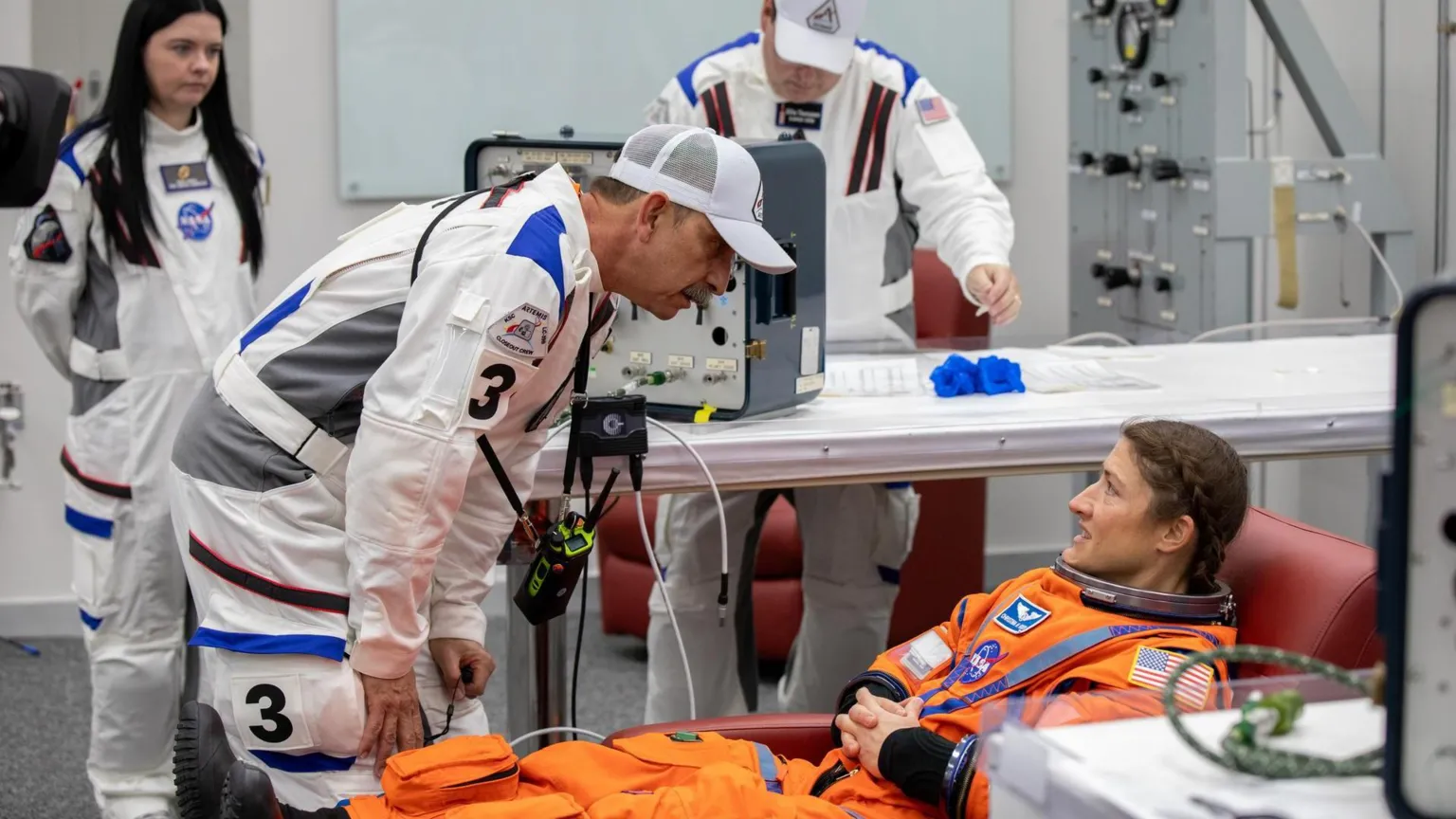
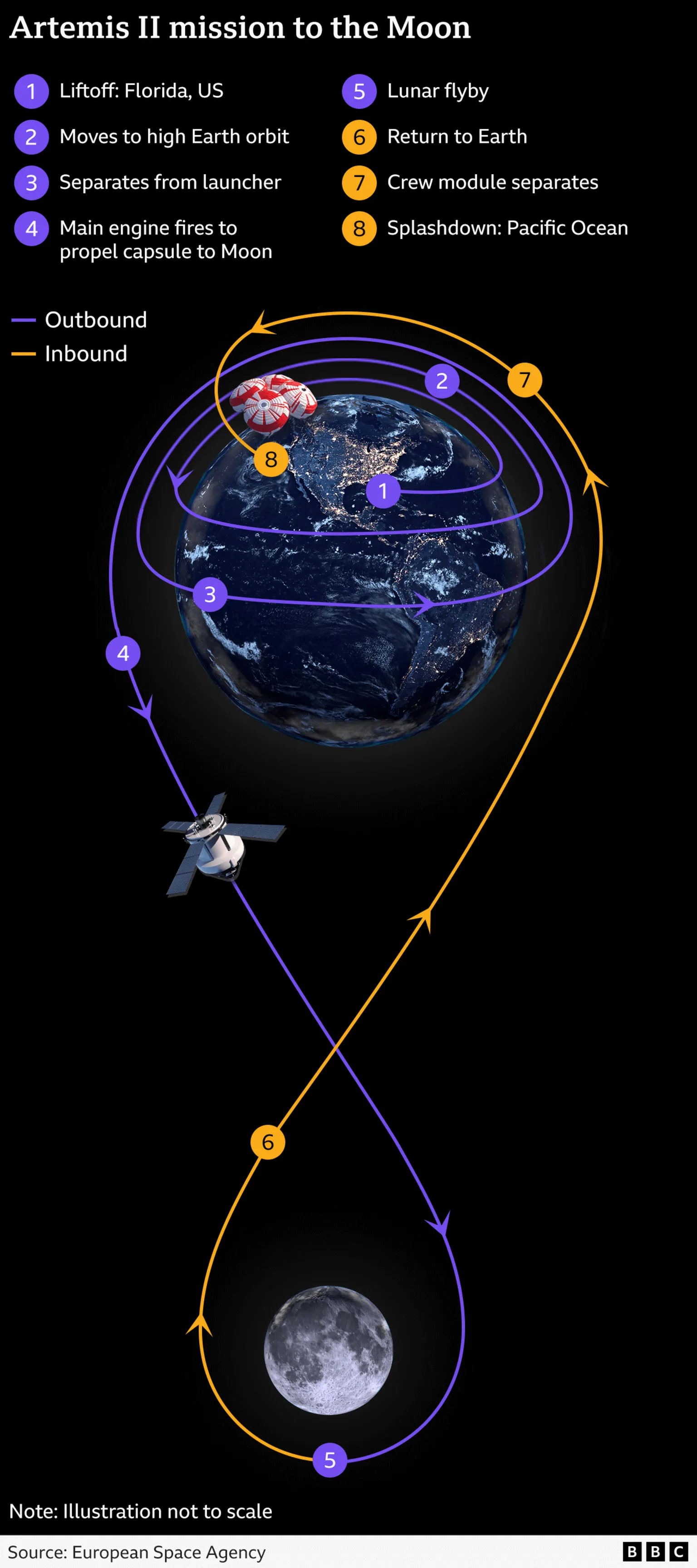
The Artemis II crew — Reid Wiseman, Victor Glover, Christina Koch, and Jeremy Hansen — have entered pre-flight quarantine and will travel to Florida closer to launch to participate in various rehearsals, including suiting up and traveling to the pad. NASA is targeting launch opportunities in the first week of April for the ten-day mission, which will orbit the far side of the Moon before returning to Earth.
Background on the Helium System Issue and Repairs
This marks the second time the Artemis II rocket has been transported to the pad. In March, NASA rolled it back to the assembly building after detecting an interruption in helium flow to the upper stage during a fueling test. Helium is used to pressurize propellant tanks, and any fault in this system could impact the upper stage engine's performance or the safe draining of fuel.
Instead of proceeding, managers chose to stand down from the planned launch window and return the SLS to the VAB, allowing engineers full access to the affected area rather than attempting repairs on the pad.
Inside the VAB, work platforms were raised around the upper stage so specialists could access valves and plumbing in the helium circuit. Engineers replaced suspect components, swapped batteries in several critical systems, and repeated tests to confirm the fault was resolved.
After reviewing the data, NASA managers approved a second rollout and the next phase of checks, which are now underway at the pad. If these tests complete without incident, Artemis II will become the first crewed mission in the Artemis program, paving the way for another crewed test flight, Artemis III, in Earth orbit scheduled for 2027, followed by Artemis IV in 2028, which aims to see astronauts set foot on the Moon.
Launch Windows and Mission Timeline
For the first launch opportunity, NASA is targeting 18:24 Eastern Daylight Time on 1 April, which corresponds to 23:24 in the UK. If this attempt is delayed, additional launch windows are available on 2, 3, 4, 5, and 6 April. Should these be missed, a final opportunity exists on 30 April.


